Author: The Photographer Clay

  • Everyday struggles and art

    Everyday struggles and art

    Something I notice frequently both in personal contact with photography friends and through social media, everyday life struggles can really hinder creativity. Current health and political issues have isolated many. Many are reluctant to venture out far from home for fear of COVID exposure, others may be reluctant due to political unrest, something we, or at least I, thought that would be virtually unheard of in the United States. Couple those two issues along with the normal, whatever normal is, struggles of finances, typical health concerns, pressures or jobs, and family life it is sometimes a wonder we can create anything worthy for the past couple of years. At times, it is all I can do to just think about sitting with my wife and dog with a nice glass of wine and watching mindless television.

    I’m not sure I know the answer to overcoming these struggles, except that pushing through and creating something certainly will take our thoughts away from the everyday struggles and allow us a few moments of creativity. Take some time today to push through, even for a few moments, and create some art.

  • The snobbish photographer

    The snobbish photographer

    This blog post is inspired by a recent conversation in my Facebook photography group, The Digital Photography Forum.

    One of the members shared an experience on a couple of recent outings they went on. The basic story is most of the other photographers present were using the newest trend in cameras, mirrorless bodies while she was still using her tried and true digital SLR. She related that she felt she was being snubbed because her gear made a sound, the mechanical shutter, as she took photographs. I can relate to her story.

    I want to make something clear right away. I’m not an anti-mirrorless camera body person. What I am is shoot what you have type person. We all get into photography with different goals and budgets. Many of us don’t feel like we should replace gear just when the next thing comes out. Now that that statement is out there I will go on as to how I can relate.

    I’m sure that photography snobs, just like art snobs, wine snobs, or every other kind of snobbery have existed for a very long time, but it seems as if photography snobs go through a series of growth and decline, at least in my experience.

    Early in my days of digital SLR photography, I started with an entry-level camera and consumer-grade lenses. These were also the days of Yahoo forums, I know ancient history. During that time, I felt a lot of snobbery from photographers who had higher quality gear. They often made you feel like you weren’t a “real photographer” unless you had the “latest and greatest”. Over the course of the next 15 plus years, I have been able to upgrade some of my gear but I have tried to not be a snob when it comes to photography. It may be because I don’t have a room full of the big-name lenses or high-speed low drag gear. I’ve been around those people who have had that stuff and frankly some of them never impressed me with their photography. Conversely, I have been around people who have had entry-level equipment that can impress me with nearly every photograph they take. My thought is, I’m not impressed by what gear you have but how you use your gear and how well you create your art. Impress me with the results, not what you use.

  • Learn to visualize

    Learn to visualize

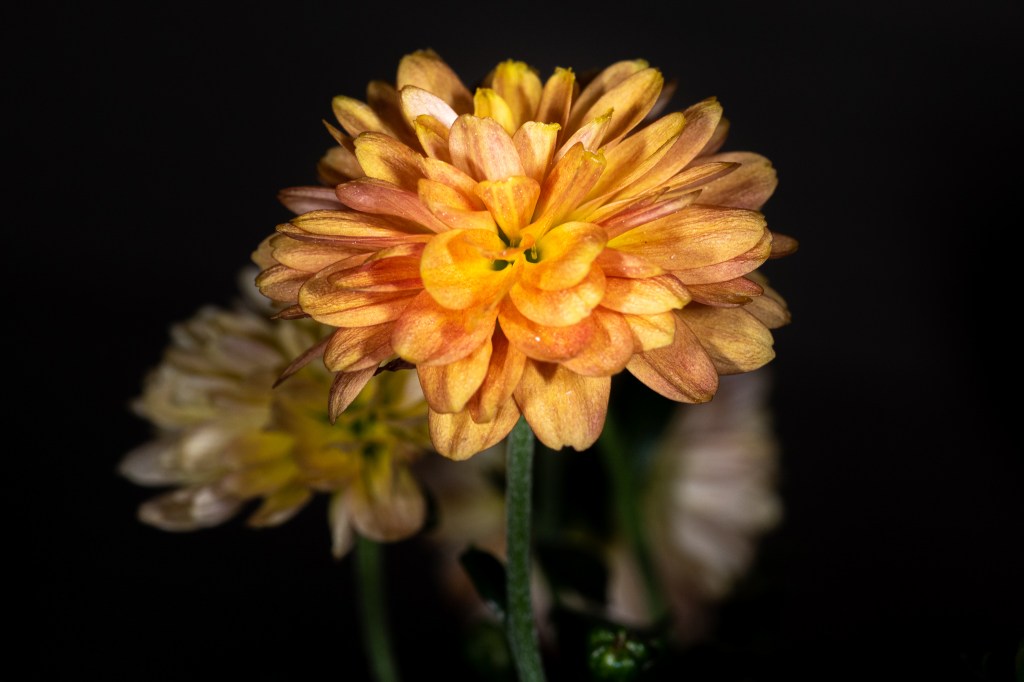
    Yesterday, we talked about learning to see. Once you learn to see the details you can start to learn to visualize your images. The photograph I have included above was not completed in Photoshop or Lightroom to give it the blackened background. I saw the flowers and knew the look I wanted, which was to isolate the flowers completely from their surroundings. All it took was a bit of a flash and a small aperture. One of the reasons I say you can start to learn to visualize we all know the frustration of having an idea for something but just can’t seem to pull it off. Another part of being able to visualize is being able to control your equipment to help you complete your mind’s eye vision.

    Learn how to use your equipment and be able to control it all the way to its manual settings. Just like any artist being able to control your tools makes creating your art much easier and much less frustrating.

  • Learning to see

    Learning to see

    One thing photography has taught me is to see and I mean really see. Photography has taught me to see the color temperature of light, it has taught me to see small details of things that many others walk past never noticing. This gained vision isn’t always a good thing, however. The ability to see can cause me to spend a lot of time working on “cleaning” up a scene once I have taken a photo which isn’t always possible or practical on location. I mean cleaning up by removing bits of debris that I believe distract me away from the intended subject, or stray hairs on a model. It also can cause me to become obsessive about seeing light fixtures with burned-out light bulbs or light bulbs of a different color temperature.

    All in all, learning to see the fine details I believe has caused me to grow as a photographer. Learn to see the details and expand your vision, you may be surprised at what you have missed seeing in the world around you.

  • Our greatest challenge

    Our greatest challenge

    Often our greatest challenge is ourselves. Self-doubt can be worse than over-confidence. Over-confidence may lead us to fail but self-doubt can lead us to not even attempt to try something.

    Years ago as a part of a job assignment I had, we were required to learn to repel off the side of a building. I have a fear of heights that have, at times, been nearly disabling so this was going to be a real challenge for me. On the day designated to meet for the training we show up at the training facility, an 80 foot repel tower. There were several levels of the tower but we were to ascend the stairs all the way to the top of the tower. I climbed slowly, staying on the inside portion of the open stairway. Ah, we made it to the top. After a brief bit of instruction, we put on our repel harness, who wants to go first asked the repel master? Well, it wasn’t going to be me. The first guy up goes over the side with another repel master and they start to descend when suddenly the first guy’s feet go up and he is hanging upside down about 75 feet off the ground, now I’m really not sure about this. Long story short, I made it down that side of the tower several times that day and this training and exercise became a yearly certification. I still don’t like heights but I can do them.

    What does all this have to do with our photography and artwork? Don’t let fear and self-doubt keep you from growing. It is okay to get outside your comfort zone with your art. It is okay to push the limits of your skill and knowledge. Sometimes self-doubt comes from the fear of never having attempted something, sometimes it comes from failing at the first attempts, but over time, training, and experience it can soon begin to fade.

  • Photography tips

    Photography tips

    I sometimes feel bad for people who are just starting out in photography. At times, it must be awfully confusing and frustrating. While it is often easy to find information the information can vary wildly, especially in social media forums and that is not even mentioning the so-called trolls who are just out there to cause trouble. You also have the snobs who love to talk down to new photographers. Most of the problem comes from social media but social media forums are often a first attempt to find information especially for new photographers and often for seemingly good reasons. A quick internet search for photography exposure tips leads to 12 million results but if I join a social media forum I can ask a question and get answers from people who have learned but. A question I saw in a Nikon photography group goes something like this, “I have a d800 I’ve been using for several years now. I’m having a hard time getting crisp photos out of it. I’ve recalibrated my lenses, and I still feel I’m not getting the pictures I should be getting. I’m wondering if having them professionally calibrated and the camera serviced would help.” There were a number of responses that were all over the place but no one asked what appears to me to be some crucial information.

    1. How did you have the lenses re-calibrated?
    2. Can you show us/me some examples of photographs with the following information, shutter speed, aperture, lens focal length.

    To me, this is important. If you re-calibrated your lenses yourself and don’t know what you’re doing you can really mess things up and it can be a user error. I have asked these types of questions before on similar posts and in many instances which are far too frequently met with little to no response from the person asking the question or the equivalent of hate mail from others, but that doesn’t stop me from trying to help others.

  • Greatest influence

    Greatest influence

    I sometimes think about who is/was the greatest influence in my photography. Many times I’m stuck in my effort to identify a single person. One of the first people to really influence my photography was a guy named Neville Elder. How did Neville Elder influence my photography? He was an instructor I had during my photography course. If you’re curious you can find Neville’s work here. Neville Elder was always supportive of the images I submitted to my projects and trust me not all were great or even good. Neville always provided honest feedback and offered suggestions for the next time, but he was also able to say something was good and leave it at that.

    While Neville Elder was one of the greatest influencers of my photography he is surely not alone. So many influencers are just everyday photographers I have met along the way. Some I still interact with and others have long ago moved on. I am constantly inspired by the members of a Facebook group I administer. None of the people who I believe have had the greatest influence on my photography are household names.

    The point I am wanting to make is that we can all be an influence in someone’s life without being famous. Create your work, share your photography with the world, don’t be a jerk, don’t be afraid to get out there you may just be the one that keeps someone else going.

  • Ego versus need

    Ego versus need

    As a new year begins I have resolved to stay on course to the goals I set late last year when I began this blog site. The goal I set when I began this blog on September 25, 2021, my goal was to share my daily thoughts about art and photography and sometimes life. So far, I have missed one day due to an illness. I did move to a different provider so you don’t see all my posts here. For older posts go to this site.

    Sometimes you may find that I will repeat a message and may even appear to contradict myself. I write what is on my mind at the time. Most of these posts are written first thing in the morning when I get up, which most mornings I’m up at about 4 AM.

    If I do repeat a topic it may be that a topic is important to me. It may be I have considered additional information. It may be something I saw, read, or heard somewhere which caused me to think about that topic again.

    Today my thoughts are about photographers and gear. I often have to chuckle not because it is truly funny but funny in a pitiable way when I see photographers talk about “upgrading gear”. Photographers so often say, “it’s not the gear but the photographer who makes great photographs” and yet these same photographers will also say something like, “A Nikon Z7ii or D850? Will be used for landscape and portraits. Have D5 for sports.” Note: Yes this was taken as a direct from a post I saw on social media. Now for those that don’t know, a Nikon Z7ii is a mirrorless camera with 45.7 megapixels and a Nikon D850 is a digital SLR with 45.7 megapixels. A Nikon D5 is a professional-level digital SLR with 20.8 megapixels. I know there are valid reasons to need 45 megapixels but. I often believe it is a matter of ego more than a need.

  • Photography the greatest art form

    Photography the greatest art form

    Photography, especially digital photography, has become the greatest art form ever! There I said it. Why do I believe this? I’m glad you asked. Photography, and specifically digital photography, is available to the masses. We have access to not only programs like photoshop but we have things like Instagram and cellphone applications that we can use to edit and create our artistic vision. Digital photography is available to nearly everyone. There are currently 6.37 billion smartphones worldwide capable of digital photography. There are roughly 1.05 billion digital cameras in the world. Together that makes 7.38 billion devices capable of digital photography and the world’s population is 7.9 billion people.

    I’ll grant you the quality of much of the photographs generated could be debatable but nonetheless, this makes photography the greatest art form ever just because of its availability to the masses.

  • Viewing art

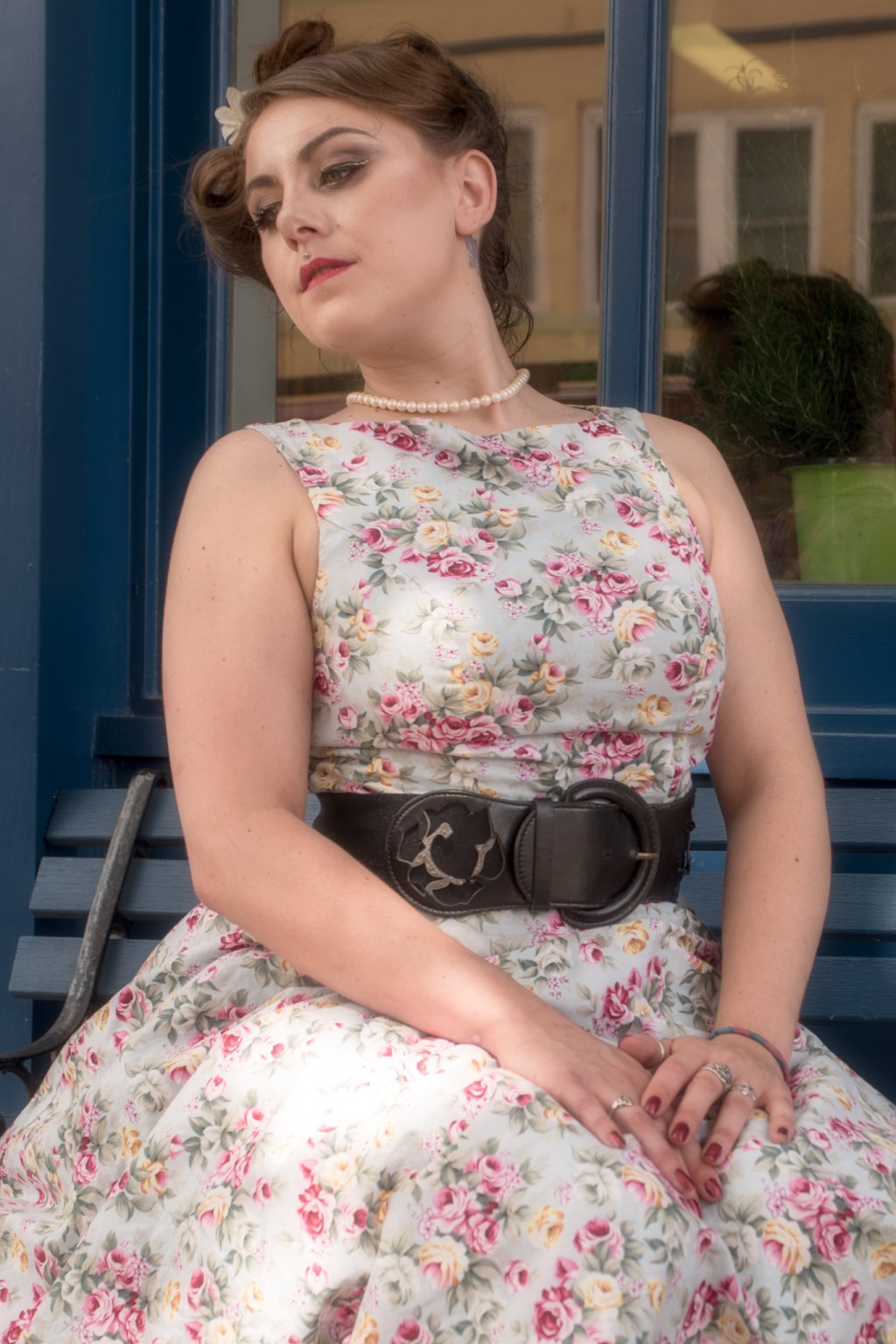
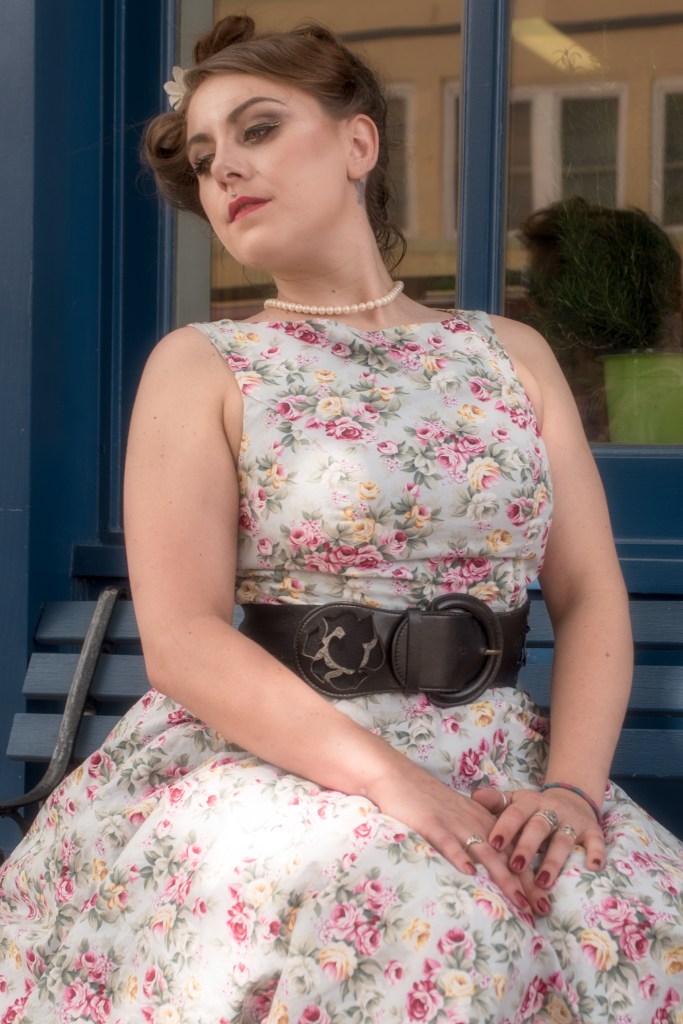
    How long do we spend, on average, viewing a photograph? The Louvre found that people looked at the Mona Lisa an average of 15 seconds! According to a study published in Psychology of Aesthetics, Creativity, and the Arts in 2017 the average person spends just over 27 seconds looking at a great work of art, Twenty-seven seconds!

    I set a timer for 27 seconds and viewed the above photograph for 27 seconds. I was amazed at how short of a period of time that was, and I’ve seen this photograph hundreds of times before. How do we get viewers to spend more time looking at our photographs?

    Look at these 11 eye-popping statistics on how content and technology are changing humans (as compiled in an infographic from WebDAM, below):

    • The average person gets distracted in eight seconds, though a mere 2.8 seconds is enough to distract some people.
    • 81 percent of people only skim the content they read online. (Usability expert Jakob Nielsen has written that the average user reads at most 20 to 28 percent of words during an average visit.)
    • People form a first impression in a mere 50 milliseconds.
    • An estimated 84 percent of communications will be visual by 2018.
    • An estimated 79 percent of internet traffic will be video content by 2018.
    • Posts that include images produce 650 percent higher engagement than text-only posts.
    • People are 85 percent more likely to buy a product after viewing a product video.
    • Posts with videos attract 3X more links than text-only posts.
    • Tumblr’s active user base has grown by 120 percent.
    • Pinterest’s active user base has grown by 111 percent.
    • Instagram’s active user base has grown by 64 percent.

    These numbers really get me thinking about how I can engage viewers with my photography. I have less than a second to make an impression and then less than 30 seconds to engage my story. This is why previsualization and planning are important when attempting to create a work of art or to engage our intended audience.