We see this debate virtually every day in photography circles, cellphone cameras versus “real” cameras, which is better? I see it far more often in groups that are primarily focused on digital SLR cameras, which often leads me to believe it is a way to feel superior or to justify their choice. For me, who cares. It makes little difference to me what tools you use to create your photograph. A good photograph is a good photograph regardless of how or on what device it was captured. Are we gear heads or are we, photographers/artists? I would like to think photography is more important. Think about it, our modern cameras are huge advances in technology from the cameras of 25, 30, 50, 100 years ago.
Let’s worry less about gear and more about the art.
I hear and read the word success a lot. That photo was a success, he/she is successful, become a success. Many times it is disguised in phrases like, published model/photographer. We all are proud of being a success but we must all define our own success rather than what defines others as a success.
Society has attempted to define success in financial terms. To become wealthy is often viewed as being successful. Being wealthy is an achievement but it’s only a portion of being a success, at least in my book. Success, to me, is a matter of achieving one’s goals, yes goals not merely a goal.
To me, creating art is a goal. Sharing my knowledge with others is a goal. Helping others to recognize and achieve their goal(s) is a goal. Having a safe and comfortable place to live is a goal. Having food to eat is a goal. Having a positive relationship with family and friends is a goal. Becoming a success, to me, isn’t just about opening one door but many doors. Establish your life’s goals and start opening the doors, once you do that your creativity will flow.
I recently watched a video asking if smartphone cameras were going too far. The author suggested that because some of the built-in AI (artificial intelligence) features were making it too easy to change an image, The author was suggesting that because an image could be modified and change a person’s appearance or could possibly superimpose a reference image onto your photo (the moon for instance) giving you a better result.
In the past, we have had the ability to manipulate photographs and could change any number of elements. In the olden days, it may have been more of an art with airbrushing and darkroom techniques but it was still possible. Today, we have the ability to perform all the old techniques digitally. There are abilities available today that may not have been possible in the years past but is it too far? Who decides what is too far? For me, I believe these are exciting times. We are opening up the creativity of many more minds and perspectives and putting it into the hands of the masses.
This morning was like most every morning. I get up and do my usual prep work before I start to write, make coffee, brush my teeth, do routine hygiene, turn the computer on browse the morning news, some social media posts. The first thing I see on my home page looking at news headlines was a link to “trending now searched”. Amongst the trending now searches were “famous photographers”. Okay, I’ll bite.
Most of the names from the link I recognized. I browsed through some of their works and then I thought, “what makes their works so much better or worthy of fame than my work or the works of others I know?” Yes, many were compelling photographs but they didn’t appear to be more compelling than many others I have seen from photographers who are displayed at the Museum of Modern Art. Is it marketing? Is it being at the right place at the right time? Is it time? Is it knowing someone (politics)? While it would be a great honor to have work displayed in some major art museum does it may our work any less than the so-called famous photographers?
I would venture to say that much of the work you and I do is just as good, often better than those we hold as the “masters” and famous photographers. I would also venture to say that we have the tools via social media and the internet to reach a much wider audience. We have the potential, with just a bit of work on our part, to become influential to current trends and the history of photographic art.
Support your local photographer, including yourself. It is easy to get discouraged, it is easy to lose your motivation especially as the colder weather moves in. I don’t mean financial support but moral support, encouragement. Most of us have a circle of friends or know other photographers or are somehow engaged with other photographers on social media. Start a conversation about some of their work, ask for input about some of your work, exchange ideas. As many of you may be able to tell I can talk to virtually anyone, but it hasn’t always been that way. One of my prior occupations sort of thrust the ability upon me. I then became an instructor and public speaker.
Photography can be a lonely hobby or business. We often go out on our own in search of our sometimes elusive photographs. Even if we go out with a group we wander off from each other to set up to shoot a scene. I believe we can often get better photography by talking with each other. We may have many different views of society, the world, art, politics, and other aspects of life but we do have a common ground in our interest in photography. By reaching out and talking with other photographers we may open our creativity to new ideas and concepts thus expanding our art.
I’m no different than anyone else. We don’t always like the hard truth. During my photography courses, we were required to submit photographs pertaining to the lessons for review and critique by the instructor. I was really proud of the photographs that I submitted and thought they turned out very well. Then I got the critiques from the instructor. While the images fit the requirements and guidelines of the project they were chocked full of technical issues and did I hear about it. It felt like a gut punch. Needless to say, I was very depressed and down about the first project, after all, everything I had heard before starting the course my photography was “very good”.
We all like to get compliments and support. Both keep us going, but sometimes we need to hear what is not so good. We need to hear about our errors, omissions, and failures. Not to bring us down or to belittle us but to help us recognize them so we can work towards growing and becoming better, should we so choose (I put that part in there because sometimes we just learn to accept some of our faults and failures). It is often very challenging to point out errors, omissions, and failures without being either too soft in our words or too harsh. Done improperly it can feel like we’re being belittled or picked on but it can also feel like it’s not important.
One of the reasons I stopped offering a lot of critiques is because far too many people either don’t want to recognize that there may be some components of their photography that need to be improved upon and would rather listen to the “likes” rather than words. When I do a critique I spend a lot of time looking at the photograph I’m critiquing. I make notes along the way. I then gather my notes and begin to write using the method I was taught in a course on critiquing photography. I cover what I thought to be good and bad. I offer suggestions on how the bad could be improved. I write about what I thought the intent of the photographer may have been. Then you get the “cute” comment and that is the only one that gets noticed. I should add that I’m not saying my opinion is better than anyone else’s opinion but if critiques are specifically requested, “cute” is not a critique, and when those become seemingly become more important than an actual critique the photographer really didn’t want to hear what may be the hard truth.
All that to say, sometimes we need to hear the hard truth. I can’t speak for others but sometimes I need to hear it. It keeps me motivated to do better, to become better.
Dads things. Remembering fathers where ever they may be.
Today, I started to think about what to write and I did what I normally do in the morning before I write which was to browse through my Facebook page to see what was discussed while I was “away”. One of the first posts I saw was one in a group run by a friend. The post was about a photographer reaching out to a friend to get a media pass to one of these local “fashion” shows. The photographer said her friend sent her a link where she could buy a media pass to be in the media area. The subsequent discussion was about how these so-called fashion shows are really only money makers for the promoters. Everyone else either pays or donates their time. I know I have mentioned this topic before but I believe it is worth mentioning again. Don’t work for free. All working for free will get you is more work for free. I know someone will say something about making connections but those connections are made, more often than not, with people who will want you to continue to work for free. Know your value.
Random thought two, is it overthinking or planning? There are times I decide on a photo idea. I may spend a couple of hours getting things set up. Positioning lights, objects, etcetera. Take dozens of photographs and when I sit down to look through them I don’t like any of them. Was it that I overthought the concept or was it a lack of planning to get it done properly? I know not every concept will be a success but when is it too much or when is it not enough?
Random thought three. I write this blog as notes to me. I rarely plan ahead of the article and write them each day. I don’t have scheduled posts set up and write a day or two ahead. As such, I often say what is on my mind. Some may agree with my thoughts, others may not but I suspect most of you have had similar thoughts. I love hearing from you and your thoughts about what I write, good or bad, agree or disagree. These articles are meant get me, and hopefully you to think about your photography.
Recently, I was listening to a photography podcast where the host discussed credentials, specifically, he was talking about photographers who list their certification initials behind their names much like PhD. His take and mine are so what. I’ll make a play on a quote from Jerry Maquire, “show me the work”.
Education and demonstration of knowledge are important, but does it matter where or how? I know I have blasted the University of YouTube in the past and probably will continue. Not that YouTube isn’t a valuable tool when used properly. It can be as much and at times more valuable than books but it can also be a disaster waiting to happen.
I got a photography education from an online school. It was a self-paced course that took me about 2 years to complete a bit shorter than average for the school. Does it matter that I got a certificate on the wall? Maybe. It made a difference to me and my work. In reviewing images I took prior to the course to work towards the end of the course and since, it has made a huge difference. For me, had it not been for the school I would likely have not learned much about flash and studio lighting or light modifiers. I would have probably not become begun to work with models or portraits.
I recently posted about the bar having been set too low for professional photographers and I believe it has and that always raises the question of having some sort of certification process to go through before being able to call yourself a professional photographer. Even if such a process were required it wouldn’t stop the GWAC (guys/gals with a camera) from charging people for portraits nor would we want it to stop them, at least I wouldn’t want it to stop them.
I have been a member of a professional photographers organization. There are some great benefits to joining one but there are also some things that aren’t so great. One of those “not so great” things, to me, was the mindset that the membership and organization was better than everyone else. Granted, there are some people who were members who were fantastic photographers, but those people would have been fantastic without the organization. It all comes down to show me the work.
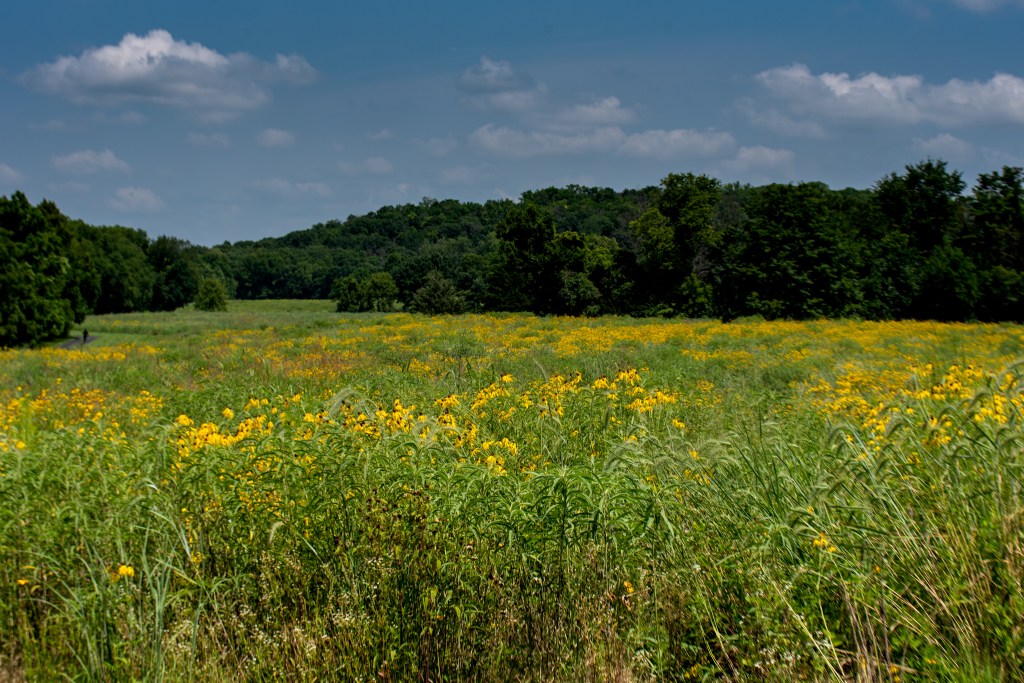
“There’s nothing interesting to photograph around this part of the country.” I once had a person say this to me. They continued, “there are no mountains or oceans” as if those were the only types of landscapes that were interesting. While mountains and oceans can certainly be interesting it doesn’t mean they are the only worthy subjects of landscape photography.
About 10 years ago, while visiting a city on the east coast, I talked to the bartender at my hotel and mentioned we were going to drive out to the ocean which was about a 5 to 10-minute drive. The bartender’s response was, “I haven’t been there in years.” A couple of years later my wife went to a training seminar near the Rocky Mountains. The room that was being used for the seminar had large windows where you could see the mountains. One of the locals said, “Yeah they’re there every day.”
I work around little children virtually every day and have younger grandchildren. The children continue to see the wonder and interesting things every day, even though they saw them yesterday. At some point, the children lose their sense of wonder of ordinary things just like us. Maybe, we should be more like the little children to see the wonder in the world around us. We don’t have to stop traveling to exotic places but think how many more wonderful things we could see even in those exotic places if we can still see the wonder and interest in ordinary things.
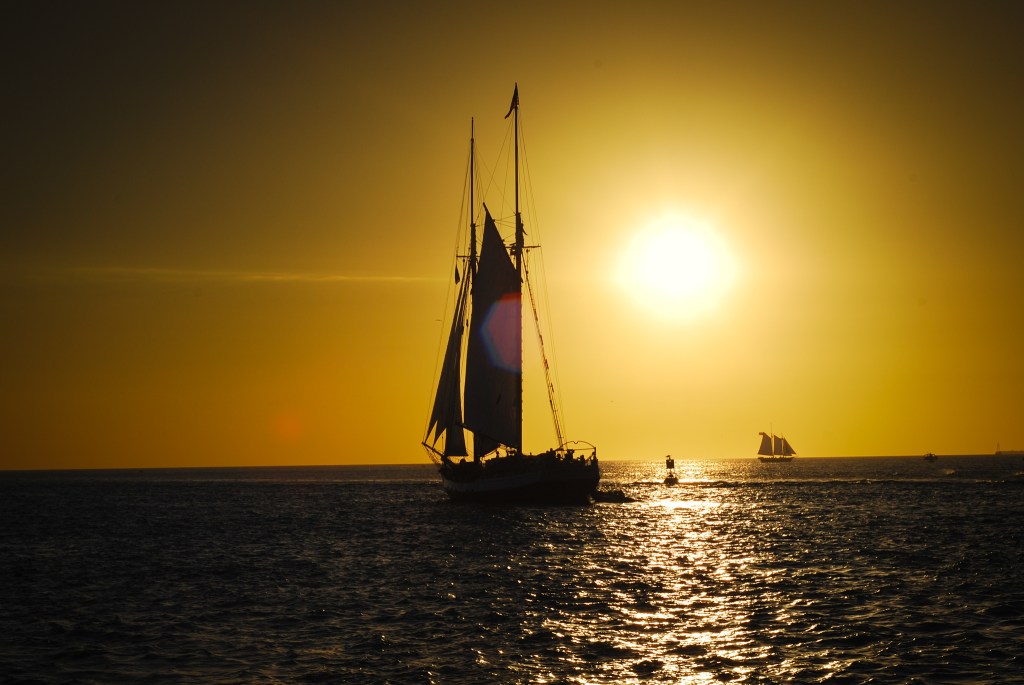
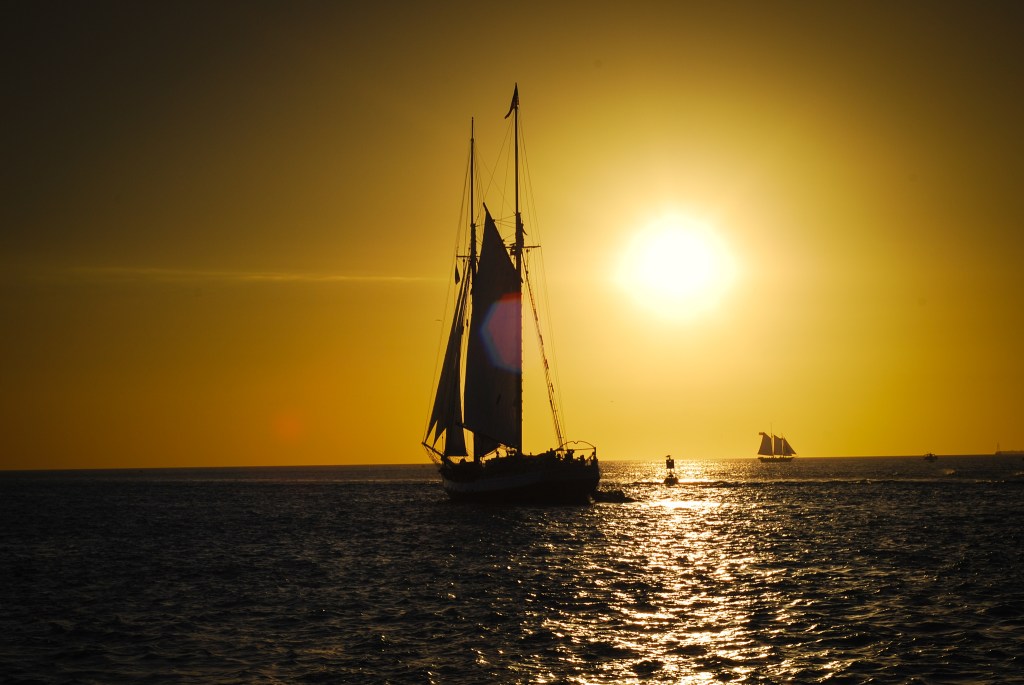
I find the great thing in this world is not so much where we stand, as in what direction we are moving: To reach the port of heaven, we must sail sometimes with the wind and sometimes against it – but we must sail, and not drift, nor lie at anchor.
Oliver Wendell Holmes, Sr.
Not only does this apply to everyday life but also to our photography and our growth as an artist. The key to achieving our goal of arriving at the port of becoming a great photographic artist is to keep sailing. Moving towards the direction of the port. There may be times we get lost at sea or encounter a storm but sail on we must. As an example, yesterday I broke out the light meter. My light meter has many options available other than just reading incident light, reflected light, and flash output. I set correction values based on the use of filters. It can display exposure values and give readings in a variety of measurements. I had forgotten how these things worked. I’d become lost at sea. So, my solution was to break out the map, the manual and to relearn the things I had forgotten. The next thing I realized I had not done in a long time and had nearly forgotten was how to use my cable releases and the bulb setting on a camera. All this got me thinking about what else I had forgotten and become lost or off course to the port.
Not only do we need to break out our manuals and refresh our memories about some things periodically but we need to also look at our charts (previous work), and maps (concepts and ideas for future work). I then realized I have charts but haven’t any maps. I come up with ideas, but I rarely write them down and if I do write them down, I file them away and don’t revisit them.
Now, I have broken out my charts, maps, and put up the sails. How about you?

 Photographer Clay