Category: Uncategorized

  • Learn to post-process to see details

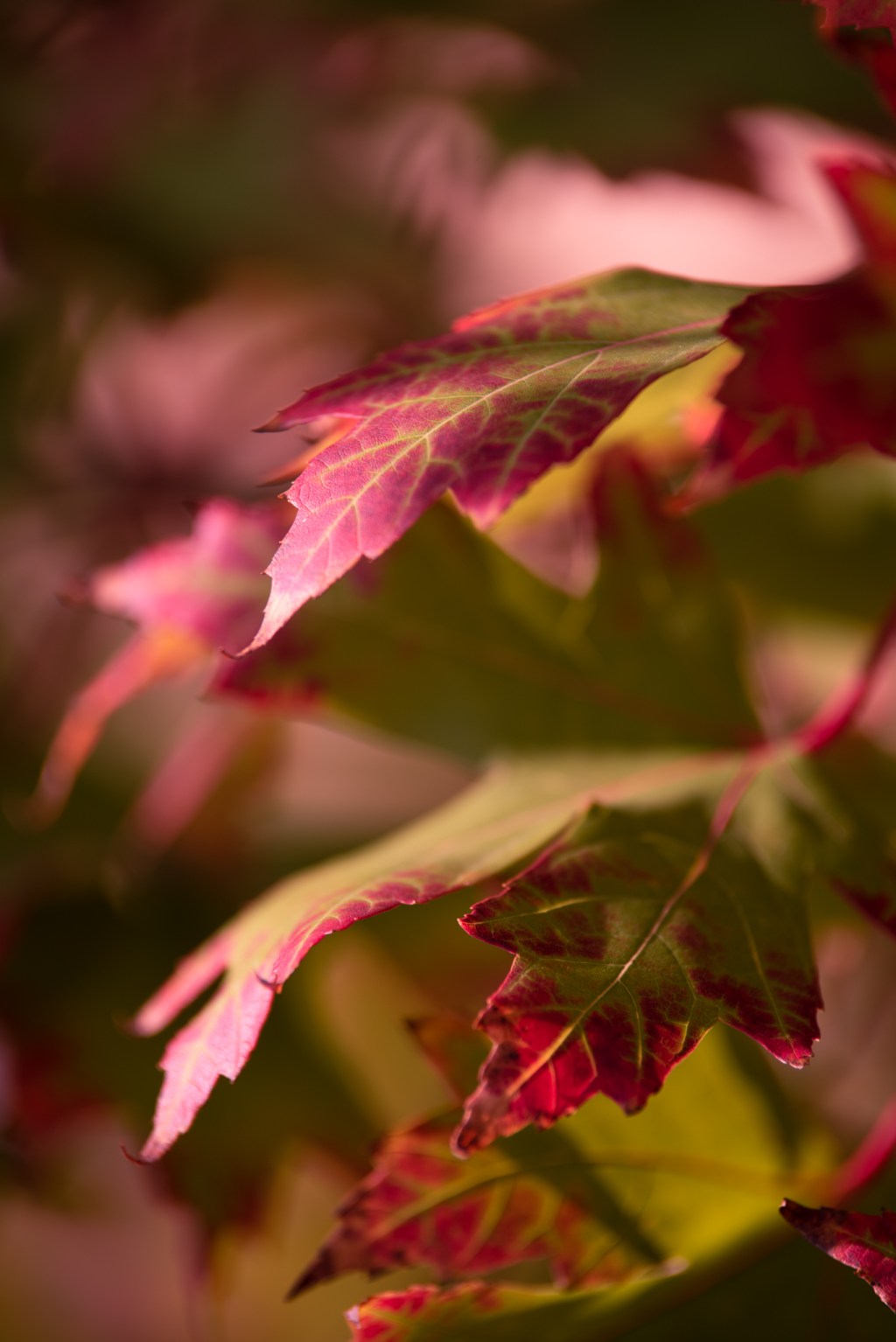
    One of the benefits I get out of post-processing my images is that I can see and refine details of an image. Sometimes seeing the details reveals a distraction such a litter or other object that pulls the attention away from my intended subject. Some of those distractions I may have missed when I originally decided to photograph a subject or scene. Some of those distractions I may have seen but it wasn’t practical to remove or correct it at the time. I don’t mind altering a scene because I prefer to depict a subject or scene as I see it in my mind’s eye.

    I encourage you to learn post-processing your images and learn to see the fine details more closely. Think of it as training your eyes and mind to see both the big things in the world as well as the fine small details.
  • Obsess over results not gear

    Obsess over results not gear

    We all love our camera gear and high-quality cameras and lenses. I see so many social media posts about photographers obsessing over gear when we should be obsessing over high-quality photographs. Gear can be important but we can get high-quality photographs with virtually any gear. I like fancy camera stuff just like many but I love great photographs more and could care less about what equipment was used to create the great images.

    A few years ago I had a conversation with a beginning photographer about using a so-called kit lens. The new photographer was asking about getting a better lens because they were unable to get sharply focused photographs with their kit lens. I explained that it was possible to get good photographs with their lens and used a kit lens to show them examples. We even did the pixel-peeping on the resulting images. We talked that it was technique and knowledge of how to use their camera settings to ensure sharply focused photographs. I mentioned that while the so-called kit lenses may not be as fast or have as robust of a build as the professional-grade lenses modern consumer-grade (kit lenses) were very good with modern glass elements and coatings.

    The advice I give photographers, especially new photographers, who are looking to get new equipment is to decide how your current camera or other equipment is limiting your creativity. Learn to use your camera equipment to the fullest and then push it further. You just may learn that it truly isn’t the gear that gets great photographs but rather the person operating the gear.

  • What is reality?

    What is reality?

    We often hear something like, “I like to take photographs that capture the scene as it exists in reality” and this is often from the so-called photographic purists. But exactly what is reality? Whose reality? There is a saying, “perception is reality”. While perception isn’t exactly reality, perception can become reality, but does it make any difference to us as artists? Yes and no.

    First of all, let me clarify something, I believe I am an artist who uses a camera to create my works. I can also be a documentary photographer when the need arises. So when I am wearing my artist who uses a camera hat, which is most of the time by the way, how I perceive a scene of the photograph is most important. I want to record how I perceived a particular scene or subject. Let’s face it, a large percentage of actual reality is boring and uninteresting. To me, reality in my photographs is what I want to make of it not what someone else perceives as reality.

    One of the masters of photography has three quotes that come to mind, “You don’t take a photograph, you make it”, “dodging and burning are steps to take care of mistakes God made in establishing tonal relationships”, and “when I’m ready to make a photograph, I think I quite obviously see in my mind’s eye something that is not literally there in the true meaning of the word. I’m interested in something which is built up from within, rather than just extracted from without.” So, when it’s time to create remember those three phrases.

  • Do you need a photo website?

    Do you need a photo website?

    Do you really need a photography website? I have one and over the years I have moved from service to service but do we really need one? If you have a site how much traffic does it get? Do you even know or care? The service I currently use is part of my Adobe Creative Cloud subscription except that I pay for a custom domain name. It’s been a long time since I have run analytics on my photography website so I also don’t know the answer to the questions I just asked about my own site.

    For me, I may not need a photography website but rather I want one. It allows me the ability to quickly direct people who may ask about my photography. I’ve been approached by strangers on the street while I have been out with cameras and asked about my photography so I keep a personal business card with my website address. I also have acquired somewhat of a following albeit not large. I believe a website is important because it is the whole point of photography to show others the world around us and how we see it. If you don’t have a website you may consider getting one. Showcase your work you may find there are those out there who want to see what you do and you just may inspire someone.

  • The business of selling photography as a business

    The business of selling photography as a business

    Photo by Andrew Neel on Pexels.com

    I don’t know about you but I see these types of blogs and advertisements for workshops, books, and training all the time. Starting a business to teach people how to start a business appears to be a big business. At the same time, I see lots of posts on social media about how a person has started a photography business and is having trouble with a customer and asking for advice on how to deal with a difficult customer. Seems to me we’ve put the proverbial cart before the horse. It seems to me that deciding how to deal with difficult customers should have been decided at the time the business was established.

    The reason this topic comes up is that I, like many, considered the idea of beginning a photography business but I didn’t want to limit myself to a particular genre of photography. I also realized that a huge percentage of the time to run a photography business doesn’t actually involve taking photographs. Do we, the world, really need all the weekend photography business warriors or are those business models shortlived? Trust me, I admire people who establish an actual business and make it but I don’t think it is something many photographers should pursue.

  • Have we ruined the term amateur?

    Have we ruined the term amateur?

    I believe we have ruined the term amateur. The term origin:

    Of French origin, ‘amateur’ originally denoted a lover of art and, by implication, often a collector. French sale catalogues of the 18th century were frequently of the collections of ‘un grand amateur’. By the end of that century, however, the word had taken on a different meaning in English, describing someone who practised art for pleasure and interest, but not for money, i.e. professionally. Amateur artists usually worked in the graphic media—drawing and watercolour—in which they received instruction from drawing-masters or drawing manuals.

    Oxford Reference

    Today the term is typically defined as one lacking in experience and competence in an art or science which is the second definition of an amateur at Merriam-Webster, where the first definition is still one who engages in a pursuit, study, science, or sport as a pastime rather than as a profession. Is it that we have grown to admire the pursuit of a venture for financial gain over that of the love of it? How do we get back to a time when being an amateur at something doesn’t bring up the initial thought of not being as good as a professional. Does being an amateur make you think someone isn’t on the same level as a professional or is it just me? Should we even care how the term is perceived? Should we start new terms such as advanced amateur, master amateur, skilled amateur, or amateur because I don’t want to be a professional?

    The more I have thought about my photography journey the more I have reconsidered how I classify myself. I think I’ll start calling myself a master amateur photographic artist.

  • Photography today is the greatest

    Photography today is the greatest

    Photography today is the greatest ever because it is everywhere. Think about it. Everyone with a cellphone has a camera. Not including all the people with cameras. Digital cameras have put the power of photography in the hands of everyday ordinary people just like Kodak’s Brownie box cameras but today we get instant gratification and don’t have to wait for the developed film and prints to come back. While the quality may be questionable of some of the photographs taken today photography is everywhere every day. It has been estimated that there are 1.8 billion photographs taken every day. 1.8 billion. Two hundred and eight thousand (208,000) are uploaded to Facebook every minute.

    My point with all this is that we are seeing a great photographic revolution right before our eyes and so much creativity from cellphone photographers and cellphone photo editing apps. Those of us who use dedicated cameras and software needs to keep up with the creativity. Let’s create some fantastic art in the coming week and share it with the world. Let’s do this thing!

  • Focused on the wrong things

    Focused on the wrong things

    I started a bit of a conversation on social media yesterday about how many photographers are too obsessed with the wrong things. It appears for the last few years many photographers are obsessed with how sharp a lens focuses and/or the out-of-focus area, I shudder to use the term bokeh. Shouldn’t we be more obsessed with composition and subject?

    I see many many photographs every day. The photographs I see range from being taken by beginners to professionals. The photographs I see every day range from macro to landscape, from nature to portraits of people. It often pains me when I see a beautiful portrait of a person and the first comment I see goes something like, “this is absolutely stunning bokeh!”. For the love of Ansel Adams! This is a stunning portrait of a beautiful person and the first thing you notice is the out-of-focus area! All the dead masters are turning over in their graves!

    The same goes for the sharpness of a lens. Yes, sharp focus is important. Yes, some lenses have better resolution than others, but super sharp and high resolution are not always best in my opinion. Photograph a female model and during the retouching process to remove blemishes and stray hairs and then you notice all the fine facial hairs, every skin pore, every slight blemish. While it may be a true representation of the person it is not how our eyes and minds see them.

    Let’s get back to where we are more concerned about composition and subject rather than the blurry area and how super sharp a lens represents every minor detail of everything in the world.

  • Breaking the cycle

    Breaking the cycle

    I started with another topic in mind today but as I poured my morning coffee I noticed a change in my Twitter feed. (By the way, if you don’t follow me on Twitter you can find me at @SwatzellClay.) The change was I now had started to get followers that were not just fake accounts. I was now being followed by Sharky James from the PetaPixel Photography Podcast. Suddenly, I thought there is a way to break the cycle. The current cycle I need to break, and I suspect some of you may need to as well, is to get my cameras out and get some photography done. I find myself far too caught in the cycle of coming home, sitting in front of the television and just doing nothing or if I go into my camera and computer room I sit and dawdle about never really accomplishing anything.

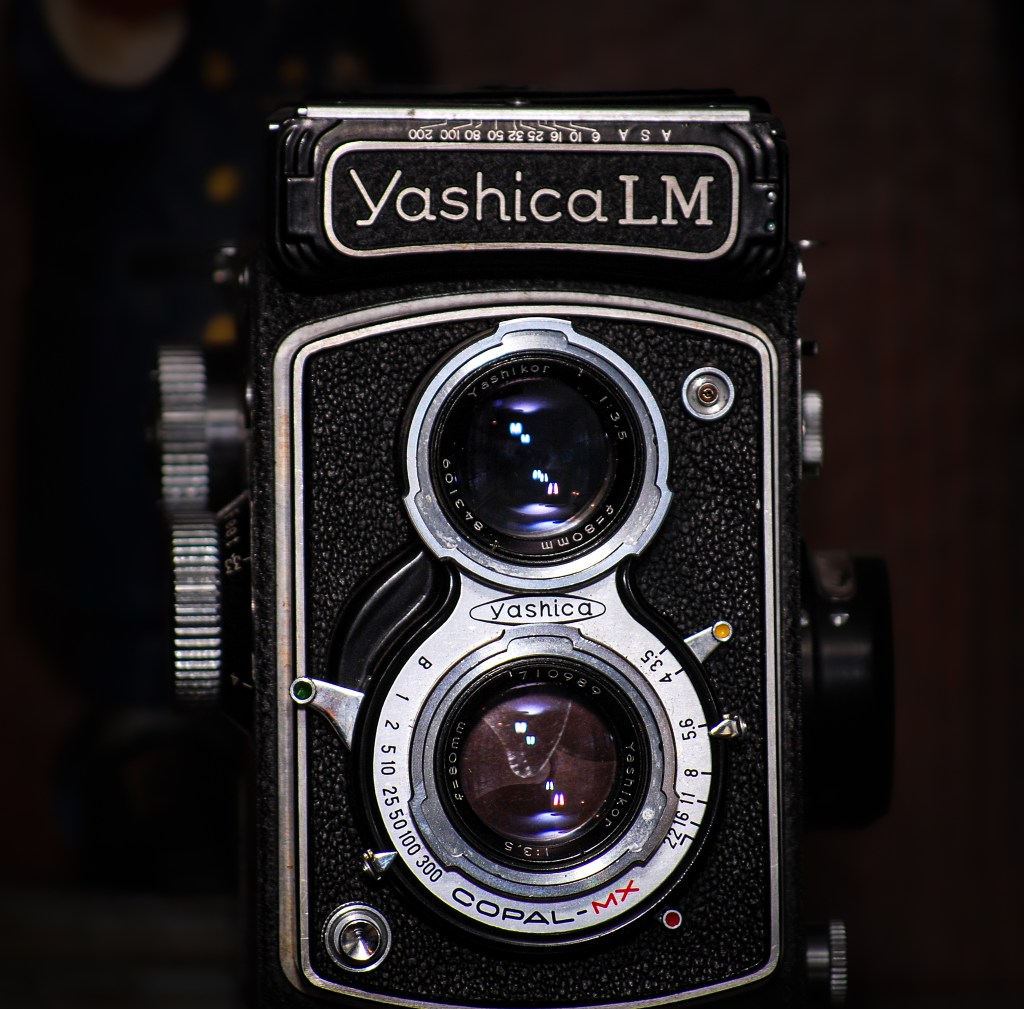
    I’m not sure how I got followed by Sharky James but something must have stood out to catch his attention. What I do know is how I’m going to start to break the cycle of dawdling about with my photography. I have three camera bodies, not counting the collection of antique cameras. I am going to dedicate one of them to a carry about camera, like I used to do. I’ll also dedicate a 50mm lens as my carry about lens. I’m sure some of you may only have a single camera and don’t want to dedicate it to carry about daily but consider it. You could also consider buying an older camera body and an inexpensive lens to dedicate. It’s worth a try if you’re stuck in the cycle of not getting as much photography done as you would like. I know we can use our cellphone cameras, which have become better and more fully-featured but sometimes it just doesn’t feel like photography.

    Try carrying a camera about to break that cycle of not getting your photography back on track.

  • Why the rules don’t matter

    Why the rules don’t matter

    The rules of photography don’t matter! There I said what I said! Artistic vision matters. Audience engagement matters. There are volumes of books and articles talking about the rules of composition, rules of exposure, rules of sharpness, rules of white balance. While these may be important to understand I find it mundane once you grasp a rudimentary understanding. To me, the worst part is this is what we teach! We don’t teach or teach as much as we should, challenge the rules, innovate, create YOUR vision and YOUR rule.

    One mistake I made in my younger days is not studying art. Where I grew up I believe influenced the reason for not studying art. It wasn’t considered manly. Fast-forward to today and I enjoy studying art, music, philosophy. While art and music have their versions of the rules look at the number of rule-breakers. Philosophers have spent time questioning the rules in an attempt to understand the reasoning. There are those who would argue that the rules are based on how to best make the subject or overall image or project stand out but then aren’t we just one of the crowd?

    Use your artistic vision to fulfill your creative desire and to hell with the rules.