We see an abundance of ways to sell photographic art, but does anyone really buy photographic art? I’ve been to fairs and community art shows where photographic art has been offered for sale by the artist. Some of the work is absolutely great, some eh, it is okay. What I don’t really ever remember seeing at these events is anyone actually buying a piece. The artist must sell something as the cost of the prints, framing, the booth, etcetera could get expensive. There are also a number of websites and online stores where an artist can put their work for sale. Who buys this stuff? I’m sure there are buyers out there. Do you create art hoping to sell? Do you create art for yourself? Do you create art for yourself and other art to sell? Do we research our audience? Do we care?
I’ve been to many houses of people who don’t have photographic art or paintings on the walls. They have wall art but not what would be classified as photographic art or paintings. Some have portraits of family members in their houses. In my house, I have nearly a dozen pieces of photographic art on the walls and I don’t mean portraits of family members. We also have a couple of paintings on the walls created by others. Is it a generational thing? Is the practice of putting photographic art and paintings dead or dying? Do we, the artists, have to follow the trend of what is popular to maintain interest in art? So many questions to ponder this weekend.
Artifact, blown out, bracketing, chimping, fast aperture, glass. The list goes on and on, many photographers know the terms, but some, especially new photographers do not. As one who has taught beginners, the terms are sometimes confusing and cryptic.
Some of the terminologies are valid, some not so much. Some of the lingo, to me, is rubbish and often meant to an attempt to separate those “in the know” from newbies. Social media and texting haven’t made it easier and have amplified the problem. There are times I have to look up acronym because I have no clue what it means.
Why do we do this? Is it an attempt to make us appear to be smarter? I can understand certain acronyms and terminology when talking amongst peers. It’s easier to say NASA rather than National Aeronautics and Space Administration, but is it really that much easier to say ACR rather than Adobe Camera RAW?
I often wonder about the future of photography. In the past, the advances were often film-based, maybe rendering colors better, lower ISO, higher ISO, less grain, etc. Today, we have megapixels, gigapixels, artificial intelligence, digital sensors with light sensitivity that was previously unimagined (upwards to 102,400). We have software that can automatically detect faces, people, subjects, skies, and objects. Our cameras can do focus tracking, and if we so choose they can even set their own shutter speed, aperture, “film speed”.
To some, we have made photography too easy. To people like me, I’m somewhat a geek and nerd who loves technology, it is exciting. It may be true that some tasks may have become easier the artist utilizing this modern technology needs to continue to master their tools and create photography and art that rivals the advancement of the tools we use.
I don’t make a significant amount of my income from photography or photography-related ventures but I sometimes wonder if we, the photography-consuming world, have set the bar too low in our expectations of the “professionals”.
I put professionals in quotes because I believe the term professional photographer has become a very loosely defined title. We have loads of “professional” photographers who are weekend warriors. Please don’t get me wrong, there are lots of very good part-time professional photographers who work their photography business as a sideline. Where I believe we set the bar too low is when it comes to people who are charing money or items of value who, often admittingly, have no clue what they are doing.
While I may no longer be working as a professional photographer I still belong to a number of groups and organizations that cater towards the working professional. I see posts and questions on a daily basis regarding situations or issues that are very basic. We all have questions from time to time. It may be something we’ve never encountered before. As an example a few weeks ago a “professional photographer” posted some examples of photographs taken during a family portrait session and they couldn’t figure out why everyone was so dark. The photographs were taken outdoors, on location, during daylight hours. A quick look at the photographs it became apparent that the camera had likely been set on a matrix metering as the background, which was likely very bright at the time, was well exposed with no blown highlights or overexposed areas but the people in the foreground were much darker, near silhouettes. Several other members pointed that out to the person posing the question. It isn’t that the photographs were the issue, the issue, to me, was the photographer didn’t know what “went wrong”.
I don’t mean to come across as an elitist, I certainly don’t intend to sound as such. I just believe that before one begins to call themselves a professional there is a particular level one should reach beforehand.
The photographic artist and the student and I don’t mean the photographic artist is teaching a student, rather the photographic artist as a student. For me, when I took up photography and even more so when I began to designate myself as a photographic artist I became a continouse student.
I read articles, blogs, and books on photography virtually every day. I listen to photography podcasts. I study photographs, techniques, and light. I can’t even watch a movie or television show without wondering about the lighting techniques and color grading that was used to give us the final version of the movie or show. Some may believe this mindset is obsessive, execssive, or extravagant. Others may just understand it.
I wasn’t always this way. I don’t know what the turning point was nor do I remember when this came about. I’m not sure it really matters as it doesn’t interfer with my daily life other than I often see things many others ignore. I see how light and shadows vary, I see how some lighting conditions enhance subjects or give a different mood or emotions. As an example, I often hear people say, “what a gloomy day” when it is slightly overcast, light rain, and perhaps a bit on the cool side. To me, colors and reflections are enhanced, soft shadows, and perhaps a great time for dramatic street or on location portraits. In other words, I see those so-called “gloomy days” as something that is photographicly wonderful.
If you want to take your photography, or more appropriatly (in my head) your photographic artistry to the next level, expand your vision by studying all the photography you can and pay especial attention to light and how it plays in the world around you.
In doing a bit of research there has been a lot written on the topic of whether photography is craft or art. A Google search showed 155,000 hits on the topic. Most of the articles I discovered were supportive of photography being art. I suspect this was the case because most appeared to have been written by photographers.
Photography as a craft
There is certainly craftsmanship involved with photography. You must learn how to operate the tools. Just like a carpenter we have a number of tools at our disposal. While we may not be using hammers, saws, or drills we do use camera bodies, lenses, lighting, light modifiers, and more. Modern photographic tools do help with a number of automatice settings, but using automatic settings likely takes both craft and art out of the picture. As a true craftsman we must learn to control our tools ourselves.
Taking photography to the level of art
Okay, so many of us have learned to control our camera, lenses, lights, and all our other tools. Have we reached the level of our photographs? Not necessarily.
So how does photography reach the level of art? This has been and continues to be a much debated topic. There are those who would argue that photography can never become art like painting, sculpture or any number of the so-called traditional arts. Is that because photography is a fairly recent innovation? Is photography really that recent? The camera obsura was invented in 1021 CE, the first portable camera in 1685 CE, while the first actual photograph didn’t come about until 1826. So if we go back to the origin of photography we certainly must include the camera obsura making photography something that has been around for 1,000 years, at least in concept.
On the other hand, many would argue photography can reach the level of art. Merriam-Webster defines art in a number of ways, such as:
1. Something that is created with imagination and skill and that is beautiful or that expresses inportant ideas or feelings
2. skill acquired by experience, study, or observation
3. the concious use of skill and creative imagination especially in the production of aesthetic objects.
Are you a photographer or a photographic artist? I used to think of myself as a photographer and for many years that was an accurate description. I would take photographs and with minimal effort afterward put the image out in the wild. During the past 2 or 3 years, I believe in my own humble mind, that I am more of a photographic artist.
What is a photographic artist
Photographic art and fine art photography are very loosely defined.
.Photographic art or fine art photography is a loosely defined genre. One definition I have found is “photographic art“, “artistic photography” and so on, the term “fine art photography” has no universally agreed meaning or definition: rather, it refers to an imprecise category of photographs, created in accordance with the creative vision of the cameraman. The basic idea behind the genre, is that instead of merely capturing a realistic rendition of the subject, the photographer is aiming to produce a more personal – typically more evocative or atmospheric – impression. One might simplify this, by saying that fine art photography describes any image taken by a camera where the intention is aesthetic (that is, a photo whose value lies primarily in its beauty – see, Aesthetics) rather than scientific (photos with scientific value), commercial (product photos), or journalistic (photos with news or illustrative value).
Fine-art photography is photography created in line with the vision of the photographer as artist, using photography as a medium for creative expression. The goal of fine-art photography is to express an idea, a message, or an emotion. This stands in contrast to representational photography, such as photojournalism, which provides a documentary visual account of specific subjects and events, literally representing objective reality rather than the subjective intent of the photographer; and commercial photography, the primary focus of which is to advertise products, or services.
I decided to call myself a photographic artist and my work as photographic art because I don’t just “snap” a photograph with my camera and throw it into the wild without ensuring the image portrays the look and feel I want the viewer, even if it is just me, to experience. To achieve the look and feel I wish to portray may involve a significant amount of post-production work in photo editing software, it may involve creative lighting, or it may involve manual adjustments to camera settings. It often involves all three.
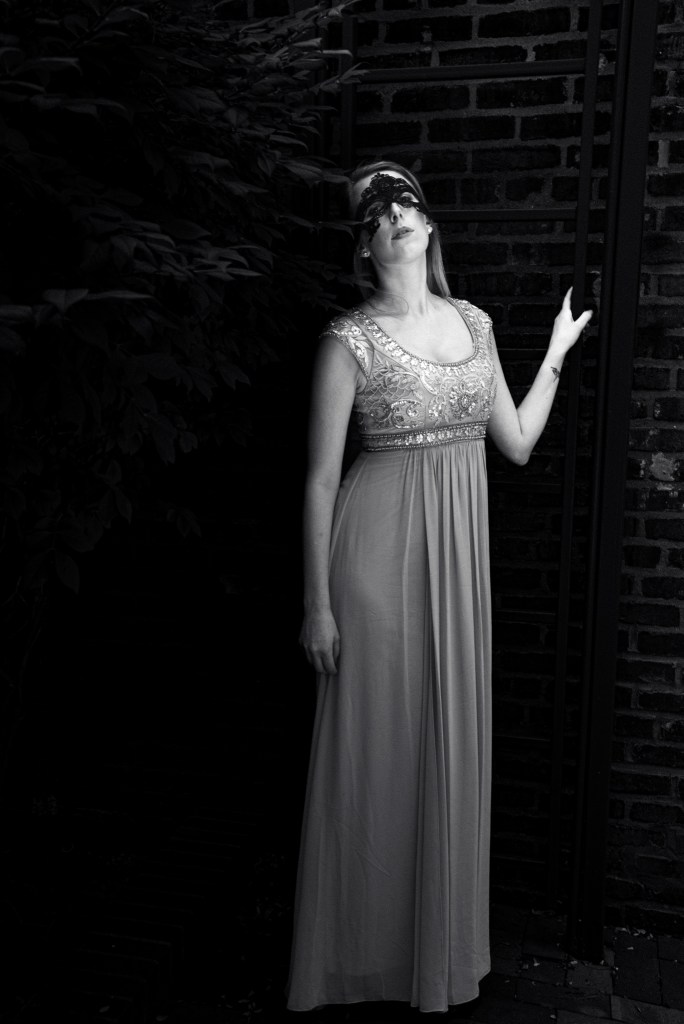
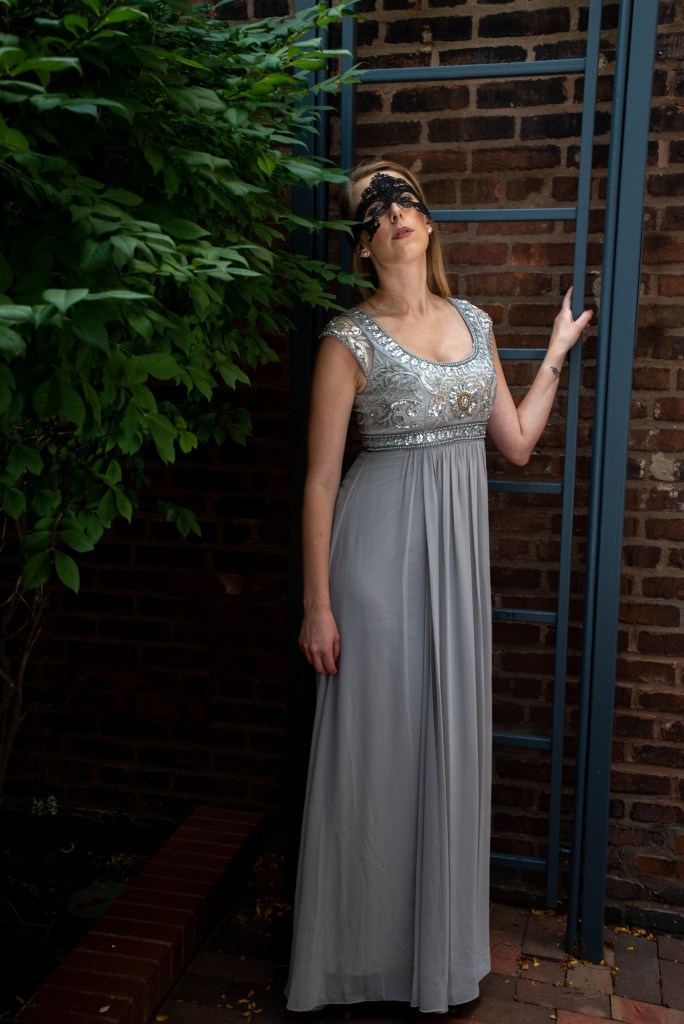
Many of you have seen the photograph above from a Facebook post in the group The Digital Photography Forum. Where I posted the final version compared to the original.
Original image Final photographic art version
I take these steps with nearly all the photographs I produce not only just portraits but landscapes, still life, macro, sunsets, pets, you name it.
Changing reality
Some would argue I’m changing reality but I argue perception is reality. I used to loathe that term as it frequently appeared to work against me but if we expand on that term a bit it makes more sense.
Even in the so-called straight photography the photographer, to some extent, alters reality. We can alter reality by the choice of lens we use, the choice of the aperture, the choice of shutter speed, the choice of metering, the choice of composition, and so on.
Perception is reality
Reality is an individually defined state. Two people can look at the same scene and the same event and have two different perceptions of what they see or happened based on their life experiences. This doesn’t make either view more or less realistic just different.
Photographic art versus photography
I used to take offense when someone referred to my work or the work of others photographic art rather than photography if they did post-processing. Nowadays, it’s a compliment. I’m an artist not merely a photographer.
What is the cost of your artwork? Do you even attempt to calculate the cost of your work? Do you figure the cost of your artwork? Some would say, “well I do my artwork for me and if others enjoy it so be it”, but what if someone wanted to buy it? How would you price the piece? Would you just throw out a number? I know many have a set rate based on their actual cost of doig business but did they use real data to calculate that? I’m sure some did, others maybe not, but what about us, the hobbyists or “weekend warriors”? Do we base a number on our hourly rate of pay? Do we base it on hour overtime rate?
There are internet stores that you can upload your artwork to and open an online store for potential customers to browse and buy your artwork. The internet store has a base price they established and then it allows you to ad your markup but how much is too much or how much is too little?
Many of us, have fixed costs we can calculate, such as the cost of Photoshop/Lightroom, which I caluclate at 32.8 cents per day based on the $9.99 price plan, not counting sales tax. We can project the cost of our computer based on let’s say a replacement every three years, or did you even figure that cost in?
The whole point of this post is to get me, and hopefully others to, at very least, think about how you price your photography and artwork.
Working for exposure is often a hot-bed topic. Some people do this frequently, some do it from time to time and some never do it. I submitted some images from a photo session with the metal band Harvest the flesh and the Metal Maidens, The images were submitted to an online magazine where they were published. My pay, zip, zero, nothing, nada. While it was an interesting, somewhat entertaining photo session it was the last time I did something “for exposure”, where the only person who made money was the online magazine.
I do photo sessions as a trade for time sort of thing where it benefits both me and the models for use in our respective portfolios, so that isn’t what I mean when I say I don’t work for exposure. To me, if anyone makes money from an event or photo session, we should all make money. Some people would argue that doing some sessions for exposure allows you to make “connections” but I would counter that with you can still make connections without the free work.
I get it, creatives are often asked to work for free. Models, ah, you just have to wear the clothes, walk and stand. Photographers, you just pus a button.
In my area, we are innudated with these so-called fashion shows where models and photographers work for free. I recently saw a person wanting to do a free session but wanted someone with tuxedos to allow them to use the clothes for free. The only person making money is the show’s promoter. While some of these may be fun, they can also be a lot of work and at the end of the day, I only put money in someone else’s pocket.
While it may not always be about making money it often comes to would I rather be making someone else money or making art for me. I would love to hear your thoughts on the topic of working for exposure.
Like all growing, growing as a photographer we may experience growing pains. Sometimes it comes at the cost of a negative critique, the temporary loss of motivation or inspiration. The pain of change and experimentation that doesn’t work. Again, like all growing, there are many advantages. Your art becomes better, more mature. You are able to see deeper into your subject and express yourself more openly.
This growth may not come easily. It requires change and change can be scary. If we change we don’t know what the future holds for us. Will people like the change? Will I like the change?
So how do we grow as a photographer? For me, it has been looking at the work of others, both good and bad. It has been looking at my previous work and developing a plan to improve upon what I have done in the past. It has been listening to photography podcasts, reading articles and books on photography. It has been learning new techniques and skills in Photoshop and Lightroom, but greatest of all it has been getting the camera off the shelf and just trying something new. Not all the new things I have taken photographs of have been seen by others. Much of it wasn’t worthy of being shown to the public. That has been one of the pains of my growth recently as a photographer. Now, I believe I am ready to start getting some of my new and improved content out into the wild after all, what good is growing as an artist, or more accurately for me now, a visual storyteller and content creator.
Keep after it, start growing as a photographer, visual storyteller, and content creator. Let’s make some art.




 Photographer Clay