Category: Uncategorized

  • What is your best photograph?

    What is your best photograph?

    I began thinking about this topic just this morning (4 AM). I looked through my Lightroom catalog and learned I have 712 photographs rated 5 stars. I haven’t excluded any of the photographs I took as portraits for people who paid me so the number of photographs I have done as art is less than 712. Then I began to wonder, “am I missing some favorites I didn’t rate?”. It is possible. Even if the number is say, 600 how do you determine which is your best? What I may think is the best today, may not be the best tomorrow. Do I count the best as a photograph of someone or something I love the best? Did I include some rated as 5 stars simply because the photograph was of something or someone I loved?
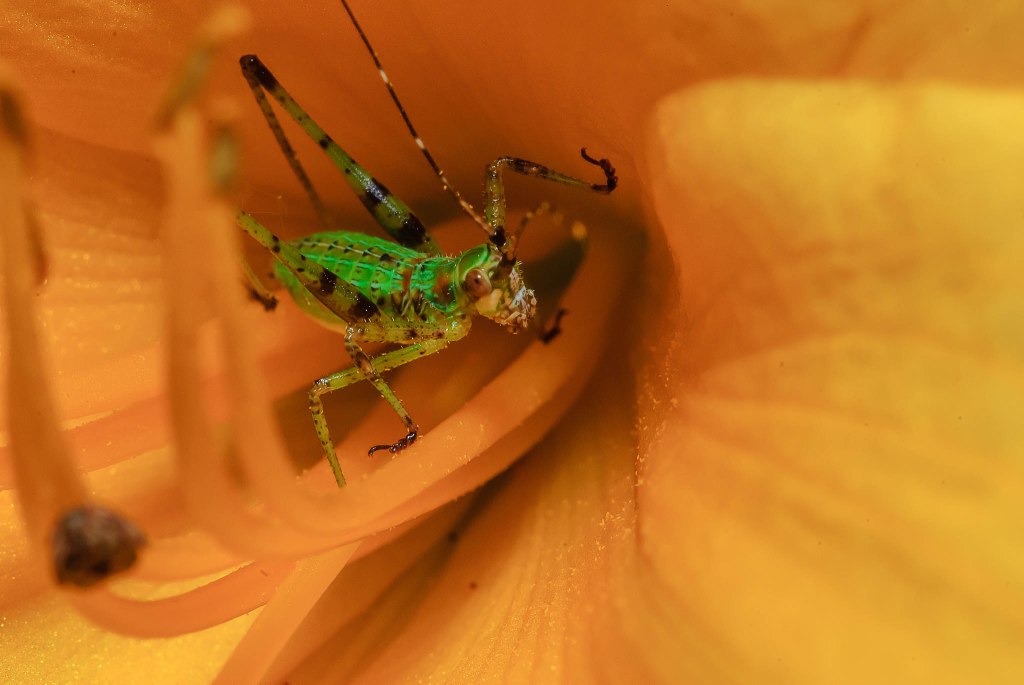
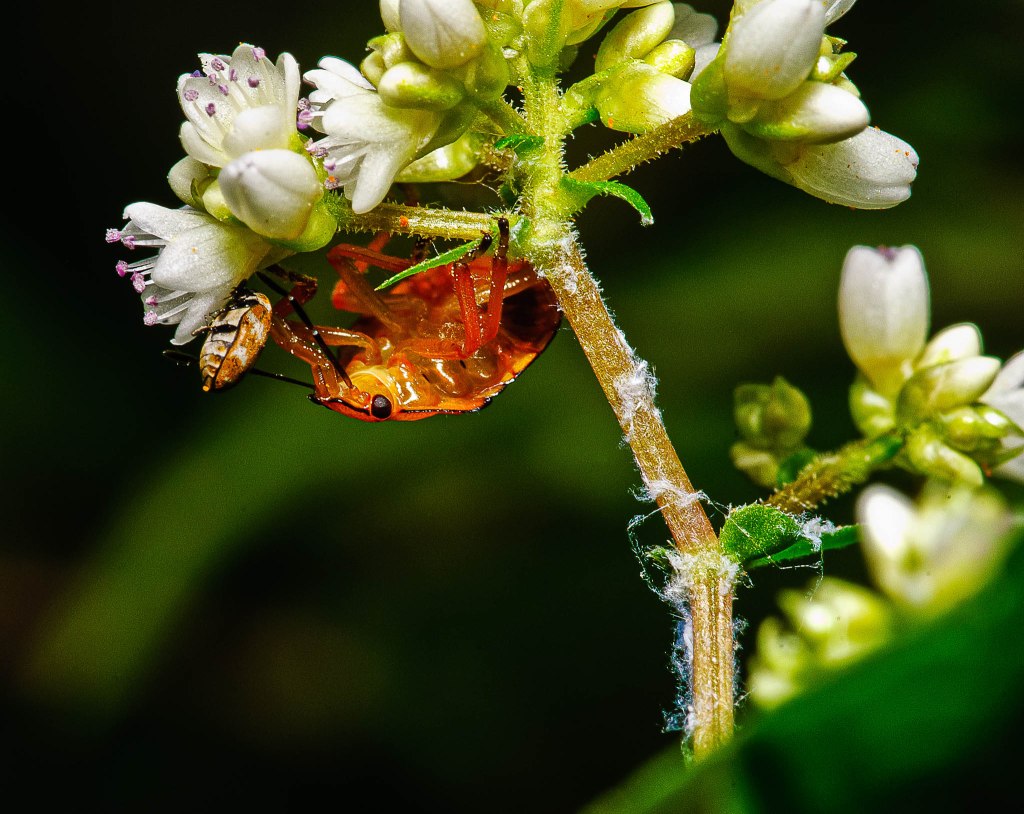
    The two photographs I included in today’s ramble I remember taking and why I rated them as 5 stars. The first where the insect is feeding on another insect is something we don’t often see or at least notice. The second is a nymph of an insect that appears to be hiding inside a flower, again, something we don’t see or at least notice often. Both of these are photographs of very small insects and were taken with a macro lens to get up close to them.

    Some of the other photographs I have rated 5 stars I like but wonder now if they really deserved the 5-star rating. Much like going to a restaurant and thinking this is fantastic food, great service, and nicely priced, then returning and becoming somewhat discouraged because the food this time isn’t as good or the service is a bit lacking.

    This is an interesting topic to think about in my mind because I’m not sure there is a real hard answer to the question and it is ever-changing. Are we just living in the moment? There may be photographs that are timeless but does that make them the best?
  • Recognizing your own work

    Recognizing your own work

    Do you or can you recognize your own photographs? I’ve taken tens of thousands of pictures and if I go through my Lightroom catalog I occasionally come across a photograph that isn’t mine. Most of the time I don’t even have to check the metadata. I just don’t recognize the image. A bit of it is I, at least, vaguely remember what I have taken photographs of but a bit is a style of my own that I have come to recognize. I probably couldn’t describe my style to anyone I just remember it.

    I’ve talked to many photographers. A lot of them, especially newer photographers often say they don’t have a style but it is that they just don’t recognize their style as a style, or are they too busy attempting to copy the style of others? I believe this is the inherent problem with attempting to copy the style of others, you forget to or just don’t add your own twist to it. I guess there is nothing wrong with that it’s just not for me. In fact, when I have mentored others I make a point of telling them my goal isn’t to make them a copy of myself but to help them find their own style.

    To me, it is like recognizing your family. Often you don’t even have to see their faces to know who the people are in the photograph. My photographs, in a way, are like family. I know them even if I can’t tell you why.

    Even if you don’t think you have a style, you probably really do have one. Look closely at your photos and you will probably start to recognize commonalities in your images.

  • Reimagine previous work

    Reimagine previous work

    I frequently go through previous work and reimagine its development. Some of it comes from new techniques I’ve learned some of it comes from just playing around with different looks. Many of the photographs I reimagine were never publicly shared because the initial process just didn’t work out.

    I have no problem visualizing previous work in a new way. New features in the software, new techniques learned new ideas and new concepts. For me, if I’m not learning more I’m not progressing as a photographer or artist. It’s all about progress and personal growth.

    My suggestion to all photographic artists is to keep an open mind to new techniques, new concepts, and new styles. Don’t stay in the same place.

    Now I just need to get my crap together and work to get more current photographic work done and apply what I have discovered to new work.

  • Color doesn’t exist in reality

    Color doesn’t exist in reality

    I never really thought about this before yesterday, color doesn’t exist in reality. We have electromagnetic radiation bouncing off objects and the different wavelengths which we perceive as color. Does this mean that black and white photography is really the true reflection of reality? As such is it all just an illusion? Does reality really matter and the biggest question of all, who cares?

    I believe many get caught up in what is reality without realizing that much of reality is perception. I have heard the phrase, “perception is reality” and I used to really hate that term as it seemed to be used in an attempt to alter my thoughts and beliefs. As I have grown older I have come to realize the truth in that phrase, with one addition. Perception can become reality. Accepting this “truth” has changed my view on many things, especially in creating art. My goal most often with my photography is not to capture a scene or subject as it truly may exist in the natural universe but how I perceive the scene or subject. My perception becomes my reality.

  • Has it all been done before?

    Has it all been done before?

    I often wonder, can we really create an original photograph, or is everything an imitation or copy of something that has been done before? There are few locations on the planet that haven’t been photographed, but are there any truly new concepts? It is said that in writing books there are seven basic plots. Is this true with visual arts? Are there really new ideas? I’m not sure of the answer but it isn’t likely to stop me from my attempt to create a unique look, after all, no one else has all my experiences. They may have similar experiences but not the same. This is why I believe it is important to put your own style into your art and not merely attempt to copy the work of someone else, regardless of how good and creative that work may be. I don’t believe there is shame in getting inspiration from the work that was created before our own as long as we put a bit of our personality into it.

  • Creativity limits

    Creativity limits

    One of the traits I am personally proud to have is that I don’t really have limits to my creativity. There are techniques I like and use often but sometimes I “play” with different processes.

    I guess my process is less reality-based and more imaginative-based. For me sometimes reality sucks. Reality is something that I want to escape from. I would like only to watch documentary movies and television or only read historical factual books. Yes, sometimes it is wonderful to see a documentary or show based on real events. Yes, sometimes it is wonderful to read a book on facts and history.

    A few years ago I became interested in philosophy. I hated philosophy in college but I love a philosophical conversation not. I periodically read books such as The Republic. I like things that make me think more deeply. I like things that are ambiguous. I like things that are conceptual or with a subliminal message. At the same time, I often look for beauty in nature and reality.

    All this leads to my biggest problem which is staying focused on a project. I am beginning to get a grasp on how to channel my thoughts and creative ideas but it is very much a work in progress.

  • The call to photography

    The call to photography

    Years ago I was gifted a camera, but I didn’t receive a call to be a photographer. That call didn’t come until later. A couple of years after getting my first camera I did start to become more and more interested in photography. I had acquired some more gear and even a simple black and white darkroom. Then the call faded. I had cameras but little interest in making photographs outside of vacation or special events. That call finally arrived in the spring of 2005. It isn’t that I didn’t have a “telephone” I didn’t have it turned on. In fact, I wasn’t even particularly interested in art or music. Oh, I had art on the walls of my house and I listened to music but it wasn’t a focus of my lifestyle. I’m not sure what prompted my interest in photography. I remember going to a camera store, Ritz Cameras. I found a camera I wanted to buy. I got a Nikon D50 with an 18-55mm “kit lens”.

    I would take photographs of just about anything that crossed my path. I was operating in mostly a variety of automatic modes but it didn’t matter. Soon, I acquired more gear. The call had come in. I was 46 years old at the time. Many of the other photographic artist types I have met had a much earlier beginning, many when they were children.

    My point is that no matter how old you are when the call arrives work it. Develop a passion for your art. You’re never too old and remember, always always be willing to move outside of your comfort zone and styles. Try new things.

  • Hanging out with creative photographers

    Hanging out with creative photographers

    This past weekend I volunteered to work at the gallery of a contemporary photography group of which I am a member. First off, it was very slow as far as visitors. One person needed to borrow a pen and piece of paper because he hit a parked car with his vehicle and another was another member who came to see the exhibit since he missed the opening of it, otherwise, I was alone with the exhibit which was billed as small works where no print was larger than an 11 x 14.

    What I found very interesting were the selections the members made to display. This wasn’t a juried show but members could select up to three prints to be included in the show. Now I’ve only been a member for a short time but I did have some very interesting conversations with other members. All the work was very good albeit an eclectic collection. I was going to put items in the show but absentmindedness was to blame for my neglect (in other words I forgot).

    I spent a total of 5 hours looking through the gallery. There were some photo books from a free film project and the last juried show. Spending that amount of time with various works of art in a relatively small area I had lots of time to really study the artwork. I found this to be an awakening of sorts. Hanging out with other creative photographic artists and viewing their work is somewhat inspiring. I’ve found very little criticism on whether about the processes of others. Some work only in film, others only in digital, and then there are those who do both. Some are more purist photographers while others are more post-development. Thus far, I haven’t found it to be like social media groups or photography clubs of which I have been a member where there is a very discernable division between photography styles.

    One thing is for sure and that is I feel much more confident with my style and my work. Who knows maybe this is the motivation and inspiration I have needed for so long.

  • Fine art photography is more than just art

    Fine art photography is more than just art

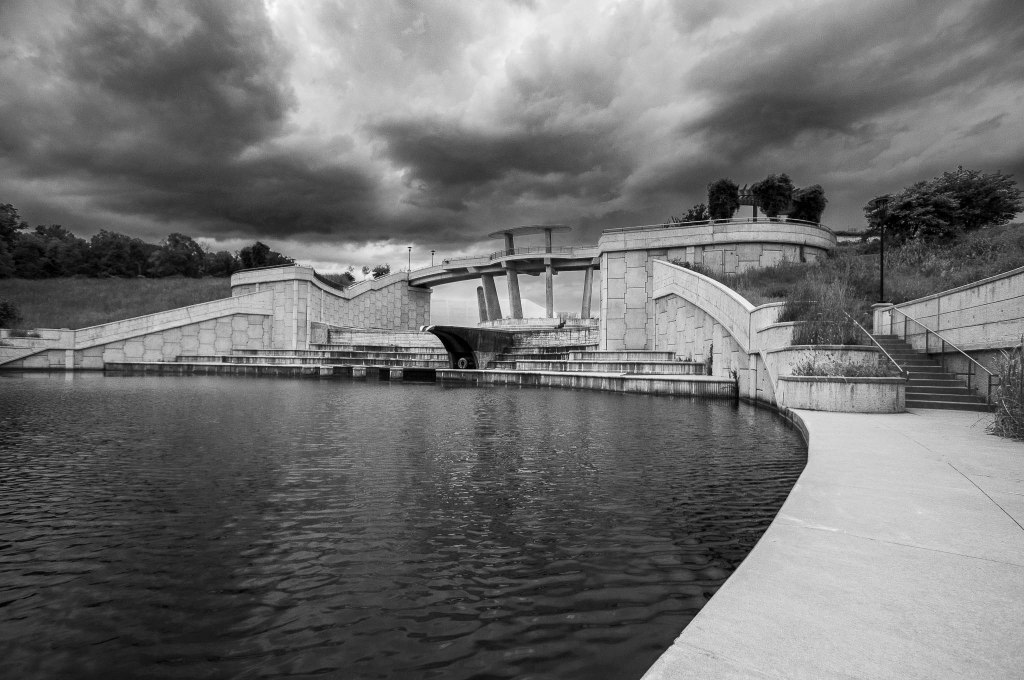
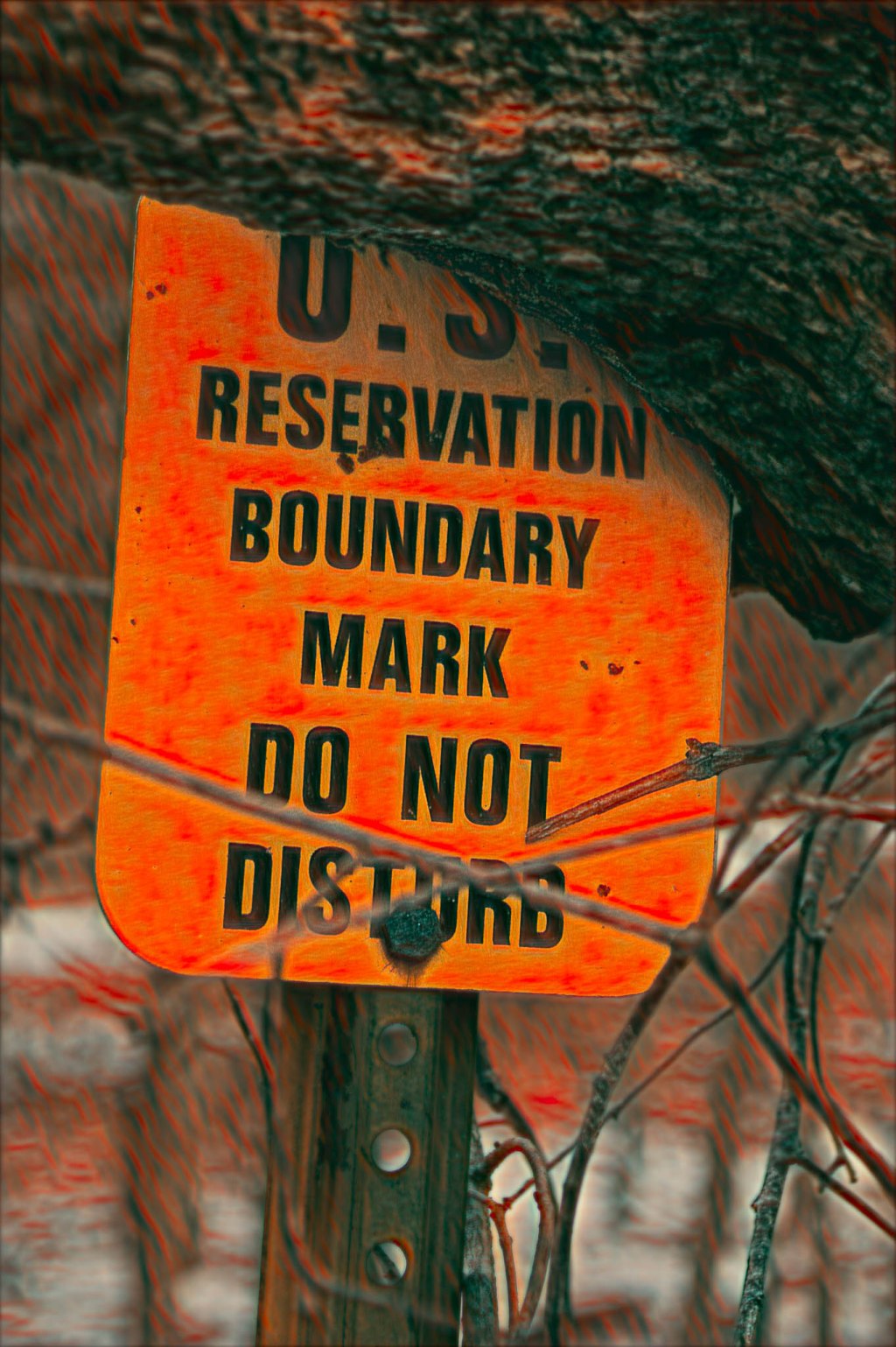
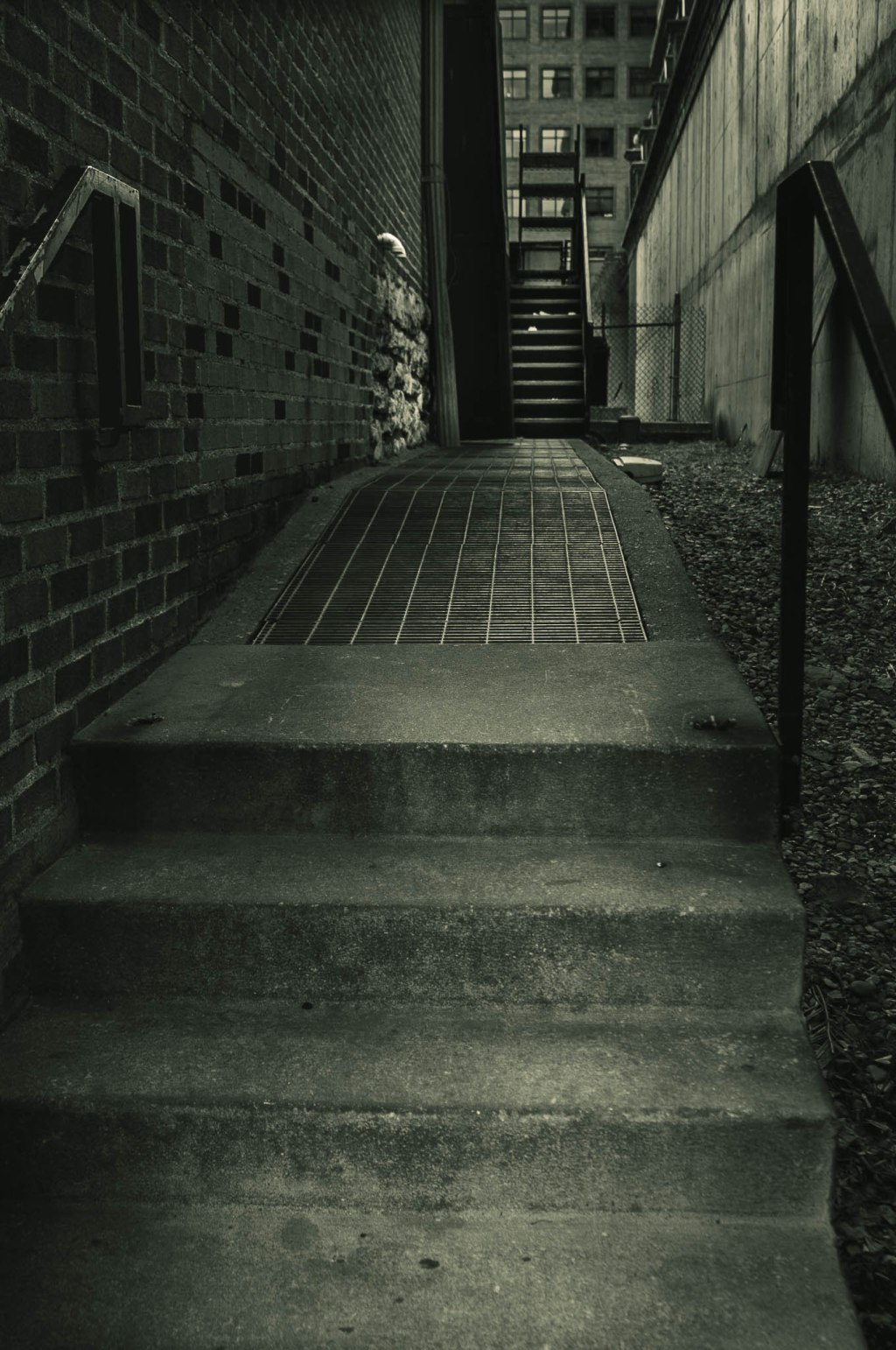
    The Path

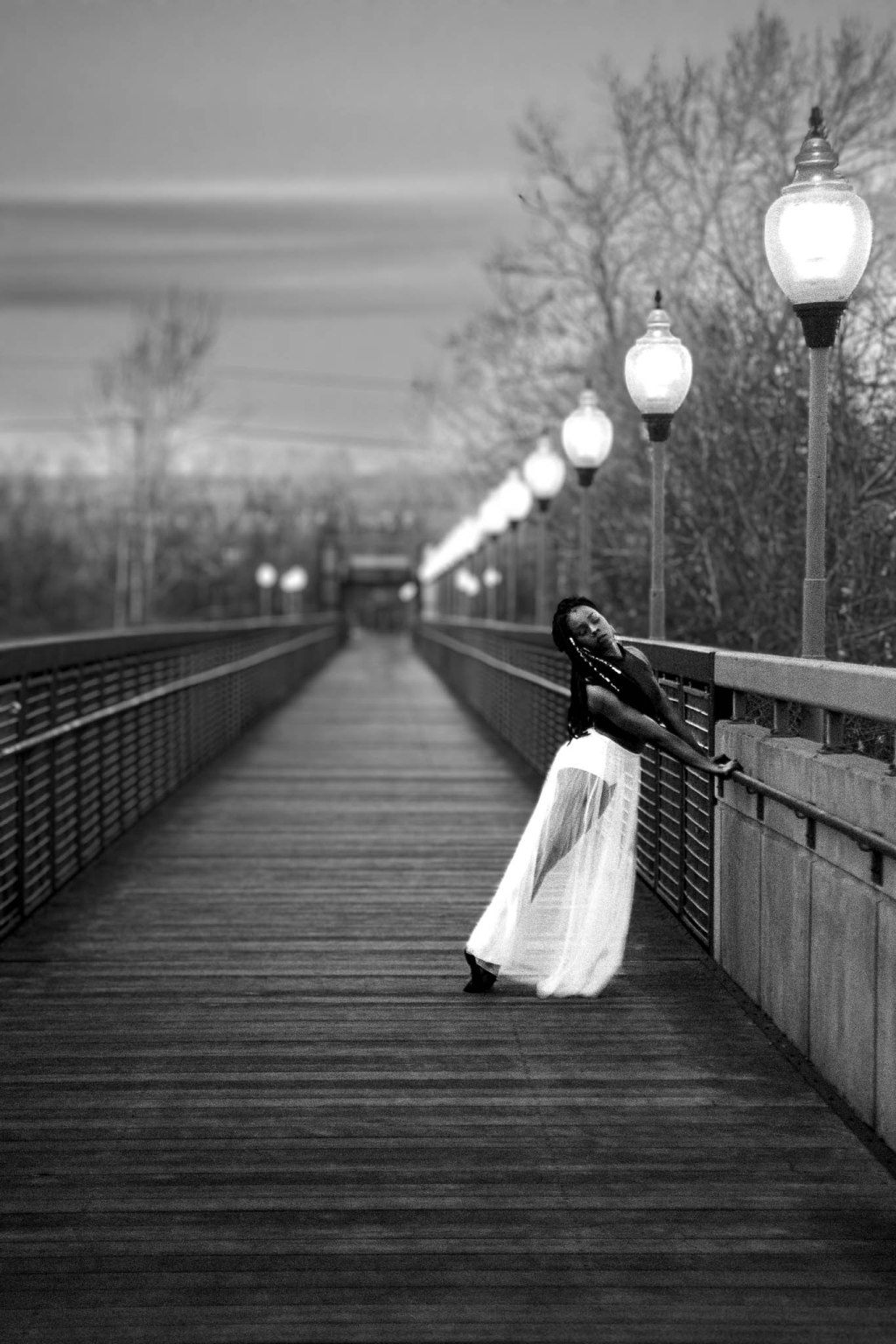
    I would argue all day long that photography can be art, but at the same time, I would say that not all photographic art is fine art. A fine art photograph, like any piece of art fine art, is something more. It MUST convey the artist’s interpretation of a subject or scene not merely be a reproduction of a subject or scene. A fine art photograph should take the viewer beyond mere reproduction. I see all sorts of photos including those the photographer calls fine art photography but often the photo looks to merely seeing a scene/subject and taking a picture of the same. I feel as if the artist needs to be telling us something more. I believe the fine art photograph needs to talk to me and embrace my imagination.

    It often helps us with an artist statement or, at very least, a title. This gives us something to understand what the artist wished to convey. What do you think? I’d love to hear your thoughts.

  • Photography gear envy can kill creativity.

    Photography gear envy can kill creativity.

    Photography gear envy can kill creativity. I used to suffer from photography gear envy. I always looked to see what others used and often was envious of their equipment, especially if I thought my work was much better. So, how did it kill my creativity? Because I was often too busy chasing gear that I wasn’t working out how to create better images with what I had.

    Let’s face it, even entry-level gear is often better than what photographers used 25, 30, 50, or 100 years ago. While we use more lightweight materials (plastics and composite materials) in much of the construction of modern gear, mechanisms are durable. Modern lens coatings help reduce flare and aberrations.
    I’ve said this before but I believe it bears repeating. It isn’t about gear it is about results. If you’re not getting the results you want don’t look at gear first, look at what you’re doing with your current gear, most likely it is something you need to improve upon. Maybe a better understanding of light, focus, or camera settings. You, the photographer, are the most crucial component of your gear.