Tag: art

  • The lost art of prints

    The lost art of prints

    It seems that for many people photographs never get printed but rather they depend on electronic devices to keep their photographs. This may not apply to many of us who do fine art style photography. I have many prints of photographs I’ve taken hanging as wall art. I also have prints of grandchildren and family members. It seems that the most common way people display their photographs today is via their smartphones.

    A case in point, several years ago when I was still working on setting up a photography business I was approached by a potential client who wanted a price on photographing her wedding. She stated she didn’t want any prints only digital files. I turned down the job for two reasons, I believe a life event is too important for just a digital file and she was searching for prices I would not work for.

    I have tens of thousands of photographs, the vast majority will never become a print, but I also have photographs I print and do change out my wall art with photographs, along with updated photographs of my family.

    If you haven’t printed any of your photographs, consider doing so.

  • Black and White photography for a reason

    Black and White photography for a reason

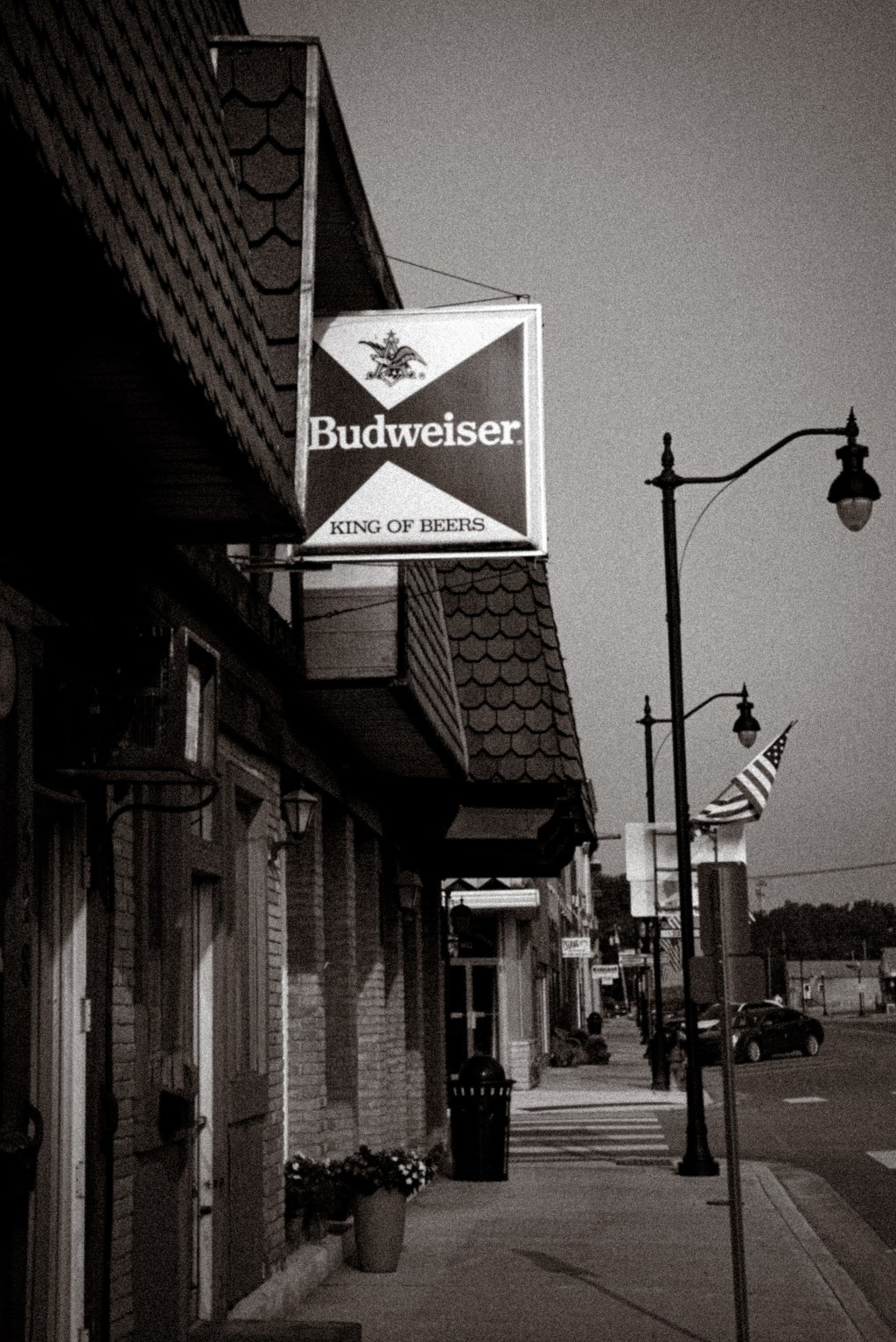
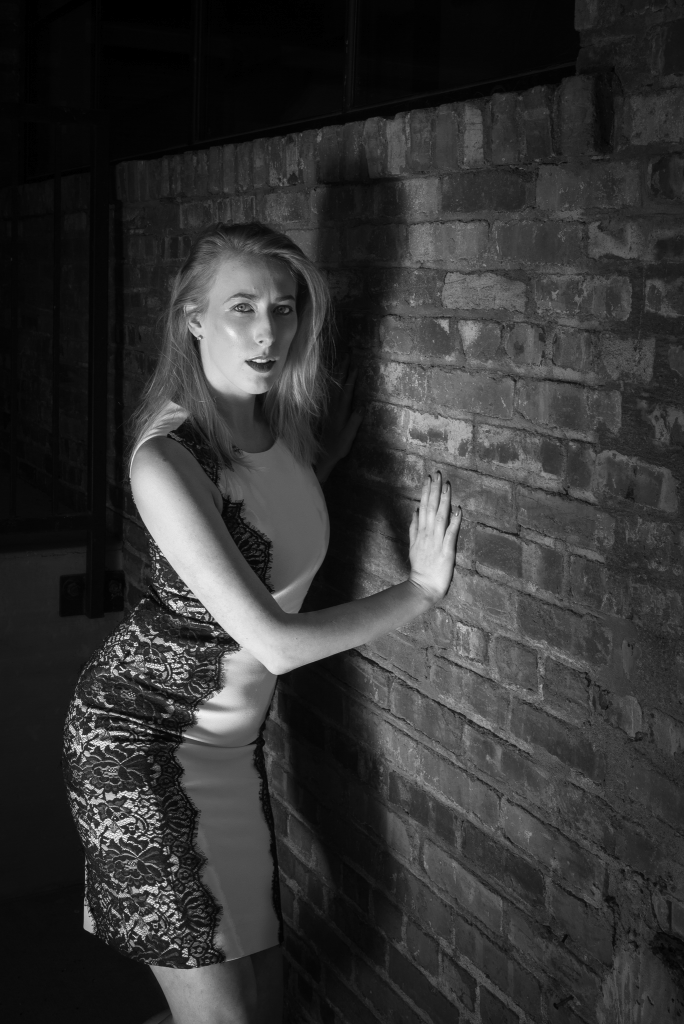
    The first color photograph was developed in 1861 but color photographs didn’t become the dominant form of photography until the 1970s. So most of us took black and white photographs because that was all we had available. Back in the days of my darkroom, I didn’t develop my own color photographs as it was much more involved and required equipment and chemicals specifically for developing color film. Times and temperatures needed to be much more tightly controlled. Fast forward to today. Color photography is the dominant style, but I do still like a nicely done black and white photograph.

    I see photographs far too often talk about converting an image to black and white because they had to use high ISO settings, or just because they want to be “creative”, but they merely throw on a preset or some filter and think voila! To me, it takes more than that. Colors are converted to tones of grey. For me, I don’t convert to a black and white just because or as a way to “fix” an image with lots of noise due to high ISOs. Doing so, to me, makes it like a black and white image is something less than its color counterpart. There is a reason why masters did so much dodging and burning on their black and white photographs. It’s about tonal range and contrast.

    I feel like the color gets in the way of the story in some photographs which leads me to do a black and white version. Think about it next time you want to do a black and white photograph. Learn to do more than just slapping a filter or preset on an image. Do the black and white conversion the justice you do your color images. Convert the image with a purpose.

  • Could you choose your all-time best photo

    Could you choose your all-time best photo

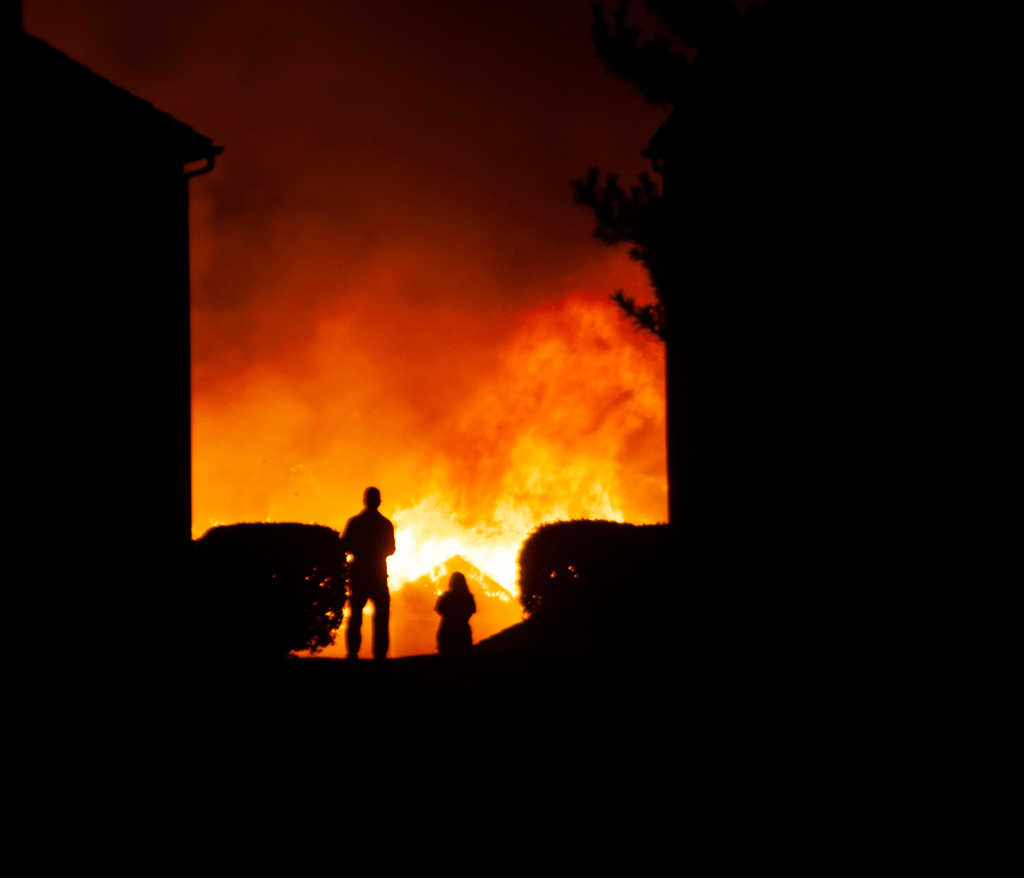
    Could you choose your all-time best photograph? I find it difficult to choose one of my all-time best photographs. My choice changes each time I look through my catalog of photographs. Today, I chose the photograph above. It was one I took shortly after I moved to Kansas. I was awakened at about 1:15 AM on September 10, 2014, by the sounds of sirens, lots of sirens. I walked outside and towards the direction of the sirens and saw an apartment building across the street completely engulfed in flames. I quickly grabbed a camera and took the photograph. I don’t know if the two people were residents of the building in flames or just like me a bystander but the emotion of two people who appear as mere silhouettes against a roaring blaze makes this one of my best photographs of all time. It is often easy to choose a photograph of a loved one as a best but is it a best because of our attraction to the person or is it truly your best photograph.

    Think about it, go through your images and see what images you believe are your absolute best.

  • Create art for art’s sake

    Create art for art’s sake

    Create art for art’s sake. This phrase has been around since the 19th century. Art doesn’t have to have a deeper meaning, it doesn’t have to have a motive, it doesn’t have to have a hidden message. Create art for the sake of creating something aesthetic and beautiful. Create art that lets you and your viewers enjoy the art you created. Art doesn’t have to be complex. Life is often far too complex and we are constantly bombarded with messages that attempt to persuade us on what to do or what not to do. Music and poetry have messages they are attempting to convey. With photography, we can just create images and art that is pleasing to view to help us, and maybe others, to just enjoy the moment without having to receive a message.

    Create some art today merely for the sake of creating art.

  • Viewing photography

    I seek out places I can view good photography. I love looking at good photographs. It is really one of the biggest reasons I became interested in photography. I have found through my journeys a couple of absolutely wonderful places to view good photography. My two favorite sites for viewing good photography are Behance and 500px. When you get to either of these places I am immersed in a gallery of beautiful photographs. The imagery covers all the genres of photography from landscapes to fine art.

    Yesterday, I wrote about needing a break from my photography. I’ve had that and now spring is approaching us in the northern hemisphere and it’s time for me to get my photography going as it did before the break. It is sort of rebirth if you will. What better way to be reborn as a photographer than to spend time viewing beautiful photographs. If you haven’t viewed either of these sites and browsed the photographs and artists there go and take a look. If you have other sites that have wonderful photographs feel free to drop me a line in the comments with your favorite sites.

  • Sometimes you need a break

    Sometimes you need a break

    Photo by Andrea Piacquadio on Pexels.com

    Many of you may have noticed that I skipped yesterday’s blog post. Then again, maybe no one noticed. Either way is fine. I decided I needed a break. Writing this blog has been an interesting challenge for me. I have written something every day, now minus two for the past 6 months, 4 on this site. Yesterday, I was completely dry, I sat in front of my computer screen for an hour and nothing came to mind. So, I finally decided it was time for a break.

    This is how my photography has been for the past several months. I have felt like I was repeating my photographic work. Work I had done before and was just photographing the same things over and again. It was time for a break. No matter what your endeavor is it is important to take a break every once in a while. It will refresh your creative mind, at least it has mine.

    Now that we are rapidly approaching spring, at least in the northern hemisphere, it is time for a rebirth. Break time is over, and it is time to begin once more.

  • Showing your art to the world

    Showing your art to the world

    Do you show the world your photographic art? How do you show it? Where do you show it? There is a multitude of options from social media platforms to prints. the method you choose can widely limit how many people actually see your work. Is it even important to you to have others see your art?

    I know I have written this before, but social media platforms can be dark places to display your work if you are easily offended or discouraged, especially for new and beginning photographic artists. The world of social media is full of people who thrive on trolling others and insult not only their work but the artists. But, social media isn’t all bad. There are groups that exist that are very supportive of members both new and experienced. Typically, these are smaller in size.

    If you choose a web hosting service, the problem exists of driving traffic to your site for the world to discover your work. with literally millions of photographers, and billions of photographs the chances of people discovering your art could be the proverbial needle in a haystack.

    If you choose to print and display your work in your house or even a local gallery the traffic of potential viewers can be greatly limited.

    You also have the option of multiple methods of showing the world your work. through social media, a website, and through prints.

    Unlike photographers of decades past, we have available to us a vast array of methods of showing the world our art. Get your work out there, show the world what you create.

  • Why Ansel Adams was a master

    Why Ansel Adams was a master

    I could list dozens of reasons why Ansel Adams was a master of photography, but the single biggest reason I believe he was a master is that he was not afraid of post-processing. He spent hours in the darkroom getting the best possible print to match his vision of a scene. He was meticulous in both the exposure of the negative, its development, and the final print. I seriously doubt the majority of us are as meticulous. We go out and point and snap. Yeah, I know we have some tools that he didn’t have, we have autofocus, we have built-in light meters, blah, blah, blah. But are you really using these tools to their fullest? Probably not, and in fact, I would say most times, absolutely not.

    Thinking about how haphazard I have come to depend on technology to instantly give me the results I think I want I have decided that I need to slow down, and set up my photographs and truly utilize the tools I have available.

  • What makes a good artist?  Education or life experience

    What makes a good artist? Education or life experience

    A friend asked me, What makes a good artist? Education or life experience. My first thought was wow! What a great question. My second thought was a bit of both but more influenced by life experience than education. As an artist, we project our life experiences through our art. It is often a reflection of ourselves and how we perceive the world. I can’t teach you life experience, it is something you have to, well, experience on your own. I can influence your life experiences, but I can’t control how you perceive them outside of some brainwashing techniques. What can be learned is how to express how your life experiences through your art. The more I think about the question the more I question my first thoughts. Is it like, “what makes a good meal?” or “what is art?”.

    I do believe that as an artist, we give the world a peek inside our minds, thoughts, and perceptions. But, we can also hide our real thoughts and perceptions through our art. Look at the artists who were perceived as happy, funny, and joyful by their art but were truly suffering in their minds. I believe we have more than one personality and we put forth the one we want the world to see often hiding our true selves to our minds only.

    Pondering this question reminded me of the lyrics of a song by Chicago, “Does anyone really know what time it is” because in the song it really questions if we pay attention to the world around us, including the small things, or do we just move along to the next “big” thing. Do we really let the world know us or do we hide our true selves from the world and project only what we believe the world wants us to share?

  • You’re not as good as your camera

    You’re not as good as your camera

    Edward Steichen once said, “No photographer is as good as the simplest camera”. Edward Steichen died in 1973. The first digital camera was created in 1975. It was the size of a printer, weighed 4 kg, used 16 batteries, and recorded images on a digital cassette tape. The first mass-produced autofocus camera was the Konica C35 AF which came to market in 1977. Why all this history? In Edward Steichen’s time cameras were much more simple than today’s modern cameras. So if no photographer is as good as the simplest camera in Edward Steichen’s time we’re not even close nowadays.

    We obsess over gear. We talk about all the features and high ISOs, about the video capabilities of our still cameras, The ability to use more than one memory card where we can store thousands of photographs. We talk about the clarity of the electronic viewfinders, and the sharpness of the lenses with the modern coatings.

    What we should be obsessing over is our ability to take photographs. I watch photographers when they are out doing their thing. They see something point the camera snap the picture and hope for the best. They don’t meter the light, examine the subject, check their position, set up the focus. Yeah, I know, there is a meter in the camera, there is autofocus, but how are they metering, what are they metering, what are they focusing on, why? So many photographers also never leave the standing position. Stand, snap, move, stand snap.

    I think I can do better. I think you can do better. Let’s start to obsess over results rather than gear. Let’s start to plan our shots, do a better job at metering the light, controlling the focus, making sure we have the best perspective, study our subject. Let’s work to get closer to the ability of our gear.