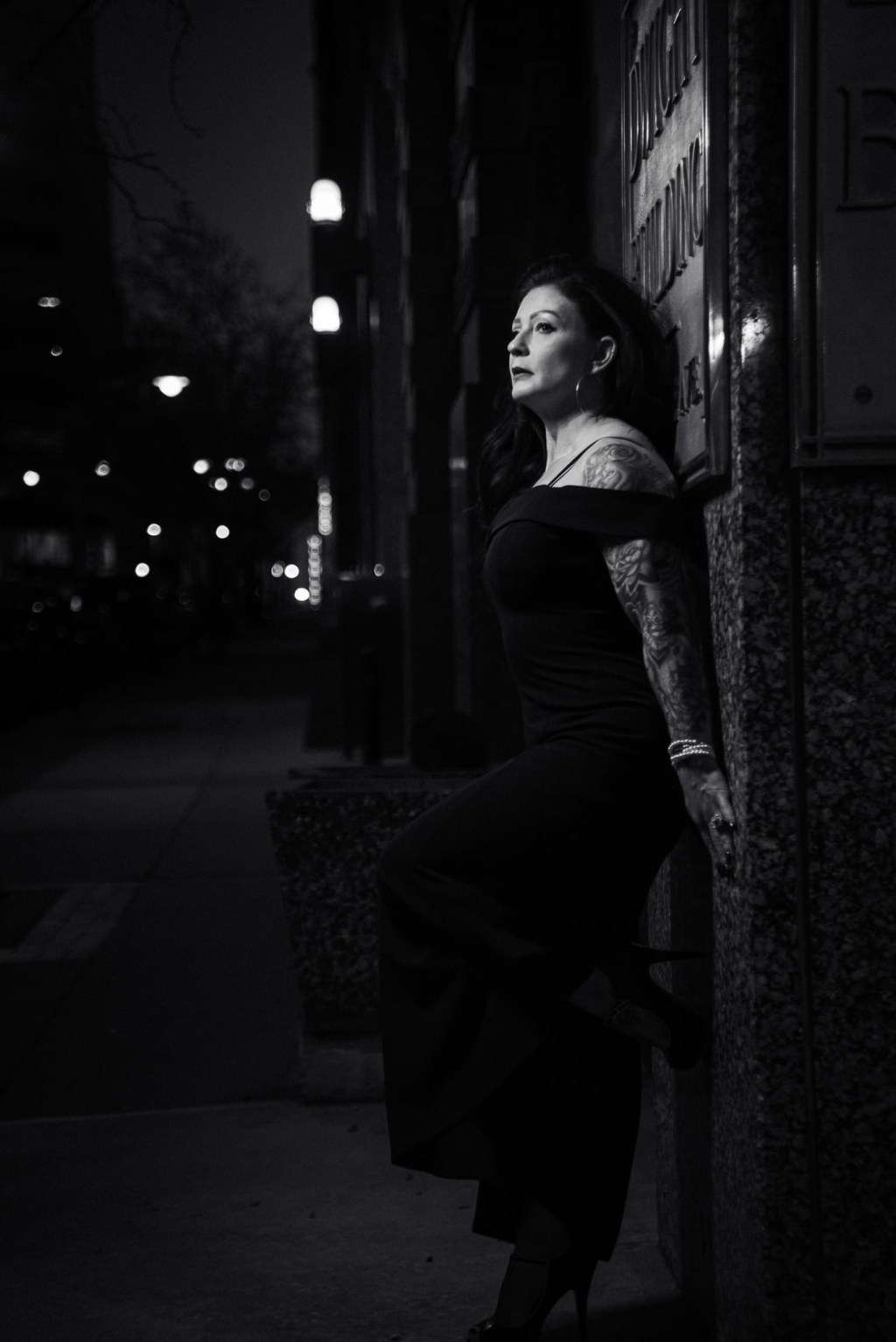
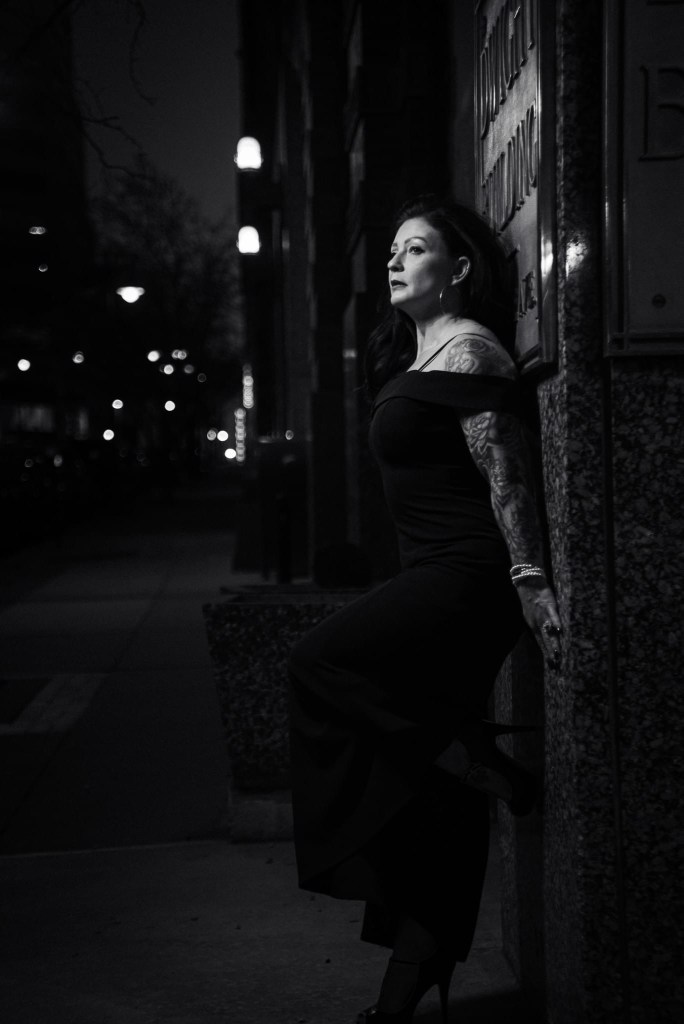
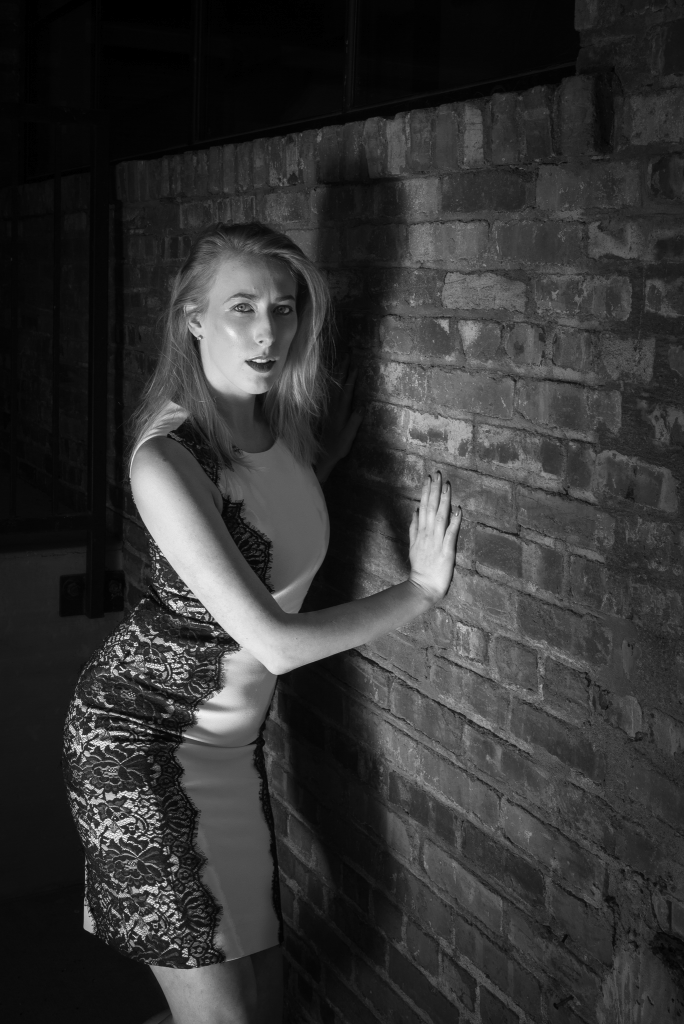
Last Friday I had a film noir style photo shoot planned. The model I was photographing is one of my favorites. I arrived about an hour before she did to do some final location scouting. As always with digital photography the originals were all color and were converted to black and white in post-processing.
Black and white photography is one of my favorites because I feel I get to photograph the person’s soul rather than their clothes. For me, color sometimes gets in the way.
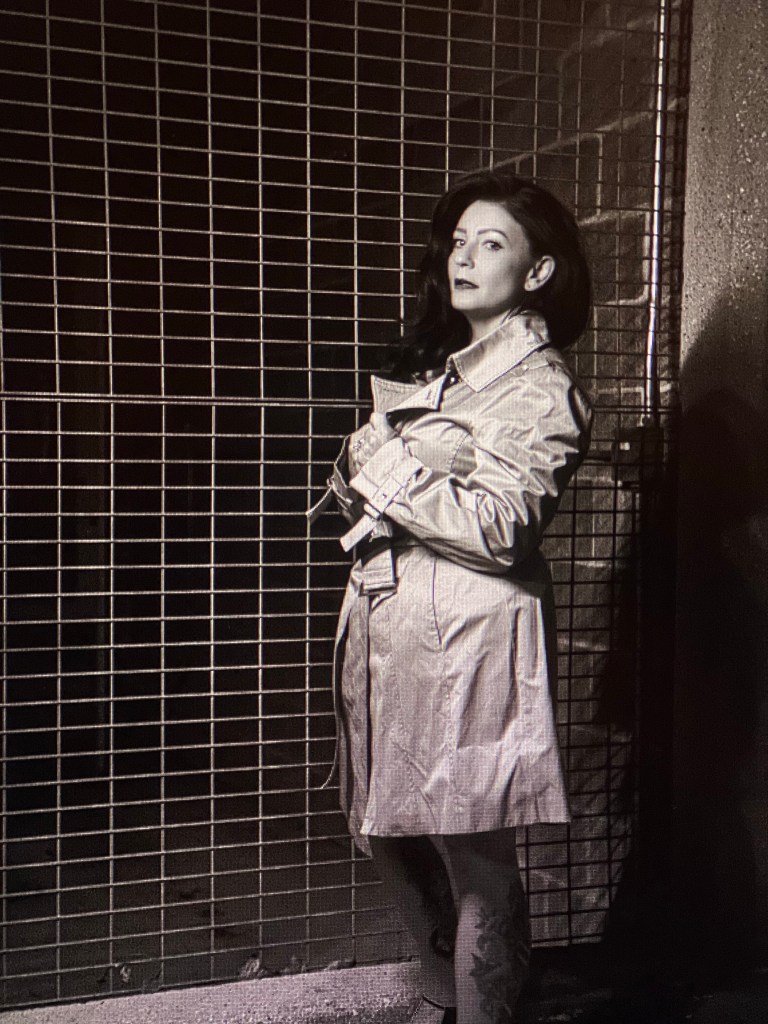
Last night I had an amazing photography session in downtown Kansas City. I get up this morning to do some edits and write my blog only to find out I have no internet or cable tv service. Ugh! Whatever will I do?
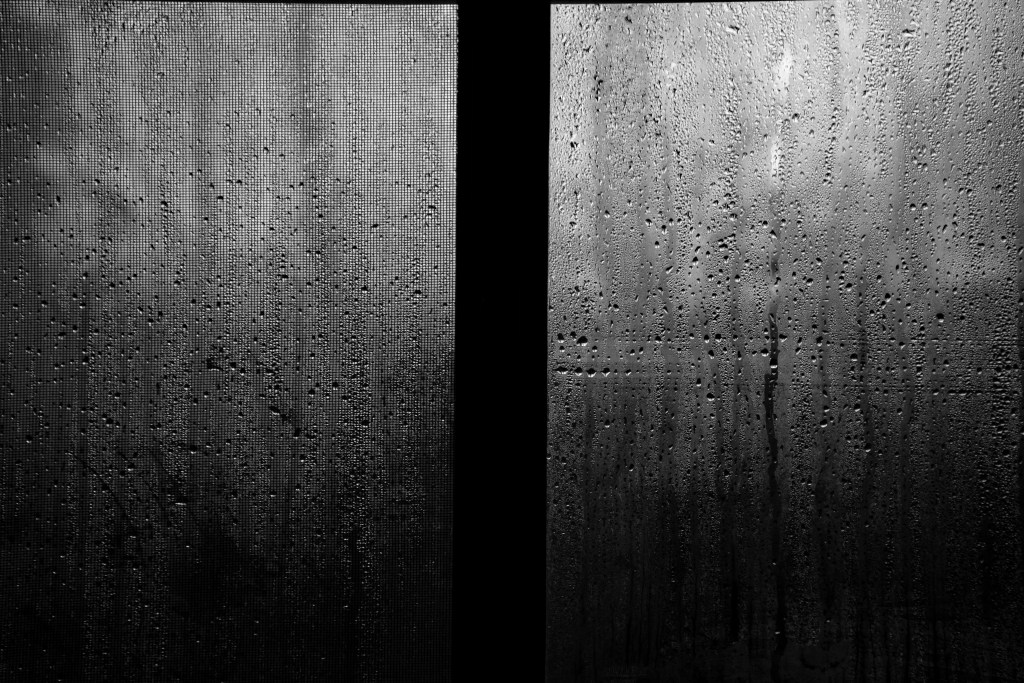
To compensate a bit I took a screenshot of one of my photos and no writing this entry via my cellphone since I do still have cellular service. If needed I could do a cellular hotspot but I’m not really setup for it. I’m just spoiled by stuff just working. I guess my idea of roughing it is a Holiday Inn Express.
Yesterday, I read a social media post on a well-known photography store asking followers what their what was the dream photography location. As you can imagine the vast majority were the iconic locations. Yosemite, Iceland, Patagonia, Antarctic, and so forth. This got me to thinking, all those are awesome places and I’d love to photograph them but are any my dream locations. My answer was no. I’m not sure of my dream location but I am pondering it as a result of the question.
My dream location isn’t going to be the iconic area that has been photographed ad nauseam.
What about the back roads of Kansas, Missouri, or Nebraska? We rarely see the landscapes of those areas. We see loads of Yosemite, mountains, waterfalls, the ocean. We see lots of locations of what many of us think of as exotic.
All of this reminds me of a couple of trips. One my wife and I went to visit our son when he was stationed at Camp Lejeune. We were going to the beach one day. The bartender at the hotel where we were staying said she hadn’t been to the beach in years. The beach was only a mile away from our hotel. Then the time in Colorado where my wife was admiring a view of the mountains and the local said, “yeah it’s always there.”
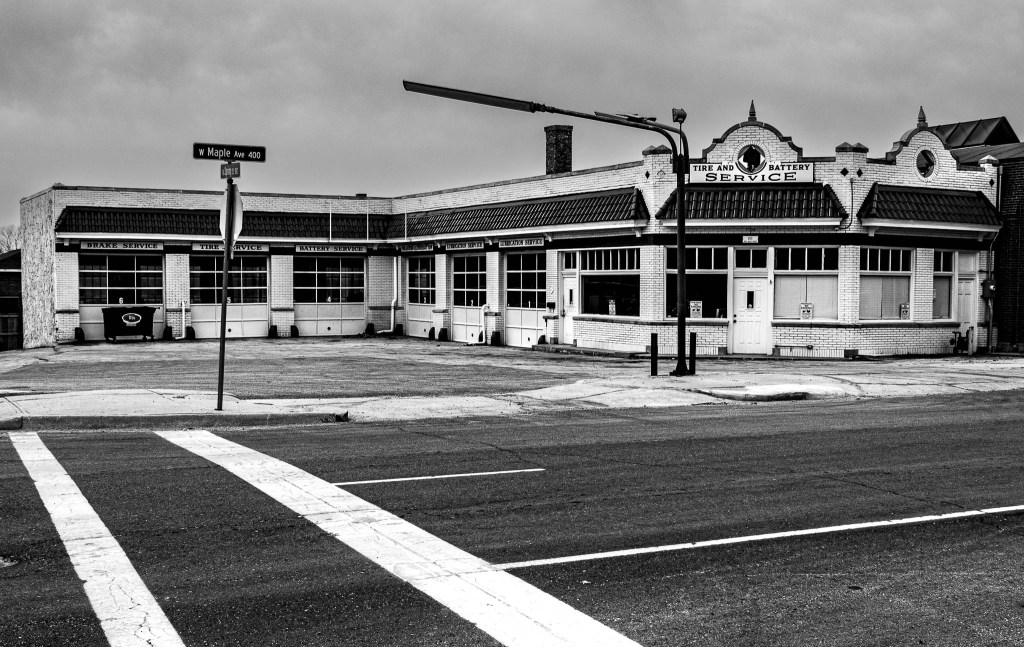
My dream location is maybe my local area with time to spend just cruising the backroads finding what I can find.
When planning or thinking about photography trips and locations we often think about going to the cliché locations. Places that have been photographed ad nauseam. Often we think of creating a copy of something someone else did before us. I’m in a mode of thinking about some of these types of trips and I am leaning more towards the lesser known places to create work that is more original.
I can art but that doesn’t mean I can envision art. It is much easier to photograph something or someone that already aesthetically looking. The true artist can see the aesthetic value of many ordinary everyday subjects. It is our vision to bring out the beauty in the ordinary. Look don’t just see.
One of the best things I have learned over the years is to learn from my past work. As I wrote about yesterday, I go through my Lightroom catalog virtually every day, sometimes multiple times during the day. I often find photographs that I processed in the past and think egads! What the hell were you thinking! That is horrible. I may then spend some time working on the original photograph again using new techniques, styles, improved processing skills, and software and many times find a diamond.
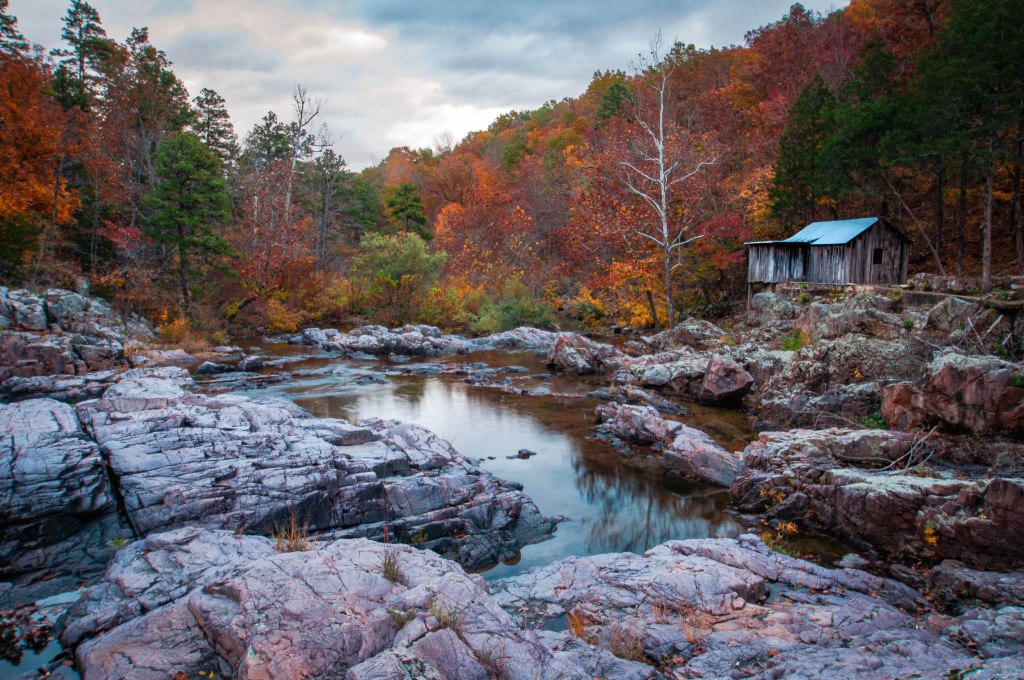
The original of the featured photograph above never really grabbed me. The light was wonderful, and the colors were fantastic but the building just never really stood out to me, it was lost.
To me, the colors of the trees distracted the viewer away from the building. I was drawn to the colors but my intended subject was really the building. The building with the stream in the foreground really fits the area in the Ozark mountains. The rustic look of the rocks and the building. I vaguely remember doing some monochrome images of this scene but apparently, I didn’t like them as they no longer exist in my catalog.
I was seduced by the colors! It becomes easy to get seduced by color, especially in the autumn! I sometimes forget that color exists as tones in a black and white photograph. I’ve talked about how black and white photography often shows us the soul of a subject and yet I still miss the chance to really show the soul of my subject. Color can be that seductress, leading us away.
So many times I see people suggest converting a photograph to black and white as a way to “fix the noise” of a high ISO digital photograph and it always makes me roll my eyes. Black and white photography isn’t for “fixing” a noisy photograph. There are what I would think to be valid reasons to convert a digital photograph to black and white. One of which would be because you want the look of black and white as an artist.
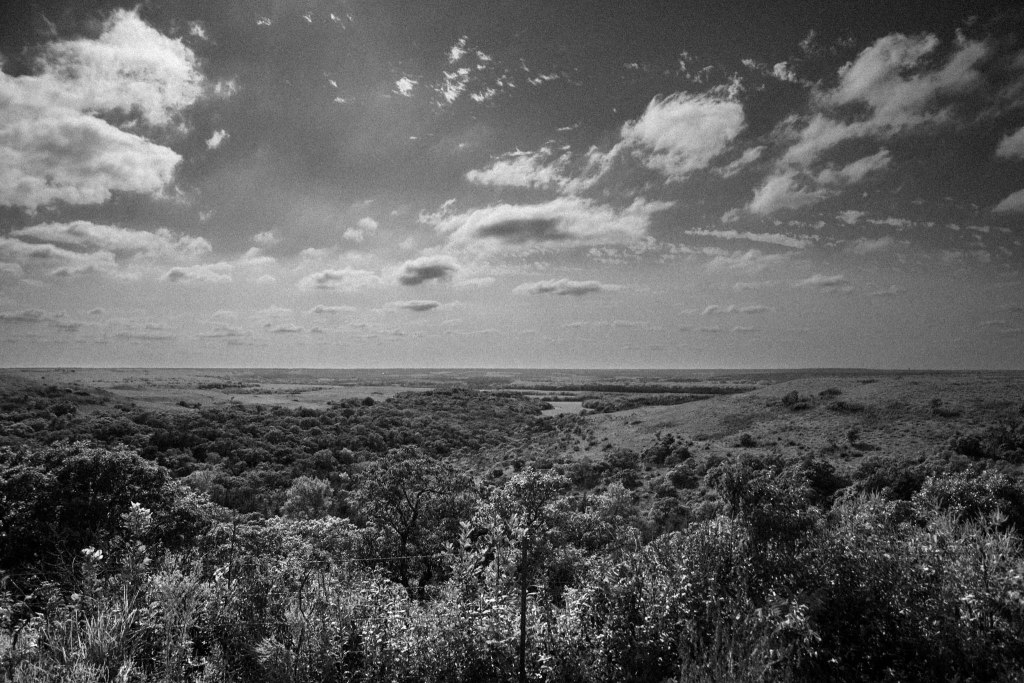
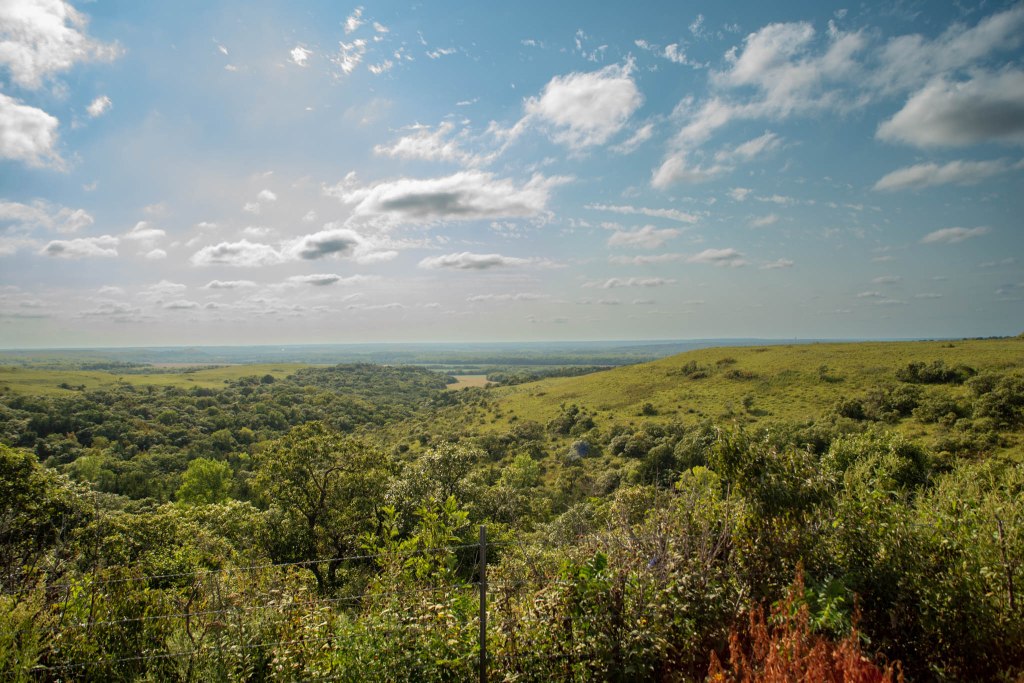
Black and white photography, to me, is an artistic statement. I believe that sometimes, the color gets in the way of the subject. The scene in the featured photo is just an example of that, to me. To me, in this particular scene, the color was a distraction,
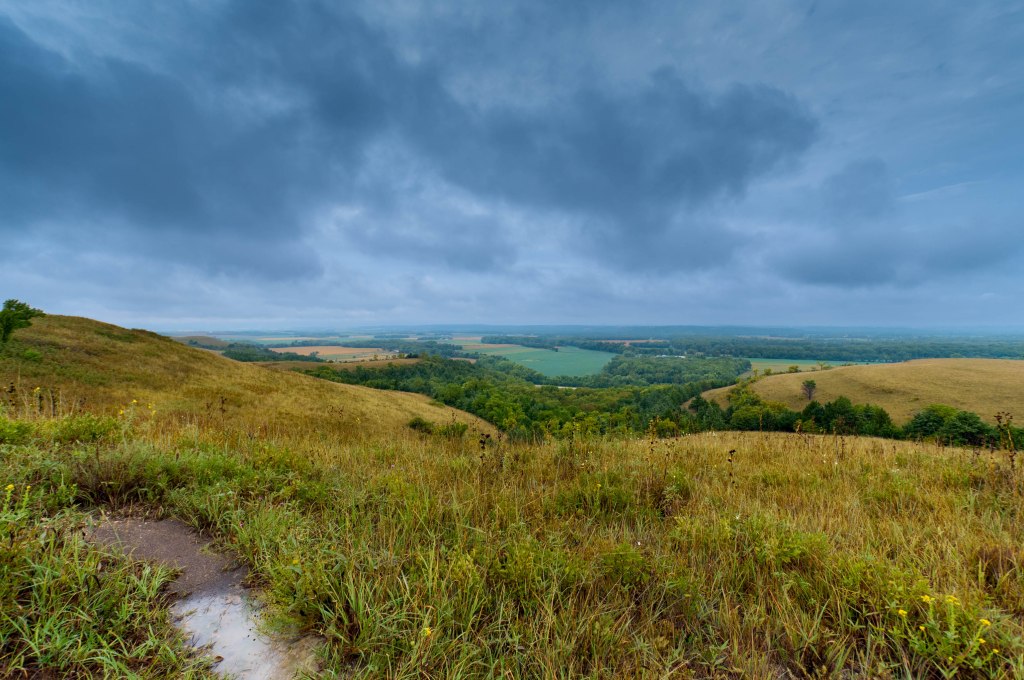
One of the problems I had when I was photographing the Flint Hills was finding a composition. Looking at the views was amazing in person. You could see for miles and miles but often in a photograph, the scene appeared uninteresting unlike what it appeared like in person.
Choose to create black and white photographs for artistic reasons, not fixing things. Use black and white to create and enhance the story. Use black and white to show the soul of your scene.
The first color photograph was developed in 1861 but color photographs didn’t become the dominant form of photography until the 1970s. So most of us took black and white photographs because that was all we had available. Back in the days of my darkroom, I didn’t develop my own color photographs as it was much more involved and required equipment and chemicals specifically for developing color film. Times and temperatures needed to be much more tightly controlled. Fast forward to today. Color photography is the dominant style, but I do still like a nicely done black and white photograph.
I see photographs far too often talk about converting an image to black and white because they had to use high ISO settings, or just because they want to be “creative”, but they merely throw on a preset or some filter and think voila! To me, it takes more than that. Colors are converted to tones of grey. For me, I don’t convert to a black and white just because or as a way to “fix” an image with lots of noise due to high ISOs. Doing so, to me, makes it like a black and white image is something less than its color counterpart. There is a reason why masters did so much dodging and burning on their black and white photographs. It’s about tonal range and contrast.
I feel like the color gets in the way of the story in some photographs which leads me to do a black and white version. Think about it next time you want to do a black and white photograph. Learn to do more than just slapping a filter or preset on an image. Do the black and white conversion the justice you do your color images. Convert the image with a purpose.



 Photographer Clay