Tag: fine art

  • The feeling after a successful photography day

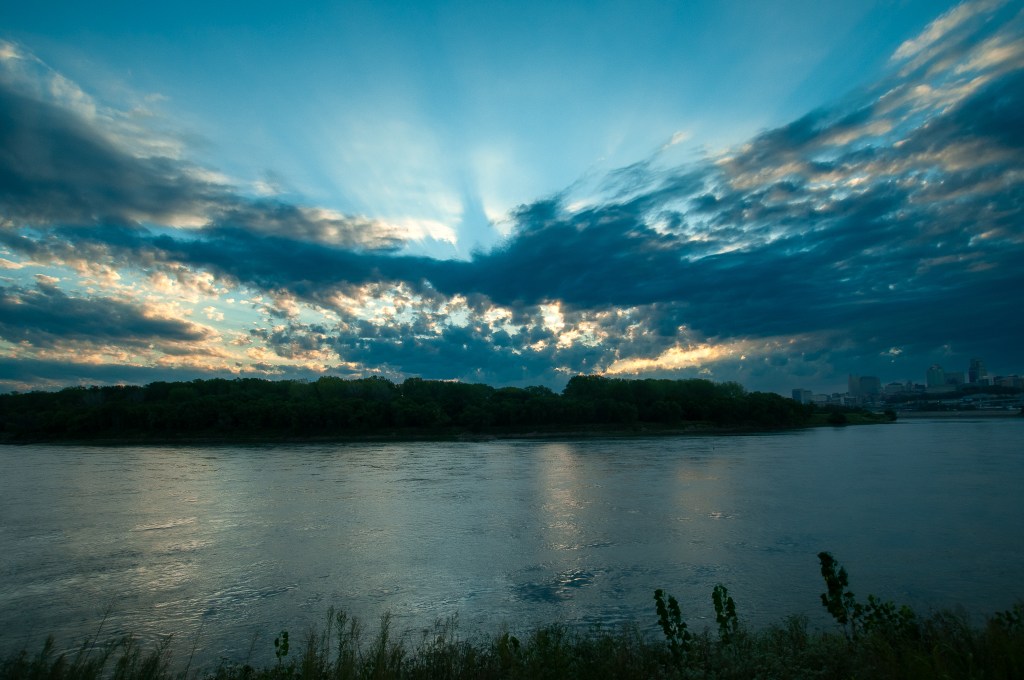
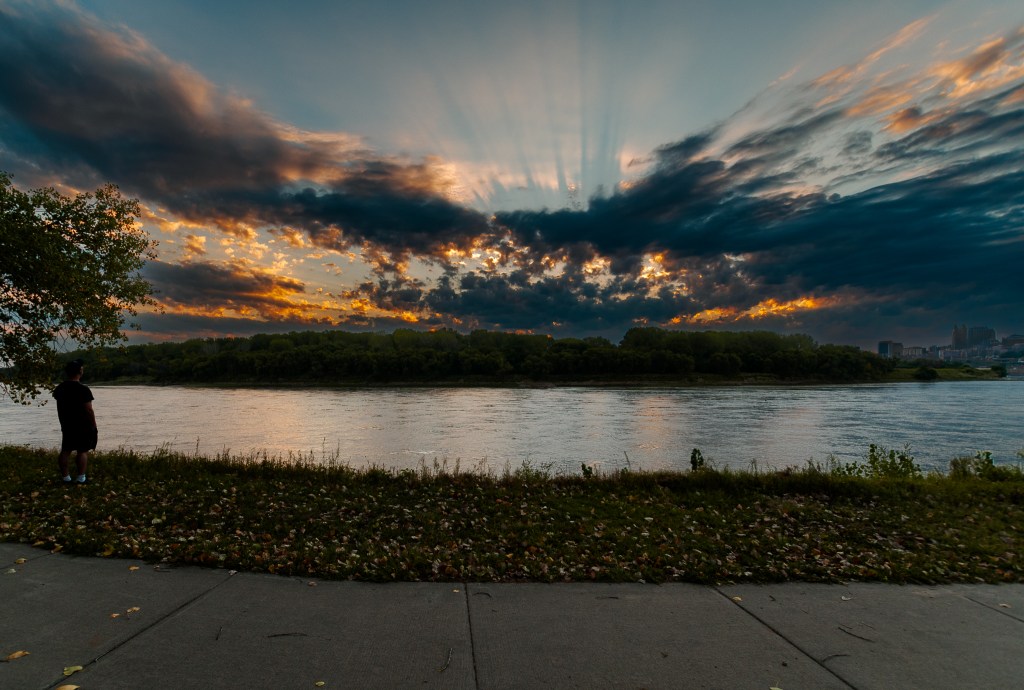
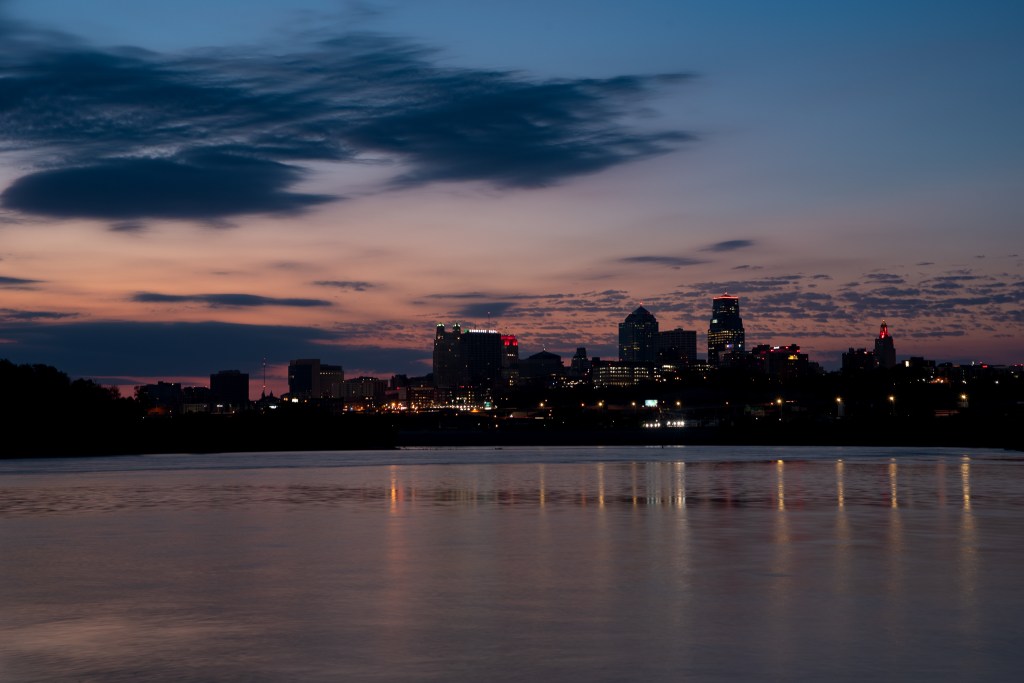
    Sunrise over Kansas City

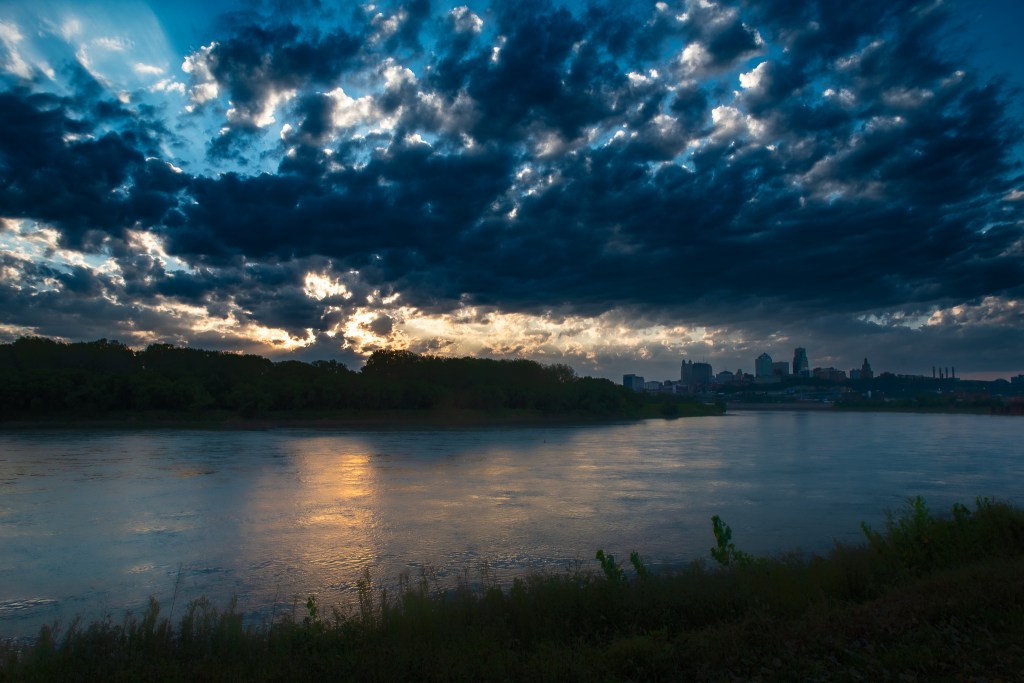
    Yesterday, I had my first photography day in months. What I mean by photography day is that I started at 6 AM and finished at 2 PM. I ended up with 143 photographs, 17 per hour, or .3 per minute. It doesn’t sound like much but of the 143 over 60% are “keepers”. 60%! I cannot remember the last time I had a 60% keeper ratio.

    Sunrise over the city

    Most of the photographs I got are landscapes and time was spent composing and setting exposure. There was also some traveling between three locations. Some of the locations were a couple of miles apart.

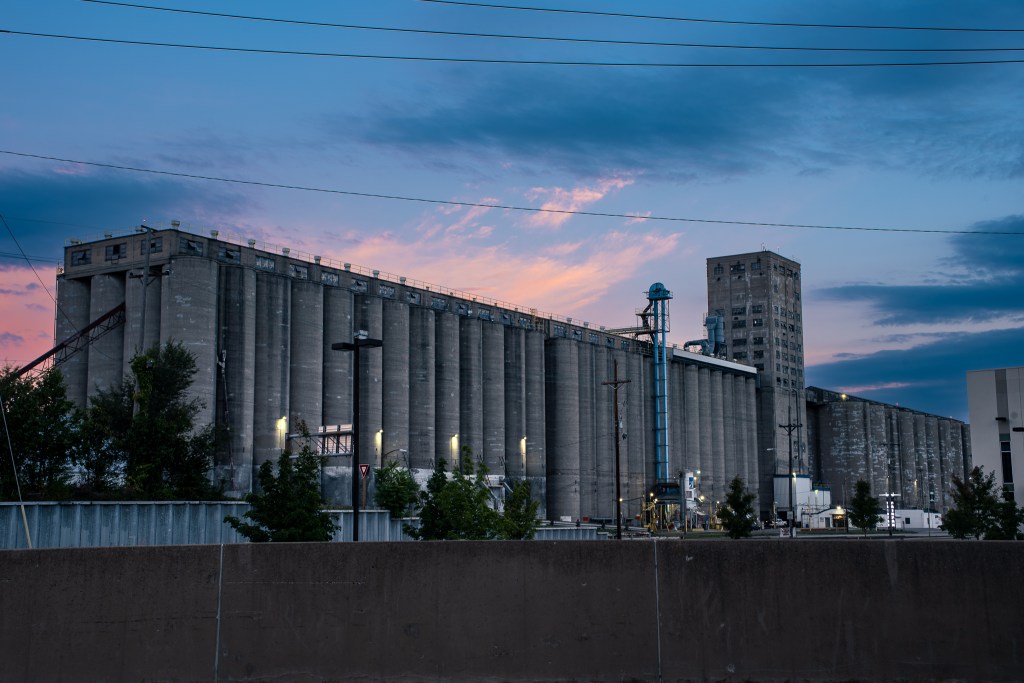
    Sunrise over the grain elevator

    Over the course of time, I have learned that the time spent setting up the shot pays off, especially in landscape photography. Setting up the shots included the use of a tripod, and adjusting the exposure, composition, and focus. Nature also helped by providing some awesome cloud formations.

    All the photographs included in the blog were from a single area at sunrise. If you’re a landscape artist, don’t be afraid to get up early and get to your location before the sunrises. While we can never rely on nature to provide the skies we hope for sometimes luck is with us.

    This successful day has re-inspired me to get out more and get more done and hopefully sharing a bit of my successful day will get you inspired to create more.

  • Preparing for a photo outing

    Preparing for a photo outing

    This morning I am making final preparations for a photo outing with friends. We’re starting with a sunrise session and then working through until 2 pm. I started last night getting batteries charged along with a lightning trigger as there is a possibility of a “stray thunderstorm”.

    I’m the type that probably over-prepares and takes more than I need. Sometimes that is good sometimes it is not. I have decided that I need to get my “shit” together! I’m also the type that often keeps my “shit” haphazardly after a session. I couldn’t find a couple of batteries right away. I couldn’t find a couple of battery chargers. I couldn’t find my lightning trigger. They were all in my photography gear storage closet just not where they should have been.

    Photo by Ketut Subiyanto on Pexels.com

    At one point I looked like the child above. Stuff scattered all about only I probably muttered some curse words while I was surrounded by my stuff.

    I’ll keep you all posted on how the rest of the day goes as this is the first “big” outing I’ve done in a while. Yeah, that has been haphazard as well.

  • Does each fine art photograph have to tell a story?

    Does each fine art photograph have to tell a story?

    I’m reminded this morning of an Ansel Adams quote, “There’s nothing worse than a sharp image of a fuzzy concept”. Sometimes it is difficult to relate to the viewer what you’re attempting to convey. Sometimes, it is difficult to understand the scene yourself but realize it may be noteworthy or important. I have, on many occasions, never realized the concept of a scene until months or years later.

    Over the course of time, I have become better at identifying the concept at the time I took a photograph, but many times beginning photographers have yet to learn the skill. It doesn’t mean their work is poor. One thing I believe is important to realize is that there was often a lot of time between the taking of a photograph for Ansel Adams and the final print. Just the time it took to set up his camera, to measure the light, the test shot, the final image the time spent in the darkroom developing the film, and then the final print. I would agree that it is important to take some time to set up the shot to think about what you’re photographing. I also think it is important to sit down and review the images on your screen and decide how you want the final version to look. We often have the advantage today in that we can have a variety of final versions of the same photograph.

  • Do you just copy yourself?

    Do you just copy yourself?

    Do you just copy yourself? I mean do you just do the same type of photography over and over just in a different location? Do you ever try to change it? Different camera angles, different compositions, different post-processing, and different lighting. If you don’t are you really growing as an artist? Do you even want to be an artist or merely a picture taker? Is a photographer an artist? These are all questions that come to mind this morning for me after listening to a podcast yesterday on nearly this very topic. Now I’m curious if I’m doing this.

    I have, in the past, branched out in a variety of genres of photography and a variety of lighting styles but as I go through my library of photographs I notice lots of similarities between those genres. Could it be that is how I came to be in somewhat of a creative rut? Maybe.

    It’s time to reflect on my style and methods and maybe work to change it up instead of just copying myself over and again.

  • Photography is more than pointing a camera

    Photography is more than pointing a camera

    Yesterday, I wrote that lighting is the most essential part of photography. To continue along that line, photography is more than merely pointing your camera at a subject and pushing a button. Sometimes you can get lucky by the point and push method but to be consistently successful, that is creating art, takes more.

    I’ve taught students who didn’t want to take the time to learn composition or camera operations. They wanted to instantly jump into the world of Photoshop and processing. The way of the artist, as I see it, begins with an idea or concept. To jump in and not learn the basics of photography is like wanting to build a house without knowing how to use a saw and hammer.

    I often go back and re-visit basic concepts of photography just to keep them fresh in my mind. Doing so allows me to recall those basic skills without really consciously thinking about them. They become natural and automatic.

  • Lighting is the most important part

    Something many photographers, especially those just starting out, often don’t take into account is the lighting of a subject. For me, it is all about the light. The term photography means “drawing with light”. Greek term photo translate to light and graph means draw. In fact we are actually recording reflected light on a light sensitive surface be it film or a digital sensor.

    I rarely trust nature to provide the light I’m am envisioning. I may use something as simple as a reflector or as complex as strobes and light modifiers.

    Learning to control the light is not as complicated as we often think it may be. Looking at the equipment may initially appear intimidating and overwhelming but surprisingly it is much easier than many believe.

    Don’t be afraid to learn and if you want find someone who will help guide you through the process of learning about light and how to manipulate and control it.

  • Some days you’re just out of ideas

    Some days you’re just out of ideas

    There are days when I just run out of ideas. Those are the days that I go back through my Lightroom catalog and suddenly may find a gem that never really got developed and shared. Today, was one of those days. I spent a lot of time this morning and never could come up with a topic. I browsed and browsed my catalog, social media sites, videos, and articles, and was still blank. I eventually found the photo above, my first real attempt at boudoir photography. It was a fun session and learned more about what I should do in the future.

  • The case against the “anti-photoshop” crowd

    The case against the “anti-photoshop” crowd

    The topic of “Photoshop”, using the term generically to mean the use of digital photography editing software, comes up often in photography forums. I find it comes up less often when actually talking to other photographers in person, especially if they identify their work as art. This topic can become very intense.

    Through the course of the conversation, it rarely fails that one or more of the “anti-photoshop” photographers will start to refer to photographs that have been edited in software as “digital art” and not a photograph. This is always an attempt to insult the “pro-photoshop” crowd by implying their work is “no longer a photograph and therefore they are not truly a photographer”.

    Having seen this discussion many times, I’ve developed (pun intended) a couple of theories on the types of “anti-photoshop” photographers.

    They never learned how photographer

    The first anti-photoshop is the one that falls into the category of they never learned how to effectively edit their photographs so they have adopted the idea of “if I can’t do it no one should be able to do it”.

    The “get it right” in the camera crowd

    These are the so-called “straight” photography crowd and often tout the works of Ansel Adams, Paul Strand, and Alfred Stieglitz. Those that argue this often forget that these masters worked in a chemical darkroom to finalize their photography, in other words, comparable to modern photo editing software. This group also includes the straight photographer.

    Photoshop makes it too easy crowd

    This group believes that because it often took a lot of time and skill to process in the chemical darkroom that the use of modern digital techniques is “cheating”. Just like the “get it right” crowd, this group doesn’t have a problem using modern built-in light-metering, auto settings, and autofocus.

    Conclusion

    In reality, I don’t care how or what process a photographer uses. I appreciate good photography. Not only do I use photo editing software but I also make use of dedicated light meters to read not only reflected light (used in-camera meters) but supplemental lighting, and light modifiers. Often none of these tools are employed by the anti-photoshop crowd. The true masters of straight photography also used some of these same tools along with creative and/or unusual camera positions and angles.

    The photograph I used above is not edited in post-processing nor did it use supplement lighting or light modifiers. What was used was a dedicated light meter to measure the exposure of the light from the sun coming through the leaves of the trees in a wooded area.

    One of the most curious things I have discovered in looking at Edward Weston’s gallery is the photographers who are also displayed there, Jerry Uelsmann, Patty Carrol, and Maggie Taylor.

  • Creativity has arrived

    Creativity has arrived

    The power of digital photography, even film scanned, coupled with the ability of modern photo editing software, has allowed creativity to flow. Today, we can mix lighting, color grading, and more without taking a truckload of gear. I will still bring lighting equipment and modifiers to use as necessary but I can fine-tune the light or completely change it up.

    The image above is the original unprocessed version.

    Don’t let anyone tell you that you to stop processing your photographs in post-production. You are losing the power of creativity and might as well be shooting an Instamatic camera.

  • The future of photography

    The future of photography

    I don’t profess to be a soothsayer so you won’t find some huge prediction from me in this post. I see all sorts of blogs and articles with headlines that go something like, “Is this the death of photography”, “This invention may soon replace photographers” or “The death of the SLR camera”.

    What I find interesting, a few years ago many predicted the death of film cameras. While there are not many new advances or new models of film cameras being developed but you can still buy film and film cameras. In fact, looking at a big-name photography retailer and online store you can even buy a pinhole camera.

    A few short years ago smartphone cameras took small, grainy, blurry photographs. Today’s modern smartphone cameras can rival the quality of many dedicated cameras and the technology is advancing. As I think about it, my smartphone is a miniature computer. It has replaced my address book, my GPS device, my landline telephone, and my radio. I can stream movies and television with my smartphone. I no longer need a dedicated device to store and play digital music. While I still have vinyl records and compact discs with music I rarely use them. Although, I am getting back into listening to vinyl records.

    I’m not saying I’m giving up my dedicated cameras for smartphone photography. Not in a moment. Hell, I started shooting film again with my twin lens reflex and a 35mm film camera. I may soon look into adding to my film camera collection and do more with them along with developing my own film again.

    I’m thrilled to think where photography may go next because we will have more options available. I, for one, love to embrace new advances in technology.