In 2005 when I bought my first digital SLR camera I was eager to learn everything I could about the camera and photography. I bought all sorts of books, joined lots of photography forums, and a photography club. One thing I don’t remember doing however is seeking out a mentor. Someone who was more advanced than I and could guide me along my way. As a result, I often wandered aimlessly. I am not sure who I would have sought out, it seems as if there are few people willing to become a mentor.
Fast forward to today, I often wished there was a person I could seek out to keep me focused. I am actually more eager to learn today than I was 17 years ago. I read virtually everything I can find. I seek out groups on social media that I believe are frequented by photographers that are more advanced or, at least, as knowledgeable as I believe I am. I also wonder if I suffer from the Dunning-Kruger effect and think I’m better than I am. I am often disappointed in the resources I’ve found. I’m eager to learn and hone my skills but quickly get disillusioned.
The search for the ultimate mentor and photography guru continues.
During the past number of years, I have seen this cycle play out over and again. A new photographer comes along with their shiny new camera and decides after having their camera for a couple of weeks or perhaps a couple of months they want to be a professional. They’ve read all the photography forums and start off with mini-sessions. charging some ridiculously low price. They then progress into wedding photography. The photographs as okay but they are shot outside in natural sunlight on auto mode. All goes well for about a year or so when they just seem to go away. I’ve had a few of these as students at some point in their venture after they have had some sort of failure. What happened? I know some have come through tough times financially, but what about the others? Even those whom I had as students virtually disappeared from the contact information I had. Could it have been burnout? I’ve often wondered but I haven’t really found the answer.
I tried the professional photographer route once, well sort of. I tried the professional route but it was after I retired from a 32-year career with a pension so it wasn’t like I was going to starve or be homeless if it didn’t work. What I found was I hated marketing. The types of photography that were going to “pay the bills” so to speak, was fun but not really all that exciting, at least to me. Did the others experience the same thing I experienced? Maybe.
Today, I focus more on what I call photographic art. I photograph the things that interest me and occasionally others find the photographic art I produce interesting. I haven’t even listed anything for sale for a while now and that is fine. I may venture down that path again but this time, I will produce the images I want at a pace I want. If you want to be an artist make the art you want. Make the art that moves you and inspires you, that is where I’m going. Join me as artists.
This is the best time to be a photographer. In the past, we had to wait to either develop our film or to get it developed and returned to see if we had achieved what we intended when we took the photograph. Today, we don’t have to wait as long as you are using a digital camera.
In the past, we had to have a separate video camera and a film camera, today the features are combined. Our still cameras, for the most part, have a video feature and the video cameras have a still feature.
We also have the ability to get out of the dark. We don’t have to use a dark room full of chemicals when we are editing or printing our photographs. We also have advanced techniques available to us in our photo editing through modern software.
The best part of all is that if we still want to “do it the old way” with film and the darkroom we can! We have all the best options available based on how we want to take our photographs.
With all the choices we have though, I will never understand the haters. We all have choices and for the most part, no one is forcing us to do our photography one way or another. Yet in many photography forums, there are the haters and the so-called “trolls”. I used to engage them but then I realized that is what they want. I’ve changed my mindset, I’ll engage the non-haters and the non-trolls with my art. Don’t let the haters and trolls force you to change how you want to produce your photographs and art. Do it your way!
I touched on this topic a few days ago ( Has Photoshop Made It Too Easy ), but I really want to touch on this topic again. The topic is, does Photoshop or similar programs make it too easy to be creative?
I recently had a conversation with a friend about the use of editing techniques to change or add to a photograph. My friend is a very talented photographer and enjoys setting up creative sessions. We had discussed the use of Photoshop in some examples she showed me as she is learning how to utilize Photoshop more in post-processing. Later in the day she showed me some images and said she “made me feel like a lazy person not creating photographs”. I can understand that to a point.
Like my friend, I enjoy putting together props, selecting a location, the lighting, and everything else, but there are sometimes I cannot select and control the weather or environmental conditions. I may actually visualize my subjects in a storm, pouring rain, night, sunset, sunrise, or any other of a multitude of environmental conditions. I can wait for such conditions but if I’m using a model or other person will they be available on, often, a moment’s notice? Do I really want to be out during a lightning storm? We may have to wait months for foggy conditions but will it be the right season? What if I envision other elements that may or may not be something that I could find with any regularity?
I don’t believe Photoshop and the use of post-processing makes one lazy. I believe that it actually encourages more creativity. The use of programs like Photoshop creates opportunities. We can still set up the props, the lighting, the locations, and all the other elements and further enhance our vision through editing. Photoshop doesn’t make you lazy it actually creates better creativity.
Does your photography really matter? I don’t necessarily mean to the world or even others but does it even matter to yourself? Do you create the photographs you want or do you create work that others expect?
I know if you’re a photographer who earns your living through your photography you often have to produce the photographs that pay the bills, but is it really the work you want to create? If it is, that is wonderful, if it is not maybe you can create some side projects of the work you want to create.
I don’t make my living through my photography. I’ve made money from my photographs but it isn’t what I do for a living, but I have found myself producing work that others expect to see rather than what I would want to produce. Even as amateur photographers (amateur meaning for the love of it) we can, at times, produce the work others expect. We can also get lost in the creativity arena.
I have, in the past, asked photographers why they took a particular photograph. Most of the time, they will answer with something along the lines of, “I was drawn to the scene by the light” or “I thought it looked interesting” but when questioned further about their “why” most are not able to expand upon the why. They don’t know why of the why. We don’t have to create images that have a deep meaning or hidden message, but if we, as the photographer and artist, don’t understand why we are drawn to particular subjects, light, scenes, and so on, how can we create the photography that matters to us?
Ansel Adams was an environmentalist. He was a lifelong member of the Sierra Club. He had a passion for the environment. It isn’t any wonder why his photographs of natural places like Yosemite are so wonderful. His passion was for the preservation of nature and natural places.
Maybe I should explore my passions outside of our photography and that will allow me to see my photography in a new light and I can create the photographs I want and understand the why of my why.
Has Photoshop and similar programs made photography too easy? What?! Some of you who have followed me for a while may think this is totally opposite of what I’ve written about in the past but bear with me.
I think I have somewhat figured out why the anti-post-processing crowd may believe what they believe, at least some of them. I think they may believe Photoshop has made it too easy. They struggled to learn how to “do it in camera” or some types of photographs were nearly impossible for them to create because their darkroom skills weren’t as advanced. Now comes along Photoshop, Lightroom, and similar programs that have opened the doors to advanced processing of images that were nearly impossible or, at the very least, difficult to achieve. Some of them are the, “I suffered and struggled so you must suffer and struggle as well” crowd.
I’ll be the first to admit that many of the past masters of photography were fabulous photographers. They knew how to use their equipment, but also remember that in those days, they were the very few. The numbers of photographers were a mere fraction of those today. I’ll also admit it has become easier to do some awesome advanced techniques just as masking, sky replacements, element selections, and compositing but to make the images look natural takes practice and honing of skills.
Every advancement in technology has met, at least, some resistance from previous generations. People complained about the advancements in transportation, computers, television, and communications.
No! Photoshop hasn’t made it too easy. Photoshop and similar programs have just changed the technology. I’m older and have been involved in photography for 40+ years. I love the advancements in technology. I also don’t have a problem with keeping the “old ways” alive. There is room for us all. There is enough respect and admiration for us all.
Along with photography, I am a fan of philosophy although I barely passed philosophy as a college student. As I have grown older I have realized that many things we think we know we actually know very little about. We often accept a common belief system without question. One thing many photographers may not know is there is a whole genre of philosophy about art, aesthetics. Aesthetics is the branch of philosophy that deals with the principles of beauty and artistic taste. Some of the first writings on the topic date back to the days of Socrates, although the thoughts of Socrates were written by his students, Plato and Aristotle.
The whole topic of what constitutes art and beauty has existed for nearly 2,500 years and continues today. I suspect that the debate will never cease. As time goes on, views of what is and isn’t art and beauty change. This isn’t a bad thing. In fact, it is a good thing. I believe it is important to remember all the past art movements (a list of past art movements can be found here). Because of the fact that perceptions of what is and isn’t art change, I choose to not worry about following the trends or what is currently popular even though I may participate in such things from time to time.
To me, the most important thing about creating art through my photography is self-expression. I didn’t always think this way. I can participate in any of the past and current art movements from photorealism to surrealism.
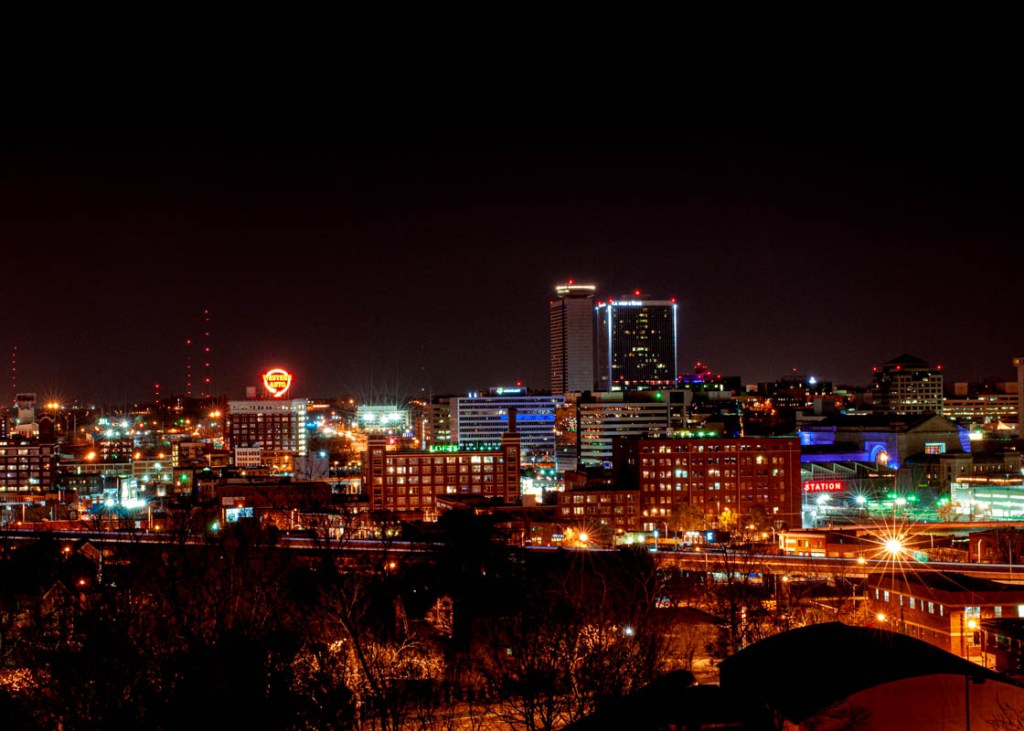
The city
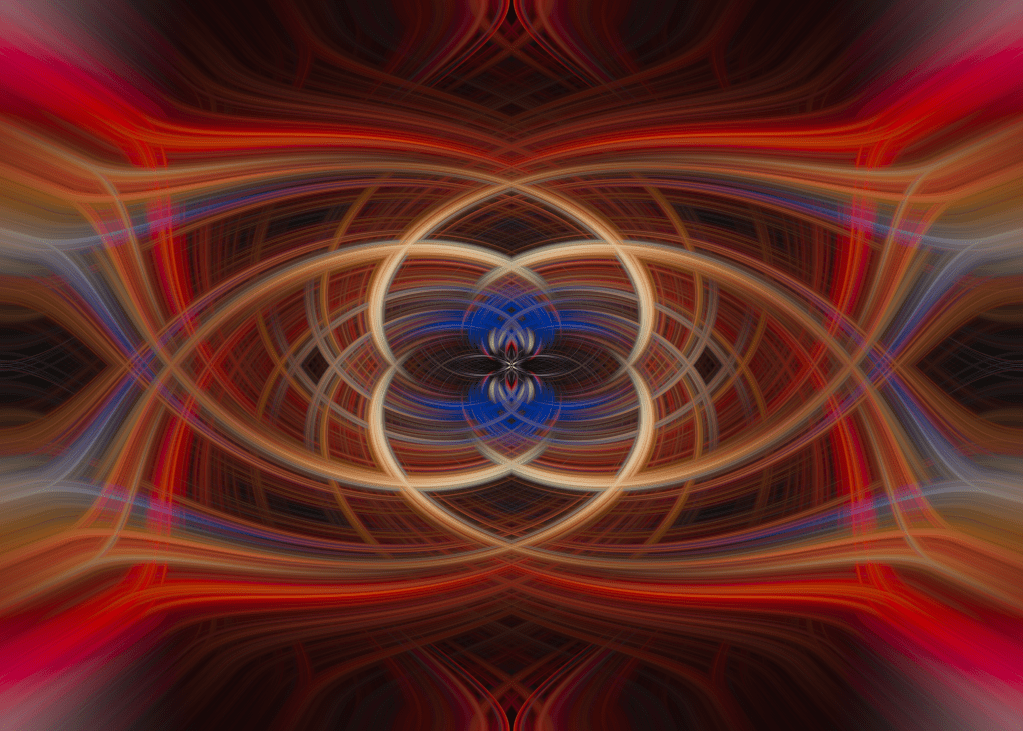
In one of the social media forums, I participate in there is a current trend of creating “twirl” art. This has created quite a stir. A few members of the forum have complained this is no longer photography since the original photograph. The complaints, of course, just created more of an interest in creating these works. While this may be a passing fad, the tools available to create these sorts of works in Adobe Photoshop have existed for every version I have used and I began using Adobe Photoshop in 2010.
The philosophy of art is not writing in stone. We can debate what is art ad nauseam but I still find myself participating in such debates. This is why I like photography, art, and philosophy, everything is ambiguous. If we haven’t clearly defined what is art or beauty in 2,500 years it is likely that we may never agree on what is or isn’t art past an often short-lived movement.
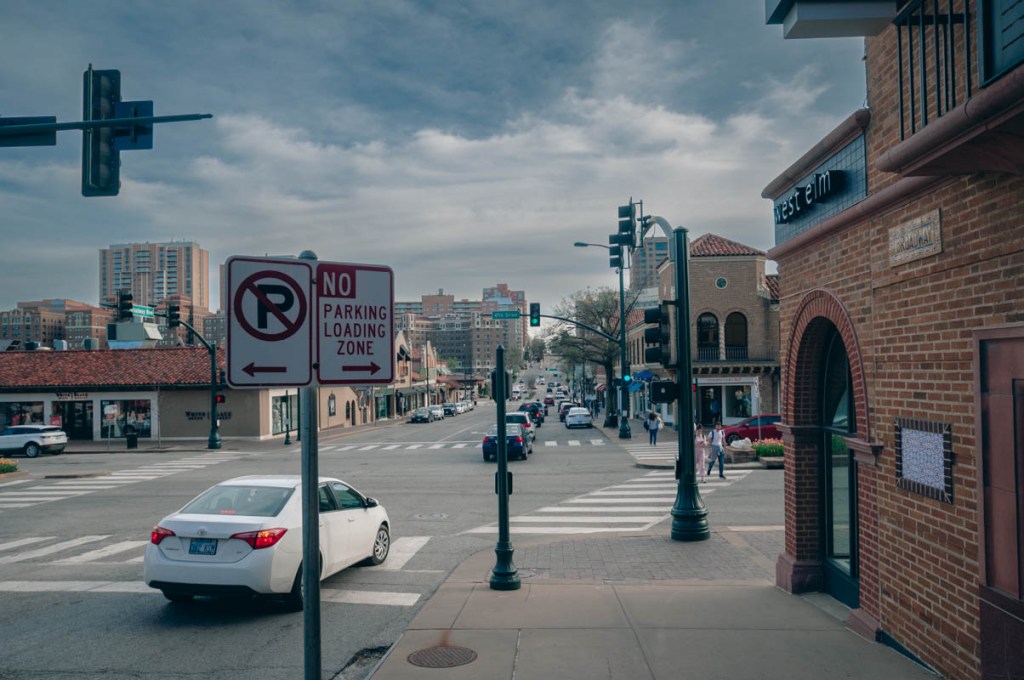
Exposure information: ISO 200, 48 seconds, f/13 at 46mm
I’ve talked about not letting reality stand in the way of creating art many times, but you don’t have to change reality to create photographic art. Sometimes we just have to see artistically or a scene just meets our vision. For me, art is about intentionally creating something aesthetic to view.
While the scene in the image above accurately shows the city, it also alters reality, without manipulation through post-processing. How so you may ask. As the caption shows, the photograph above, while only mildly processed in Adobe Lightroom, was a long exposure with a small aperture. The long exposure renders the cars traveling the streets as streaks of light. The traffic signals may show red, green, and yellow lights. The small aperture renders the points of light as starbursts. This isn’t how we see the scene with our eyes.
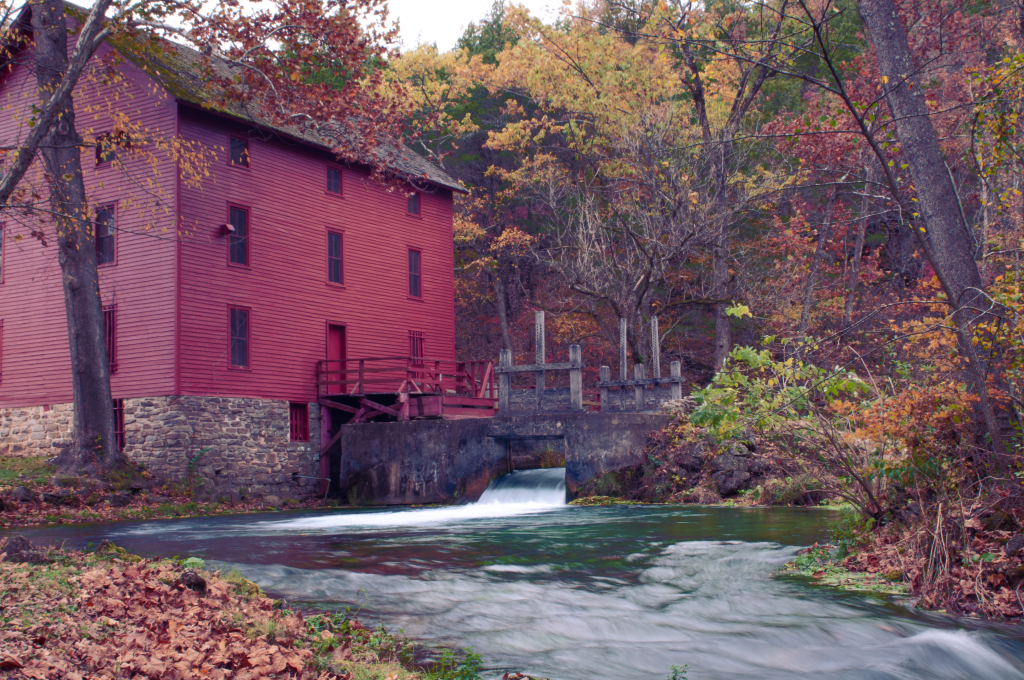
Exposure information: ISO 100, 4 seconds, f/11 at 30 mm
Again in the image above, the scene is only mildly edited through post-processing, yet I altered reality since we don’t see the flowing water as a smooth surface.
Exposure information: ISO 200, 1/320th second, f/5.6, at 16 mm
Even when we don’t use long exposures, we alter reality since we freeze time. The cars and people are permanently frozen in time. We have merely captured a fraction of a second of reality. The real world is a moving flowing place.
One could argue that video may show reality, but is it? Can the reality be altered by the choice of a lens focal length or aperture? We, as photographers, can only show a scene close to what it was in reality. This is why I often don’t hesitate to alter reality further.
As a photographic artist, I portray reality as it exists to me. I portray the reality of my world. If I ever have to record something forensically I will not alter the record any further than I have by taking a video or photographic record, but when I create a work with the intent to create art, all is fair game.
I’ve touched on this topic in the past when discussing reality and post-processing with your photographs. When I take photographs I attempt to visualize what I want the final artwork to look like, at least as best as I can at the time.
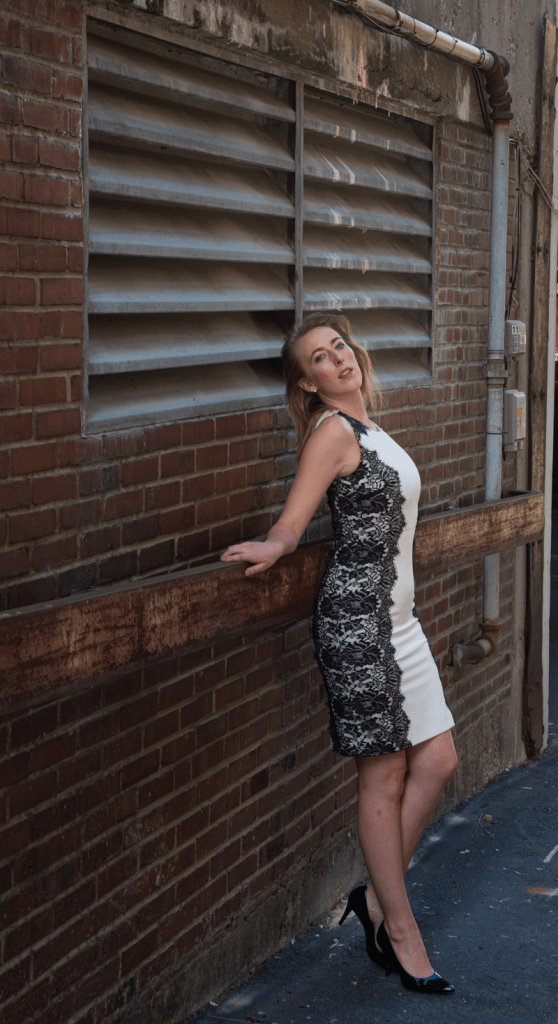
Let’s take the photograph above as an example. The scene when I took the photograph was daylight and brightly lit.
Alleyway babe – original look
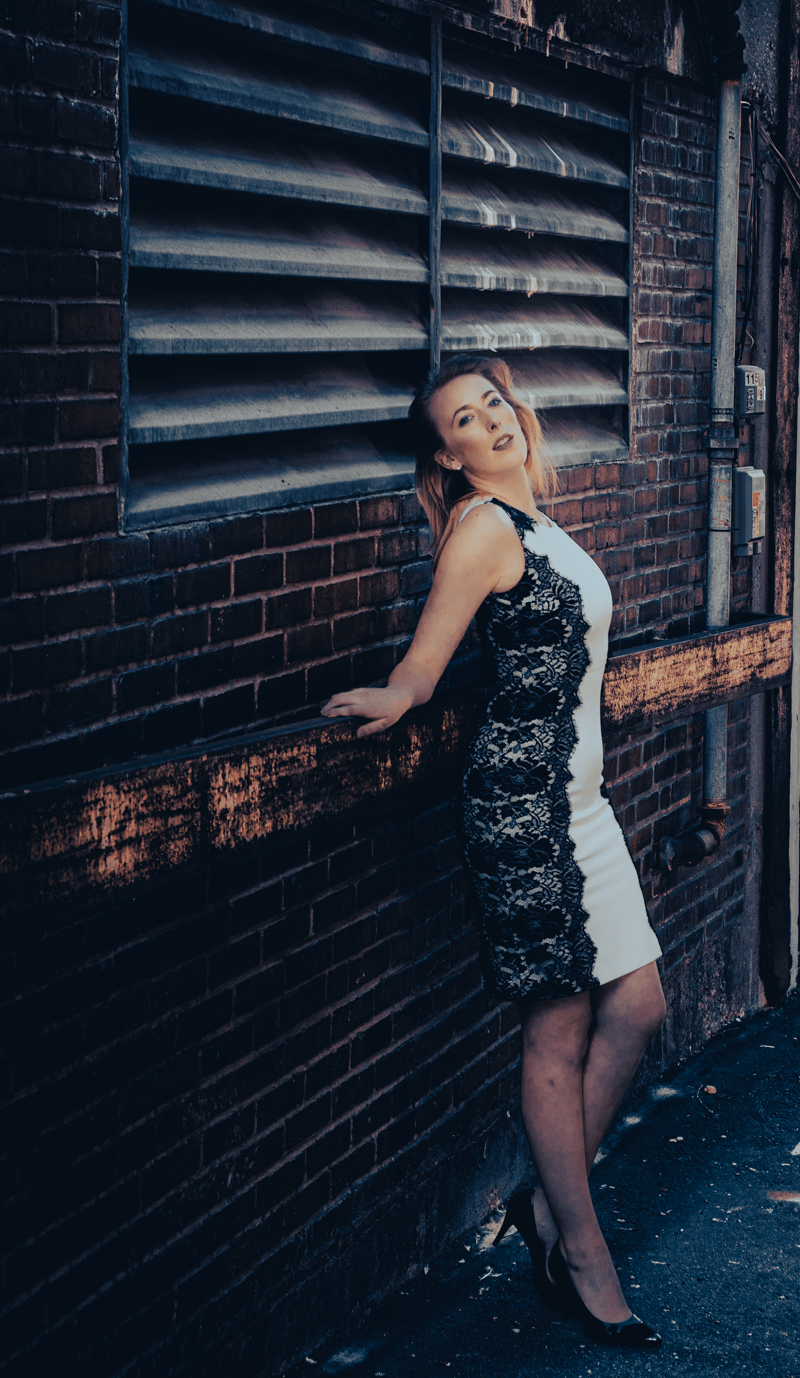
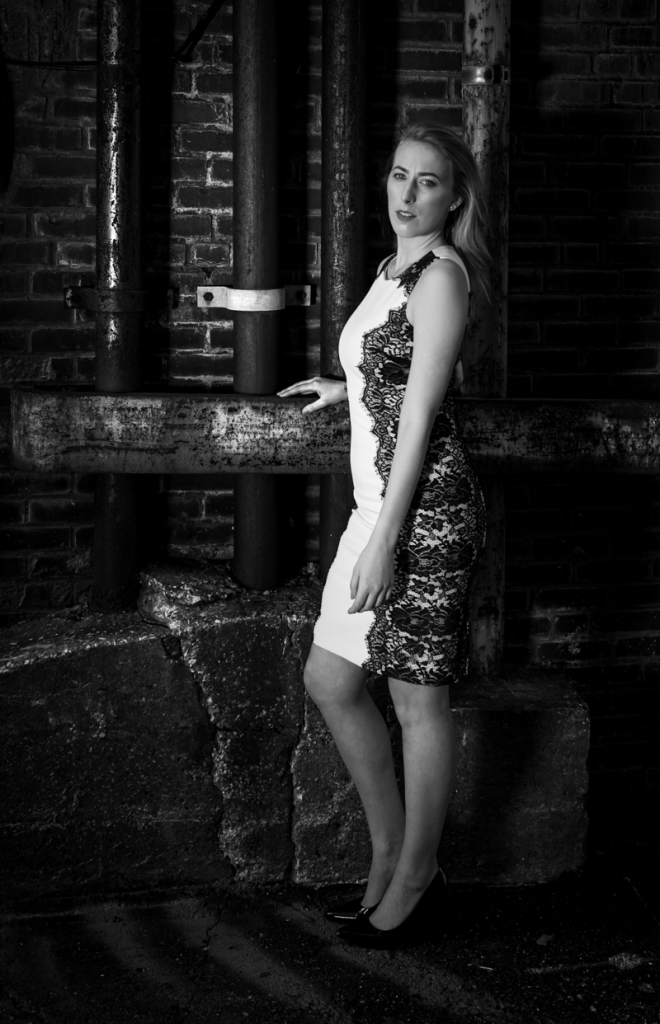
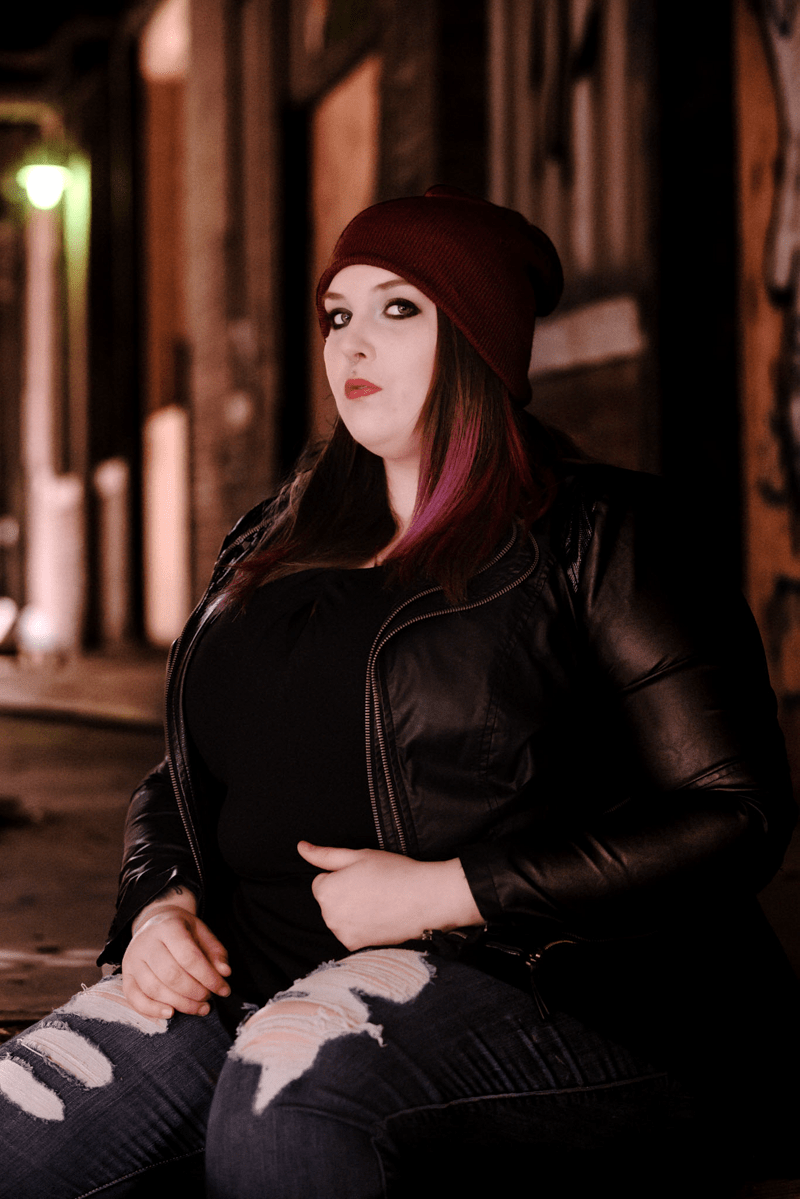
The scene above is far less dramatic. I knew what I wanted to convey which was a nicely dressed good looking woman in a gritty rough environment.
Alleyway babe
The photograph above was as I envisioned it when at the time of the session in 2016.
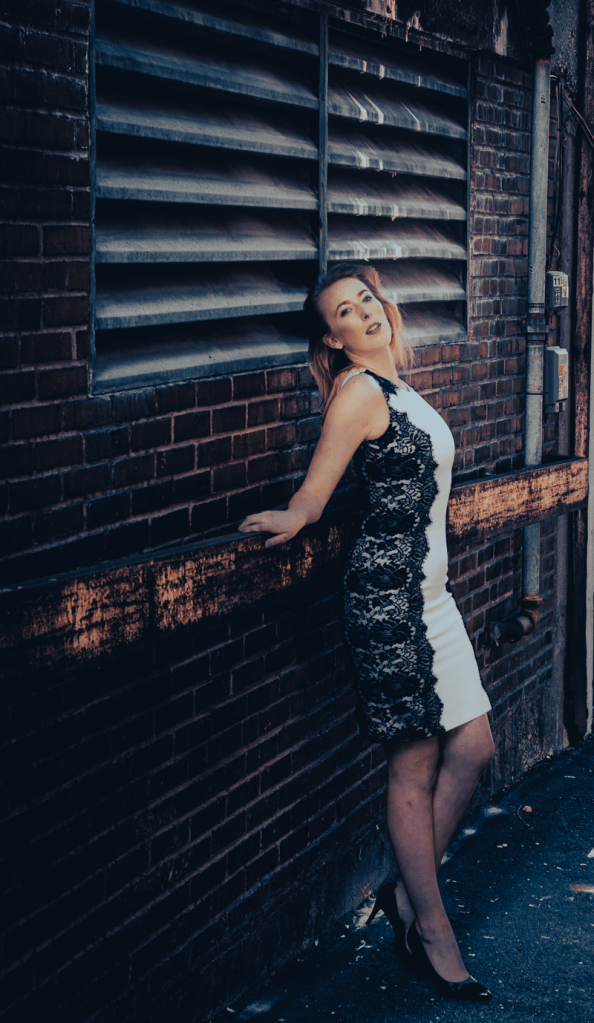
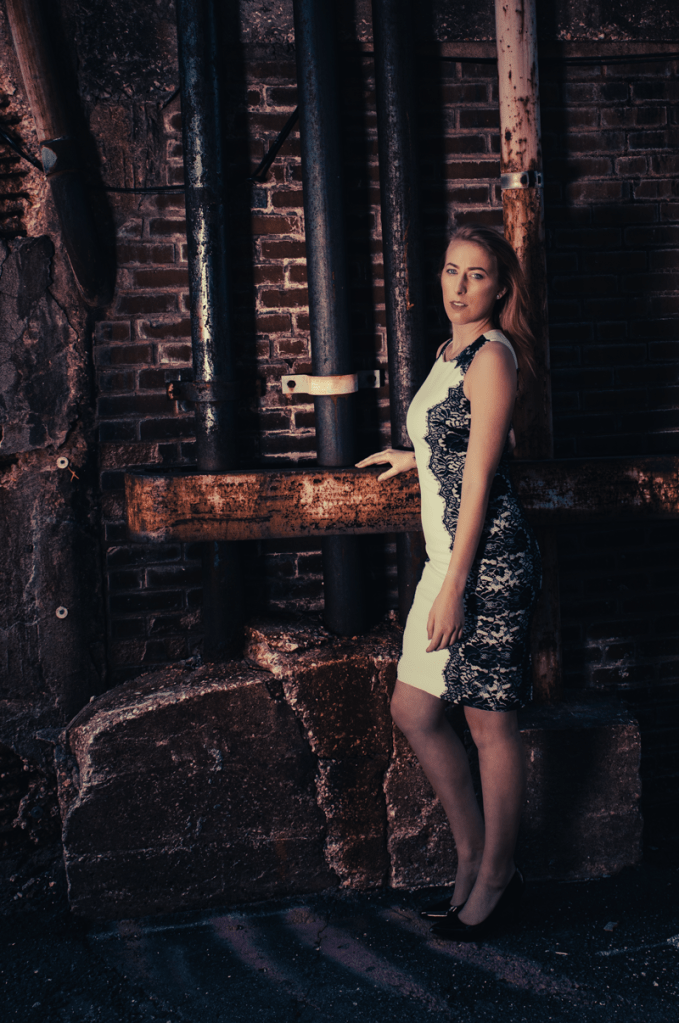
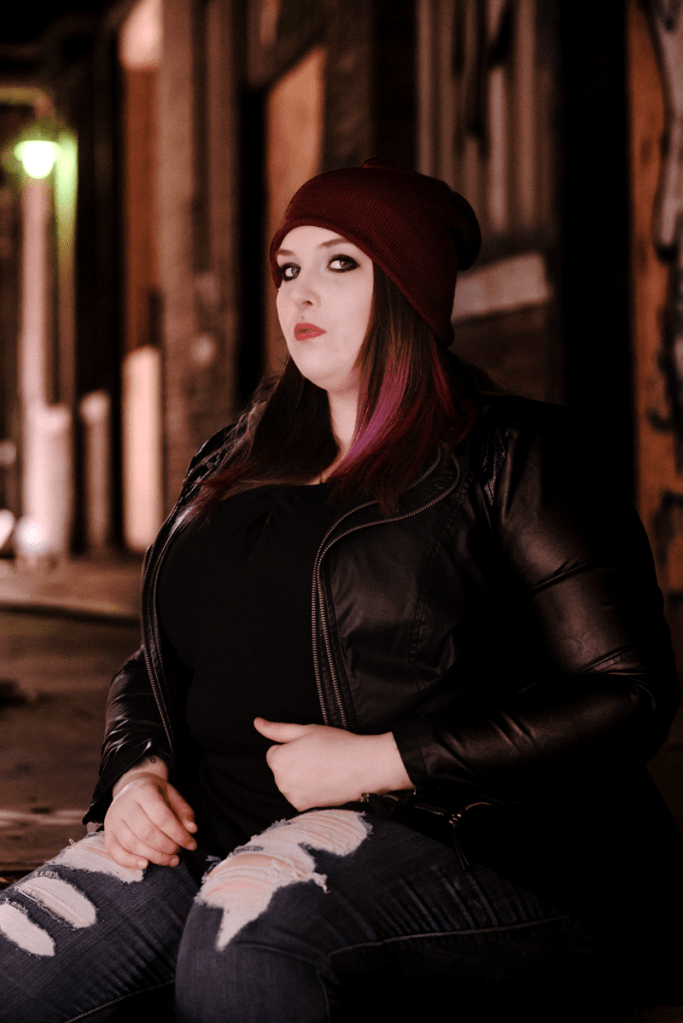
Today, when I revisit these images I still envision them the same way but with a bit of a change in style.
Alleyway babe revisited
As you can see, the general vision is the same with the exception I often think in terms of color grading to give the scene a sense of drama.
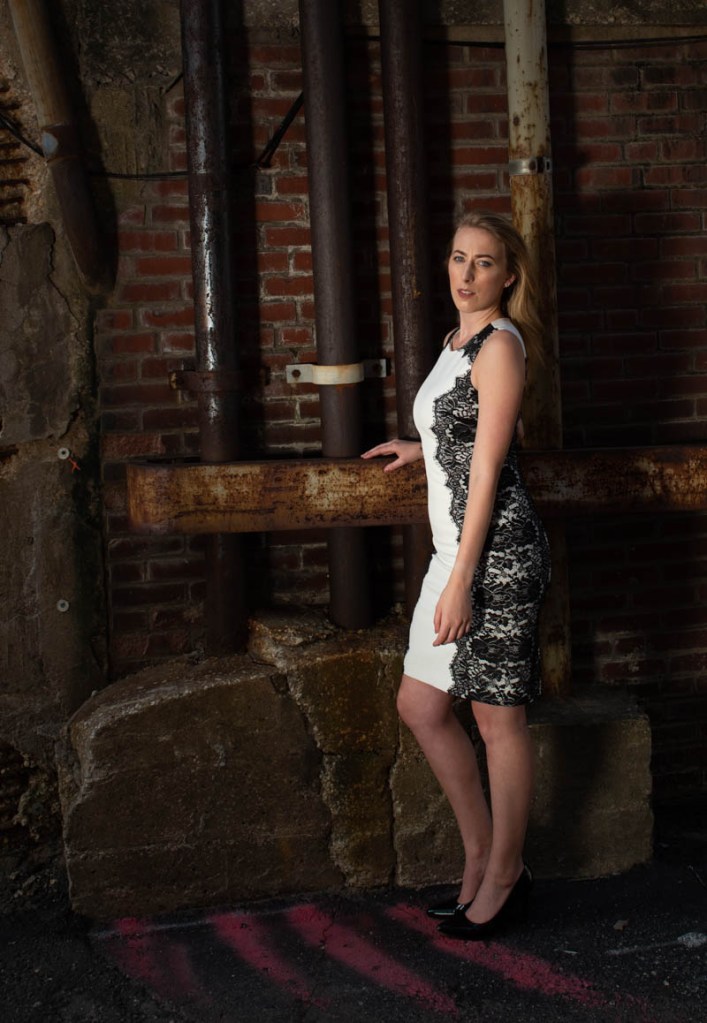
Original
I know, some may not like the style but as you may see in the image above of the original scene as it appeared it isn’t nearly as dramatic. I don’t let reality stand in my way. I am working to create an artistic look, even in portraits. I can create the generic school photo look, it just doesn’t fit my artistic desire. I envision the world in the form of art, not in a flat two-dimensional format. I often see bold colors and textures. I love seeing drama and emotion, even in landscapes. We, humans, are emotional and often dramatic. I work to create things that will give me a moment to pause and view my work. I always hope others will do the same.
I believe that once an artist starts to view the world as a form of beauty, with emotion and drama it changes how you envision your art. This is why I often find straight photography boring and unexciting. Even the masters before us that created wonderful pieces in the days before Photoshop and similar programs felt it was nearly as important, if not more, how work was done in the darkroom as it was at the time the film was exposed in the camera.
Each of my examples above, not counting the original looks, took very little time in post-processing using a current version of Adobe Lightroom. You don’t have to spend hours post-processing. You just have to become familiar with the software and your style. Learn to see with drama and emotion and then make the art come to life and meet your vision.
When I’m asked about my advice for new or beginning photographers I always recommend they learn to use their camera in manual mode. Manual exposure, manual focus. Using manual control you learn much more about exposure and focus, additionally, you slow down a bit, especially at first. Slowing down gives you time to consider your photograph. Learning to manually control your camera will be my first bit of advice. I probably shoot 90% of my images in manual mode.
The second bit of advice I believe is important is to learn post-processing. In today’s digital age post-processing is the darkroom of our photographs. When we think about past masters of photography many, if not most, developed their own photographs or had a very talented darkroom person. In fact, I can’t think of a single photography master of film days that just sent their film to the neighborhood drug store or any other mass production film processing business. Why, because how the image is developed post shutter click is nearly as important as the setup pre-shutter click. For me, the straight out of the camera jpg is not unlike using the neighborhood drug store or the “one hour photo” development store. Yeah, it’s a usable image, but they are more often than not, lacking. Can you image Ansel Adams or Edward Weston putting their camera in auto mode, clicking the button, and using the in-camera processed jpg as the final product? Me just writing that probably has those guys rolling over in their graves.
If you truly want to be the master of your photography do yourself the favor of learning to control your camera and the development of your images in post.


 Photographer Clay