Creativity is not dead despite what others may think. Yes, there is a low bar set for entry into photography but the bar was lowered 123 years ago and the so-called masters didn’t let that hold them back. How do I get the bar was lowered 123 years ago? That was when Kodak released the Brownie camera. The camera meant for everyone. Since then photography has experienced a number of advances making taking photographs easier and faster.
Just because it is easy and fast and nearly everyone owns a high quality camera doesn’t mean that creativity in photography is dead. The only thing stopping you from creating art. Just because it is so easy to share photography with the world and others just scroll past doesn’t stop you. Share. Inundate the world with your work and raise the bar for you.
First of all, I want to say motivational speakers are often full of crap, and yet this is somewhat of a motivational post. As with most of my blog posts, this is primarily aimed at me but if you get something from it, it is all the better.
Without challenges there is no growth
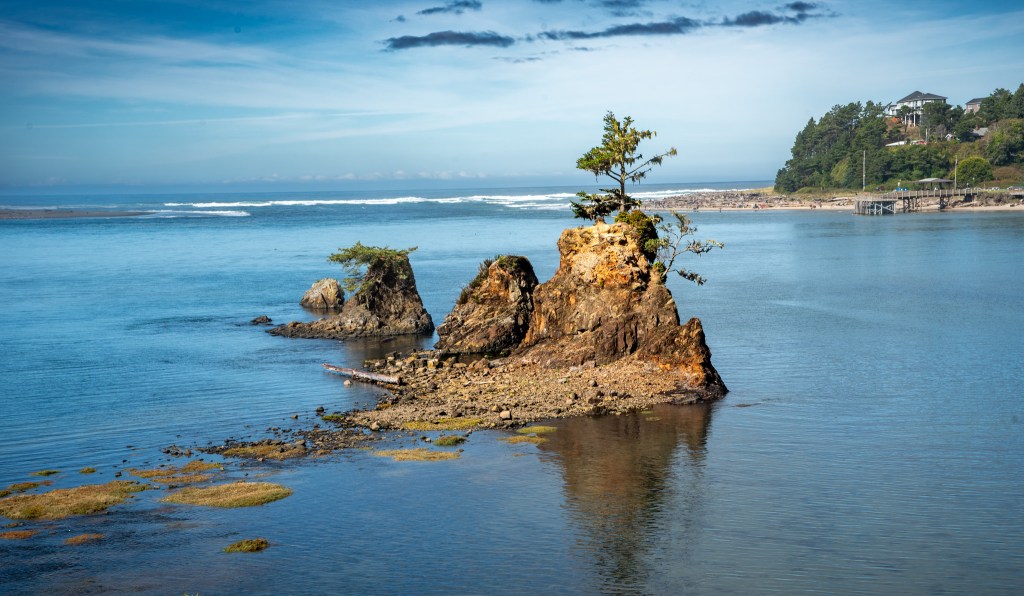
We often look at challenges as roadblocks preventing us from our destination. Let’s look at the featured image above. Look at the challenge the seed and subsequently the tree has in survival and yet it lives on and grows. It survives storms and good weather.
As photographers, we often get to a point and tell ourselves we are good enough. We stop challenging ourselves to do different things or experiment with different subjects or styles. We convince ourselves we like where we are and we like our style without challenging ourselves to move forward or perhaps venture down a new trail. Unlike the tree in the featured photograph we are not trapped with our roots embedded in the rocks. We can move about, explore different areas, different styles, different subjects, and differnt techniques.
To stay the same is easy. We are less likely to fail because we do only what we know. Even if there are techniques and styles we have tried in the past we are not the same person or artist we were in the past. Maybe it is time to revisit styles and techniques. Maybe it is time to practice some basics and refresh our beliefs.
The challenges of a photographic artist
One of the greatest challenges I find for myself is the ability to envision what I want when working to create a piece, but often struggle to bring it to life in the actual piece. Then will anyone other than me understand it? Does it matter if no one else understands?
Is our photography really about art or are we just in it for likes? Is it about creating quality or generating a dollar? For me, it often appears as if we convince ourselves it is about art and quality yet we succumb to the will of likes and/or money.
Rarely, have I taken a photograph that I felt like it was the best that could be done. I am almost always on the hunt to do better. This can be both a problem and a blessing. I constantly strive to get better results but at the same time, I become bored with subjects, lighting, areas, etc. I see many more flaws in my photographs than ever before, such as chromatic aberrations, focus that is too sharp, focus that is too soft, too much or too little color saturation, too much or too little light or too many dark shadows. But then put a beautiful model or cute child/pet/animal and get lots of likes yet put in the work and produce a good photograph of a mundane subject and the proverbial sound of crickets.
It all may boil down to the speed of life around us where we are all in a hurry to get the destination even if we don’t know where the destination is and don’t have time to stop and appreciate what surrounds us, to enjoy art and interpret the story of the piece.
A couple of weeks ago I wrote about how photography has become easier than ever and touted the ways and benefits. I was a bit wrong. Yes, photography has become easier, and for the most, it is a good thing, for the most part. What is difficult is to take good photographs and harder yet to create art. No, to me, just because you claim a piece to be a work of art doesn’t make it so. Just because it is easy to take a photograph doesn’t make you ready to become a professional photographer.
I also believe we have, at times, become too nice for fear of offending others. It has become easy to give a thumbs-up, heart emoji, or type “nice photo” on what may be a mediocre, at best, photograph. “We all have different likes”, I get it but that has become an excuse for giving the aforementioned thumbs-up, heart emoji, or typing “nice”. Our attempts to not discourage others has evolved into praising poor or mediocre work, in my opinion.
Some might say I’ve become a grumpy old photographer who believes everyone has to pay their dues, well I’ll tell you that is far from the truth. I believe the best way to encourage beginning photographers is to help them learn and progress not give them a participation trophy. Sometimes the truth is harsh.
This is one of those never-ending debates in photography. Should photography be considered art or journalistic documentary? Can it be both? Can a person practice both? I typically consider myself more of an artist. I don’t let reality hold me back. I love to create. I work to get what I consider the best starting point and then do my editing. This often involves bracketing shots, working exposure, composition, focus points, and depth of field. For me, it is all about the art with an occasional documentary look.
Even photos I take and share that look more like documentary style are altered. My reality is often much different than others. I work to re-create how a scene or subject looked in my mind, disregarding distractions such as leaves or branches that are “out of place” to my eye.
This mindset even applies to photographing people. I look for dramatic lighting but I am not beyond making the light more dramatic in my post-processing.
For me, it is about vision and emotion rather than merely recording a scene.
Photographic style, something that confuses many people. I did a bit of research this morning on photographic style and even the “talking heads”, or at least people who profess to be “experts” were confused. Most of the articles I found talked about genres of photography rather than “style”. Even more confusing is how to find “your style”. Can you even find “your style”? If you can, can you really find your style if you never go outside your “comfort zone” with techniques, processing, and compositions? If you never, go wild, how do you know that isn’t “your style?” Is “your style” just copying someone else? If so, is that really your style?
So many questions and few answers. Let me hear your thoughts on photographic style.
My intent when I write my blog posts is to, hopefully, prompt thought about our craft. Rarely do I write to provide instructions on how to create better photographs but rather to stimulate our minds to follow a path of creating art. I consider my daily ramble “photography food for thought”. Hopefully you will continue to follow along and we can generate conversation about the “food”. As long as the conversation is stimulating and thought provoking, I welcome comments about my daily ramble. I like to believe that together we can work towards creating more engaging photographic art.
For me, my photographs are never “good enough”. I am constantly working to improve my technique. I often go back and rework older photos or reshoot an older theme in another way hoping to improve on it. I’ve reworked and reshot more photographs of mine than I can count. It is all about improving, not just snapping and posting.
Some would say we all have our own style or “hey I am making money”. If you’re not growing and improving as a photographer, you are destined to fail in my opinion.
So many times, photographers are overly obsessed with copying or recording reality, but what is reality? Is it the way nature truly exists or is it constructed in our minds. If you’re inclined to read article to help understand this phenomenon, go here.
This visual interpretation of reality truly comes into play with our visual art, photography. What some see as reality may be quite different than what others see as reality. This is why I have become a huge fan of post-processing my images. In many cases it may be extremely difficult, if not impossible, to remove distractions from a scene. Sure, I could take time and move trash, trim the brush and leaves but then the light may be different. If we set up additional light sources, we have altered reality. If we setup a backdrop, we have altered reality.
In my view of the world, I see light, shadow, and vibrant colors when looking at a scene to photograph. In my reality, the camera does not always record the scene the way I viewed it at the time, therefore, I must re-create the scene in post-processing. Is it altering reality or is it bringing my reality back for others to view? I like to believe it to be the latter.
I read an article that had an embedded video which featured two photographers discussing social media viewers of their work. The title of the article was “No one cares about your photography. (And that is okay), find the article here . What I thought was interesting was I didn’t get that thought watching the video. Just because you may not get the comments or “likes” on photographs which you share on social media as you do others does not mean that “no one cares”.
To me, art is meant to be shared and viewed by others. If we go to an art museum there, for the most part, isn’t a spot or location where we can post our “likes” or comments but that doesn’t mean we don’t care.
If we don’t share our work outside of our “circle of friends” we continue to live in a closed environment and may never grow or progress as artists. It isn’t that we are interested in producing work to please others but rather may gather information that helps us produce better work and grow.
So, are we wasting our time sharing our work when seemingly no one comments or gives us likes? I don’t think so. I do my photography for me to share with others. If only a handful of people like it that is fine, whether or not they say they like it or not is also fine.


 Photographer Clay