Tag: photograph

  • Are you growing as a photographer or artist?

    Are you growing as a photographer or artist?

    Are you growing as a photographer or artist? I don’t mean physically I mean is your art becoming more mature and by mature I mean is it more complex, more thoughtfully laid out and executed. Could you have taken the same photograph or created the same piece of art a year ago? How about 5 years ago.

    I frequently look back through my library of photographs and visually compare what I was taking last year and the years before to what I am taking today. If I see that I’m going backward rather than moving forward I challenge myself by getting outside my so-called comfort zone. Maybe a change of genres or technique. Maybe learn a new process in Photoshop or Lightroom. Rarely is it that I decide I need a new tool, although I did recently buy a piece of gear to allow me to learn something new.

    It is easy to get into the habit of doing the same thing over and again. Sometimes it is good because you can hone that skill and continue to improve and mature as a photographer/artist. Sometimes it is not good because you continue to do the same thing over and over and over, never moving to the next level. When you realize you’re really not moving forward but rather doing the same thing because it is comfortable it is time to force a change.

    I’m in that process now. I want to move toward creating more fine art, but in the past, I got caught up in getting into photo sessions just because and then not expressing myself creatively but generating the same old work because that is what others wanted. It didn’t pay well enough to be financially beneficial, hell sometimes it didn’t pay at all but cost me. Then came the request for more than initially agreed upon, so more work. Today, I take what I want and produce it for myself. It may sound selfish and self-centered but to truly be creative I must first satisfy myself.

  • Are you a photographer or a gear collector?

    Are you a photographer or a gear collector?

    Here is a hugely unpopular opinion amongst many photographers, “gear doesn’t matter”. Over the course of many years, I have known photographers who had all the top-of-the-line gear. The best money could buy and their photographs were meh, mediocre at best but more along the line of a mere snapshot. I have also known photographers who with the most basic of equipment could consistently produce fantastic high-quality gallery-worthy art. Gear doesn’t matter, it is the final product that matters. How you get there doesn’t matter. Nothing matters except the final image.

    Lately, I have had conversations with photographers who are just starting out. I talk a lot about being able to control the light and lighting matters. At the same time, I also discuss how you can learn to control and add supplemental lighting in a very budget-friendly way. You don’t have to spend a fortune, mortgage the kids and dog, to get top-notch photographs. I literally started with a DIY (do it yourself) lighting kit and light modifiers. I’ll say it again for the people in the back, “GEAR DOESN’T MATTER”!

    My newest piece of photography gear is 8 years old. I’ll admit I spent a bit of money on it, but it wasn’t even the top-of-the-line 8 years ago. I’ll also admit that I have a closet full of gear but I also know that I have about 6 pieces of gear that get used on a regular basis. A couple of camera bodies, and 3 or 4 lenses. One lens, a 50mm f/1.8 I bought a number of years ago for less than $100.

    I know I’ll hear but, what about this or that. Yeah, yeah, sometimes gear helps, but it still doesn’t matter. You can have the best gear in the world and still produce crap while someone who has the most basic gear produces gallery-quality work. It’s about the operator of the gear, not the gear.

  • The most essential piece of gear in photography

    The most essential piece of gear in photography

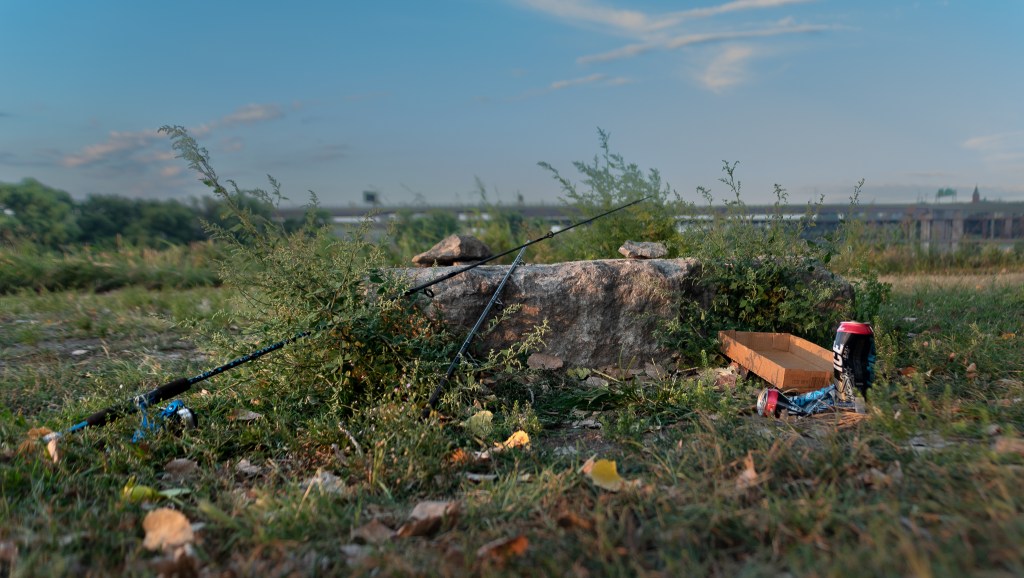
    I’ll start by saying that I used to hang out with avid fishermen, some were very much into top-quality equipment. I used to be an avid camper, having camped out sleeping under the stars, in tents, and modern heated/air-conditioned camping trailers complete with microwaves, satellite television, and most all our modern conveniences. What does this all have to do with photography? Let’s think about the fishing poles in the featured photograph. Without the fisherman, the fishing poles are useless in catching a fish making the fisherman the most essential piece of fishing equipment. As a child, I was able to catch my limit of fish using rudimentary fishing poles, which were nothing more than a stick with a fishing line and a hook.

    Just like the fishing poles, camera gear doesn’t take photographs without a photographer. The photographer decides where to set up the gear, and how to operate the gear. I know we can have cameras that can snap pictures automatically but it still takes a person to set them up. Even with that, does it create works of art?

    We now have A.I. which is making strives in creating. Type in a few descriptive words and a computer can generate an image. Yet we are still depending upon a bit of human interaction to get the machine started.

    It doesn’t always require top-notch gear to capture fantastic images. It takes a top-notch photographer to take top-notch photographs. Build your skills as a photographer first and then your gear to meet your skills.

  • Creating art for art

    Creating art for art

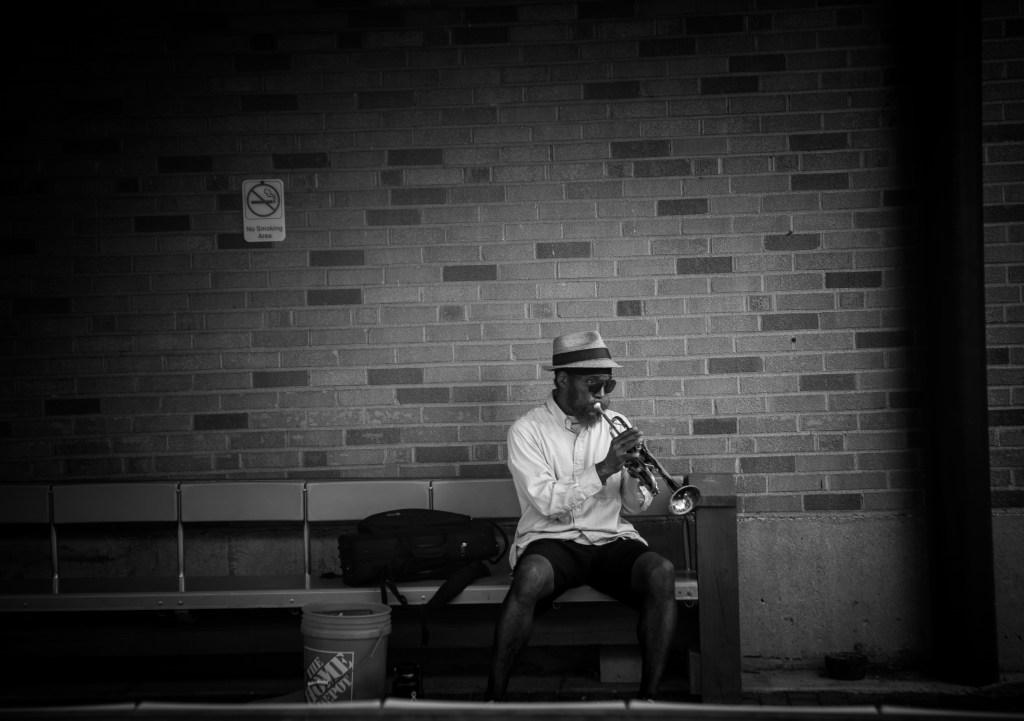
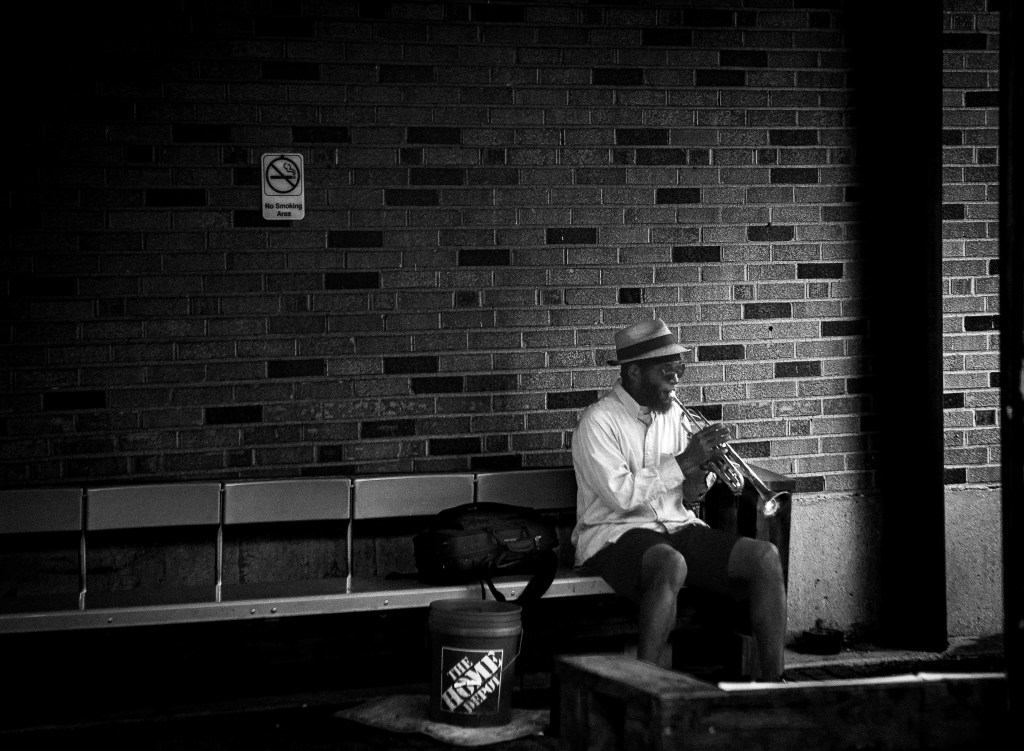
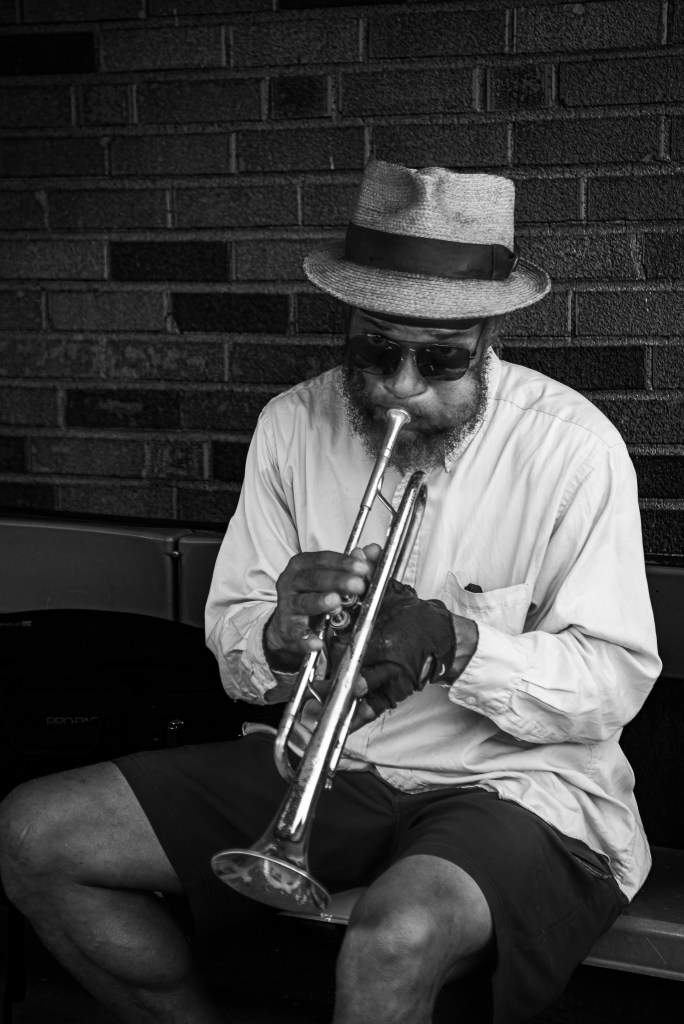
    A true artist creates art for the sake of creating art. The street musician hopes to get tips, he is creating his art, and music, for the sake of the music. I create photographic art for the sake of creating art. If I make a buck or two that is the icing on the cake.

    For me, that is the sign of a true artist. To create for the sake of creating. Creating for the sake of money one can become driven by what “sells” rather than what moves you as an artist. Creating art for art allows me the freedom to do what I want rather than worry about what sells.

    I haven’t always had this mindset. I once believed in running my photography as a business. Yeah, I made money but I wasn’t always doing what I wanted. I took “jobs” that paid, then I had to deal with clients who were late payers, wanting more than agreed upon, discounts, and the whole plethora of business issues.

    Now we are in the age of the “influencer”. Many of them want things for free to “fill their social media” believing they are entitled because they have a following.

    For me, I want to create what I want. If fame, fortune, and a following come it comes because they are really interested in my art not that I produce merely what sells.

  • Sometimes nature provides a show you just watch

    Sometimes nature provides a show you just watch

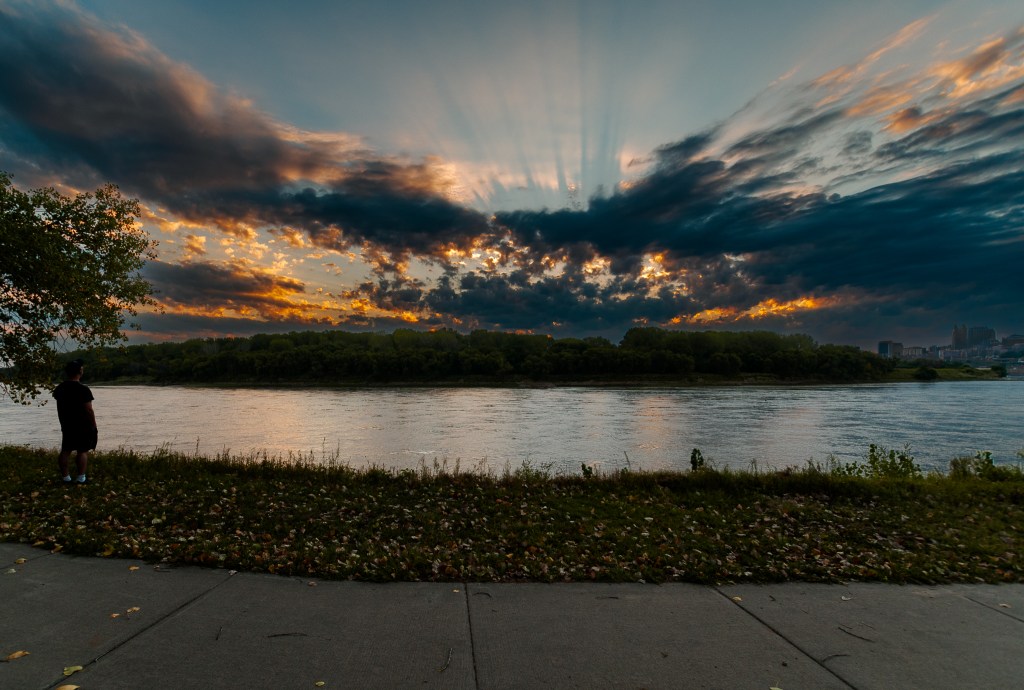
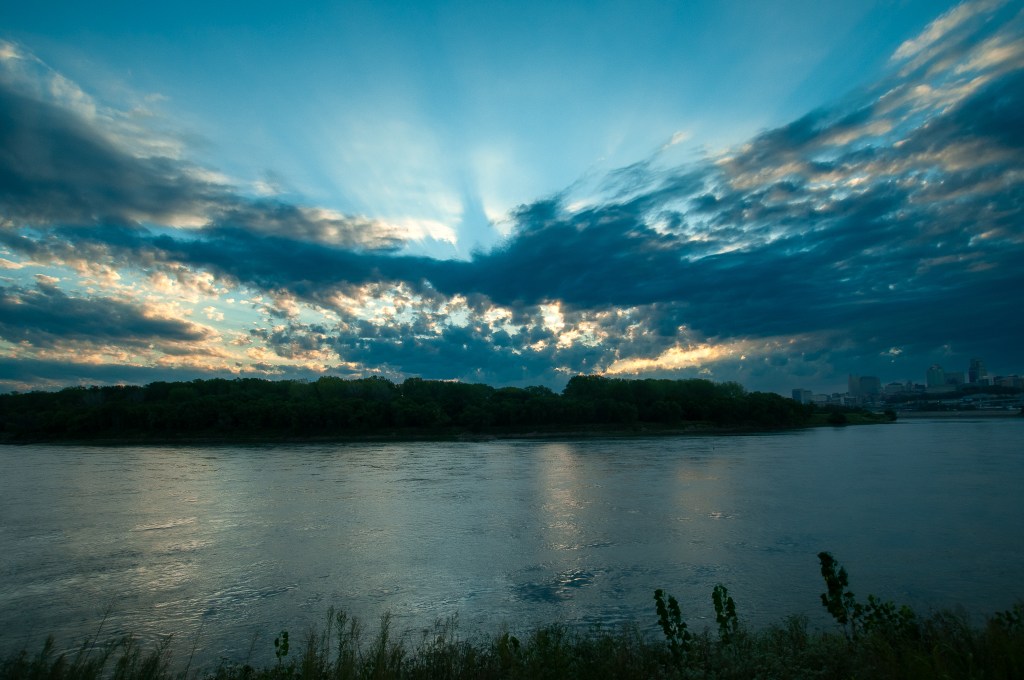
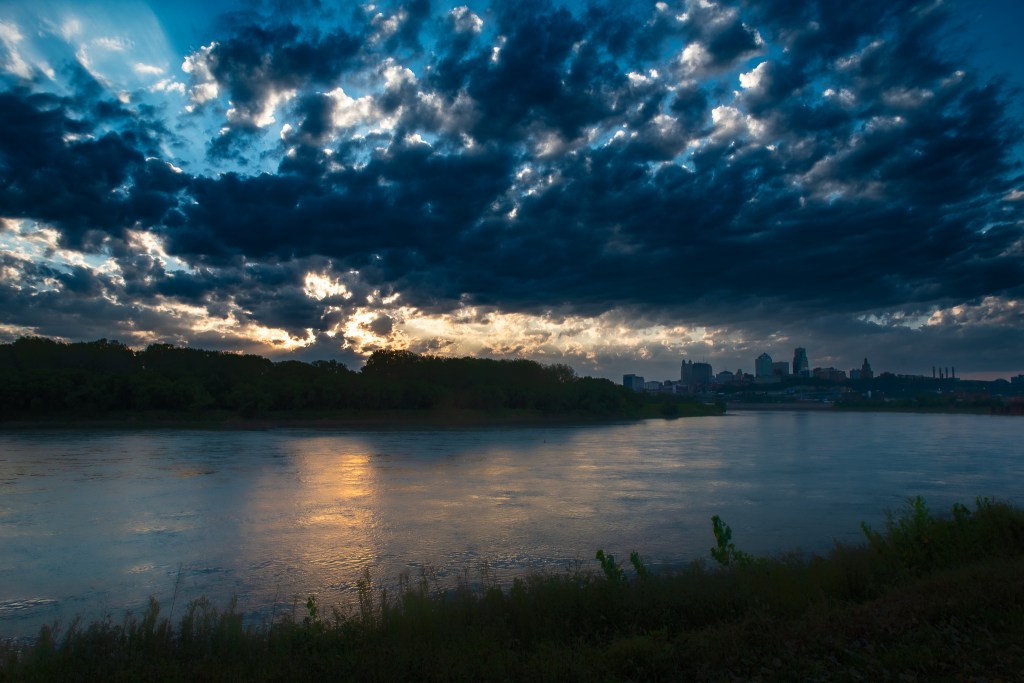
    I was out early a couple of days ago with some photography friends taking photographs of the sunrise over the skyline of Kansas City Missouri and the Missouri and Kansas rivers. Storms were brewing to the north and there was a possibility in the area we were photographing. As I was taking photographs, I saw this scene. The man watching wasn’t with our group, he wasn’t a photographer or fisherman but was out at 7:20 AM just watching the show nature was putting on. As far as I could determine he was alone. As I watched him watching the show of nature I wondered what his thoughts were, what his story is, and what brought him out so early on a Saturday morning.

    I didn’t talk to him, I just quietly took my photographs, intentionally making it difficult to recognize him so as to maintain a level of privacy in his moment. As Henri Cartier-Bresson noted this felt like a decisive moment. A totally unposed unplanned moment that just came together between man and nature.

    As we are out doing our art photography thing, it is often easy to get caught up in the act of taking photographs that we don’t pay attention to our surroundings, and even though I have never been much of a street photographer I was able to notice this scene and believe it may have been a turning point for both the man and myself. I can only imagine what was going through the man’s mind and his decision but for me, the moment reinforced the reminder to pay attention to what is going on around you, and sometimes you just watch the moment.

  • The feeling after a successful photography day

    Sunrise over Kansas City

    Yesterday, I had my first photography day in months. What I mean by photography day is that I started at 6 AM and finished at 2 PM. I ended up with 143 photographs, 17 per hour, or .3 per minute. It doesn’t sound like much but of the 143 over 60% are “keepers”. 60%! I cannot remember the last time I had a 60% keeper ratio.

    Sunrise over the city

    Most of the photographs I got are landscapes and time was spent composing and setting exposure. There was also some traveling between three locations. Some of the locations were a couple of miles apart.

    Sunrise over the grain elevator

    Over the course of time, I have learned that the time spent setting up the shot pays off, especially in landscape photography. Setting up the shots included the use of a tripod, and adjusting the exposure, composition, and focus. Nature also helped by providing some awesome cloud formations.

    All the photographs included in the blog were from a single area at sunrise. If you’re a landscape artist, don’t be afraid to get up early and get to your location before the sunrises. While we can never rely on nature to provide the skies we hope for sometimes luck is with us.

    This successful day has re-inspired me to get out more and get more done and hopefully sharing a bit of my successful day will get you inspired to create more.

  • Preparing for a photo outing

    Preparing for a photo outing

    This morning I am making final preparations for a photo outing with friends. We’re starting with a sunrise session and then working through until 2 pm. I started last night getting batteries charged along with a lightning trigger as there is a possibility of a “stray thunderstorm”.

    I’m the type that probably over-prepares and takes more than I need. Sometimes that is good sometimes it is not. I have decided that I need to get my “shit” together! I’m also the type that often keeps my “shit” haphazardly after a session. I couldn’t find a couple of batteries right away. I couldn’t find a couple of battery chargers. I couldn’t find my lightning trigger. They were all in my photography gear storage closet just not where they should have been.

    Photo by Ketut Subiyanto on Pexels.com

    At one point I looked like the child above. Stuff scattered all about only I probably muttered some curse words while I was surrounded by my stuff.

    I’ll keep you all posted on how the rest of the day goes as this is the first “big” outing I’ve done in a while. Yeah, that has been haphazard as well.

  • Does each fine art photograph have to tell a story?

    Does each fine art photograph have to tell a story?

    I’m reminded this morning of an Ansel Adams quote, “There’s nothing worse than a sharp image of a fuzzy concept”. Sometimes it is difficult to relate to the viewer what you’re attempting to convey. Sometimes, it is difficult to understand the scene yourself but realize it may be noteworthy or important. I have, on many occasions, never realized the concept of a scene until months or years later.

    Over the course of time, I have become better at identifying the concept at the time I took a photograph, but many times beginning photographers have yet to learn the skill. It doesn’t mean their work is poor. One thing I believe is important to realize is that there was often a lot of time between the taking of a photograph for Ansel Adams and the final print. Just the time it took to set up his camera, to measure the light, the test shot, the final image the time spent in the darkroom developing the film, and then the final print. I would agree that it is important to take some time to set up the shot to think about what you’re photographing. I also think it is important to sit down and review the images on your screen and decide how you want the final version to look. We often have the advantage today in that we can have a variety of final versions of the same photograph.

  • Do you just copy yourself?

    Do you just copy yourself?

    Do you just copy yourself? I mean do you just do the same type of photography over and over just in a different location? Do you ever try to change it? Different camera angles, different compositions, different post-processing, and different lighting. If you don’t are you really growing as an artist? Do you even want to be an artist or merely a picture taker? Is a photographer an artist? These are all questions that come to mind this morning for me after listening to a podcast yesterday on nearly this very topic. Now I’m curious if I’m doing this.

    I have, in the past, branched out in a variety of genres of photography and a variety of lighting styles but as I go through my library of photographs I notice lots of similarities between those genres. Could it be that is how I came to be in somewhat of a creative rut? Maybe.

    It’s time to reflect on my style and methods and maybe work to change it up instead of just copying myself over and again.

  • Photography is more than pointing a camera

    Photography is more than pointing a camera

    Yesterday, I wrote that lighting is the most essential part of photography. To continue along that line, photography is more than merely pointing your camera at a subject and pushing a button. Sometimes you can get lucky by the point and push method but to be consistently successful, that is creating art, takes more.

    I’ve taught students who didn’t want to take the time to learn composition or camera operations. They wanted to instantly jump into the world of Photoshop and processing. The way of the artist, as I see it, begins with an idea or concept. To jump in and not learn the basics of photography is like wanting to build a house without knowing how to use a saw and hammer.

    I often go back and re-visit basic concepts of photography just to keep them fresh in my mind. Doing so allows me to recall those basic skills without really consciously thinking about them. They become natural and automatic.