Tag: Photography

  • Do you give your artwork a title?

    Do you give your artwork a title?

    Surprised

    Do you give your artwork a title? I haven’t been but I believe I may have to start titling my work, and possibly a bit of a description/artist statement about the work or project.

    I always thought it was interesting to go to an art museum and see a piece of artwork that was titled, “Untitled”. I never gave it much thought that I was doing the same exact thing. Not titling my work. Even when I would export an image from Photoshop or Lightroom the “title” (read file name) was often something like DSC_####. Every once in a while I would be creative and name a file something like “name of location # of #”.

    Maybe everything doesn’t need a title, such as doing a portrait session or family photographs but shouldn’t we give them a bit of a description? I have found old slides and negatives I took years ago that vaguely remember taking but I have no idea of who some of the people in the photograph are. In fact, a couple of years ago I discovered I photographed a wedding back in the early 1980s for some friends, at the time. I vaguely remember the people but I cannot remember their names or the exact date and location where the photographs were taken. I’ve done the same thing with recent digital images. I’ve improved with giving keywords when importing into my Lightroom catalog. My filing system is still a work in progress.

    One of the reasons I have thought about this topic is that I am working on setting up an online store to sell art prints. When placing images in the store, you must give the artwork a title and a description. Shouldn’t the same thing apply to our photographs even if they are set in our digital catalogs? It would make it easier to find assets for projects and refresh our memories when we review past work and help us gather ideas for future projects. Then, worst-case scenario, if something were to happen to us or others were to search our digital catalogs they would know something about the subject, location, why, and other particulars we thought were important enough for us to take a particular photograph.

  • A picture is worth 1,000 words

    A picture is worth 1,000 words

    You may have heard the old adage, “A picture is worth a thousand words”. Often people interpret the saying most literally believing it means that what we see in a picture is worth a thousand words in describing a situation or proof of something. We all know that a photograph can be deceiving even without the use of manipulation. Often in a trial, a photograph is only one, often small, piece of evidence.

    For me, a picture is worth a thousand words is a more metaphorical concept. The saying and my, fairly recently adopted, thinking the saying means multiple and complex ideas can be conveyed in a single image conveying its meaning with more essence more effectively than mere words.

    My goal with some of my art is to convey a story, emotion, or concept. Oftentimes the story, emotion, or concept may be more clear and other times less so and open to different interpretations by different viewers.

    One of the issues that led me to this thought was a recent browse of my Lightroom catalog. I was seeking a particular image out of the thousands I have cataloged but I was unable to find the image I sought. I have been horrible at using keywords, titles, or descriptions. I have been even worse at identifying locations where photographs were taken. This began me to think about words and art. I then noticed I have, literally, thousands of images that have never seen the light of day except to occupy space in my Lightroom catalog. Many of these could be put to use as parts of projects or used to convey stories, emotions, or concepts given the proper attention.

    Begin to look at your images, and see what multiple and complex ideas can be conveyed with the proper use of your work. Who knows, you may discover more about yourself as an artist and your creativity.

  • Does modern technology do away with creativity?

    Does modern technology do away with creativity?

    A friend of mine recently shared a photograph with me she took of another mutual friend while they were out on a photography outing. It was very unique in that the mutual friend was a reflection in a store window. You could see objects inside the store, the reflection of the glass with a person (our mutual friend). I then commented to my friend that there is a filter you can use in a smartphone app that has window reflections. My friend commented that was a bit concerning because it was getting too easy without trying to figure it out.

    I’ve thought about this brief conversation and I can see both sides of the issue. For many of us who have spent years studying how to get the most out of our traditional equipment (I’ll even throw in digital SLRs as traditional because they work much the same as a film camera), it does appear you don’t need to spend time testing, experimenting, or problem-solving. You don’t have to use your imagination or creative thinking to visualize a work of art. You can just use someone else’s imagination. You can, literally, just point and click.

    On the other hand, doesn’t this open up different opportunities? While the basic concept is down can’t we take this concept and use it as a base for creating our conceptual ideas? I think we can. I’ve downloaded the app, and I have it on my smartphone. I have many creative filters even. I don’t intend to let this replace my traditional equipment but the more I think about it, the more I want to use it to fuel my creativity with my traditional camera equipment.

    I know the concept of not wanting to compete with others, but as humans, it is difficult to overcome. We often don’t like to feel our world is being encroached by those who haven’t struggled or with a simple click of a button produce something so seemingly easy that may rival what we create. My advice is, don’t worry about it. There are those of us who do still admire the work of people being creative manually and not through some app or special filter. Use this new technology as a motivator to do more creative things.

  • I’ll fix it in post.

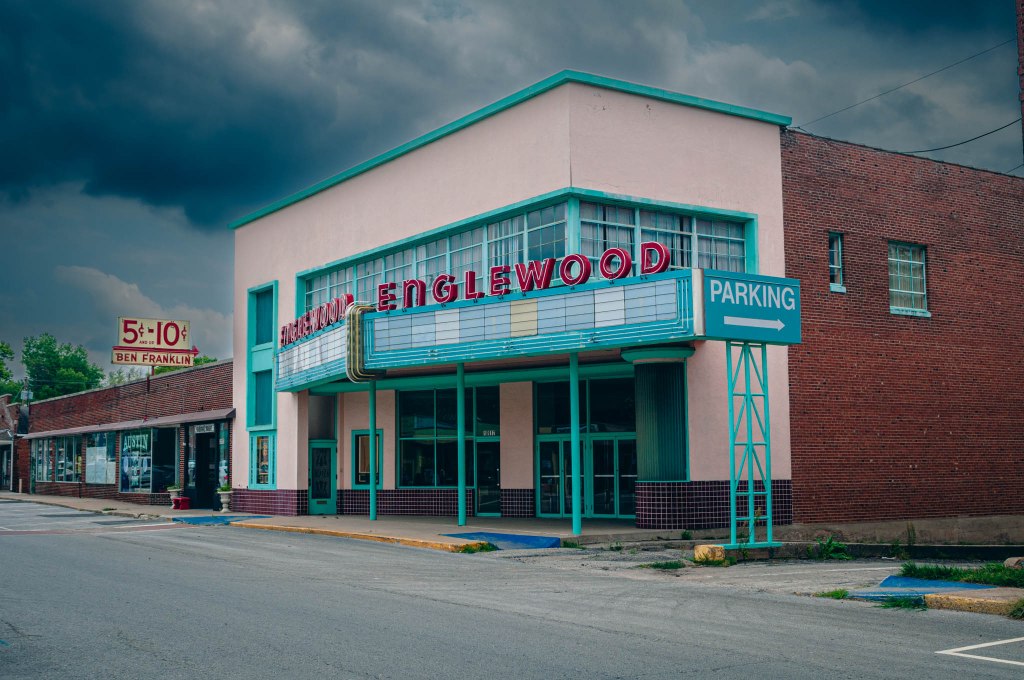
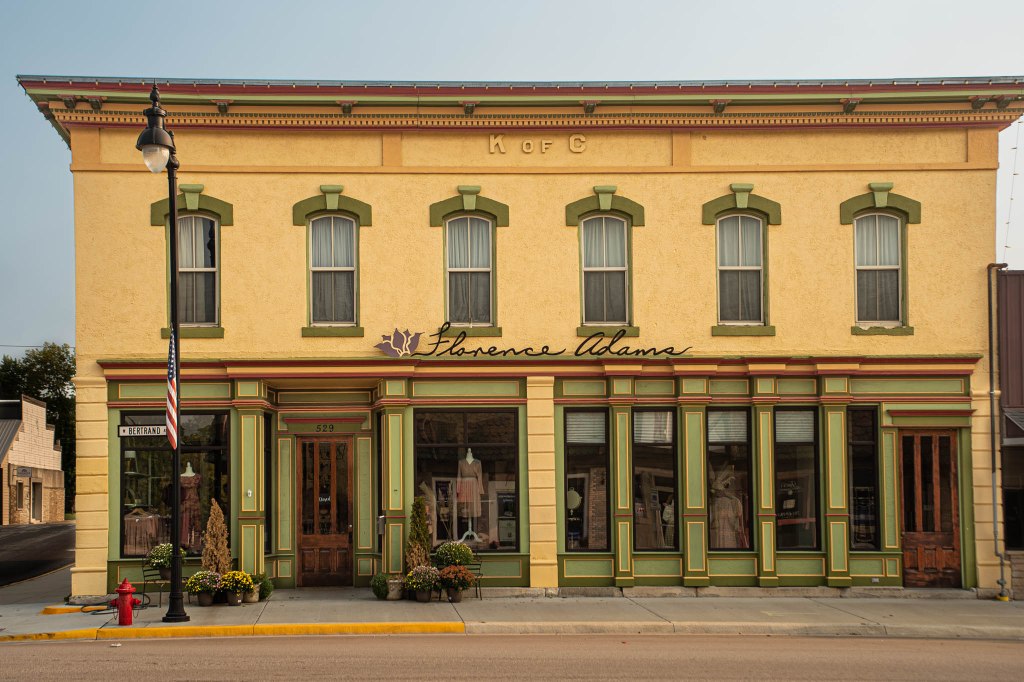
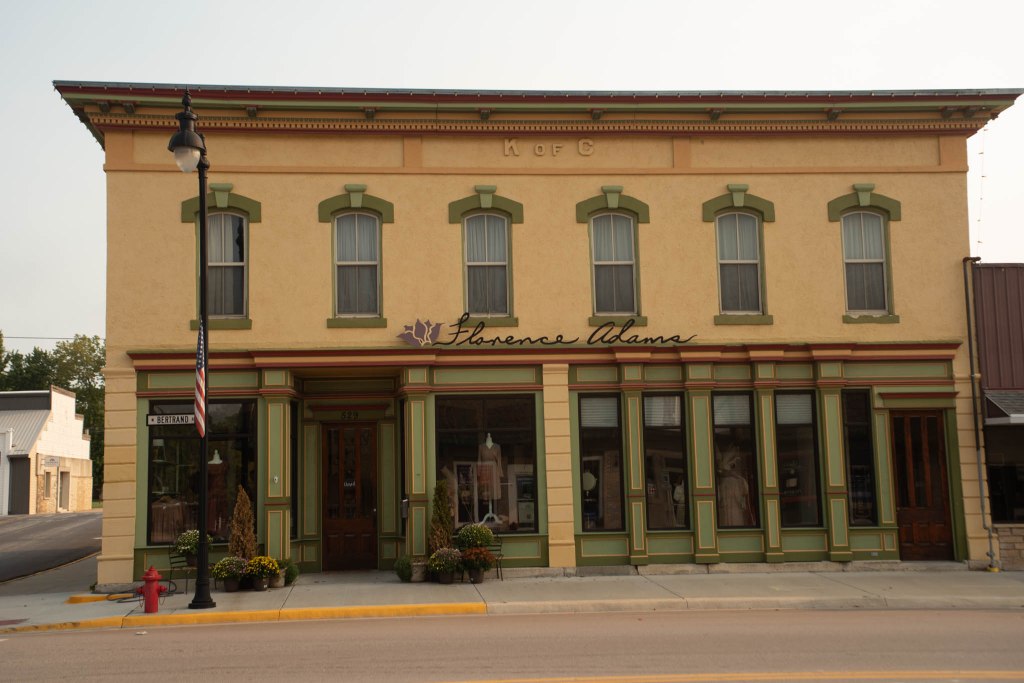
    The words the purists love to use against us but the fact of the matter is it is necessary oftentimes. The featured photo above is an example. This old Knights of Columbus building in St. Mary’s Kansas. I haven’t been able to find the history of the building other than the city was laid out in 1866 and is the home of Saint Mary’s Academy and College, therefore the city despite being only about 2,000 residents in population had, at least at one time a significant percentage of citizens who were Catholic.

    I was attracted to the building because of its architecture and coloring. The facade had been restored or well maintained and now becoming a women’s clothing store. The scene was a difficult lighting situation. While it was a bit of a hazy sky the sky was very intensely bright and the photograph itself was taken at about 9 AM.

    The original unedited photograph

    Above is the original unedited version of the photo. The sky is even more boring and nearly blown out on the right side, the building is a bit dull with heavy shadows hiding the heavy wooden doors. This doesn’t resemble the scene nearly as my eyes saw it at the time. I knew I could “fix it” in post. Is it possible to “get it right”? Maybe at a different time of day on a different day but I was only at this location for a short period of time on my way back home from a photo outing. This location isn’t too far from where I live, it’s 90 miles away and would take about 1 1/2 hours to drive there, but it isn’t too close either.

    Despite what the anti-post processing crowd likes to say, fixing it in post isn’t a bad thing. It gives us greater latitude and it is just another tool in our photographic toolbox. It doesn’t have anything to do with the lack of skills as a photographer, quite the contrary, it shows we have additional skills. Don’t let the naysayers convince you otherwise, being able to “fix it in post” is a good thing.

  • Is every photograph art?

    Is every photograph art?

    Is every photograph art? Many, if not most of you would argue that not every photograph is art, however, I’d like to show you every photograph can be art. If someone created a painting we would most likely call it art. It may not be art that we like or prefer but nonetheless, it would likely be called art.

    Would we all agree that art and beauty are subjective? Along that same line of thinking then aesthetics is also subjective. To create art is to create something of aesthetic value, therefore open to subjective interpretation. Too philosophical? Let’s look at this in a different way. If you choose to be an artist, you are. It is up to you to decide. You may be an artist before your time, much like many avant-garde artists. If you have any doubts go to any art museum with a photography section. You will see a wide variety of photography included, in many cases.

    Don’t let others discourage you from creating your vision of art or tell you it isn’t art. It is art if you choose it to be.

  • The importance of the history of photography

    The importance of the history of photography

    I listened to a podcast yesterday where the podcaster was talking about being concerned about the future of photography because many current and new photographers didn’t know the history of photography. He was concerned they didn’t know the likes of people like Edward Weston, Weegee, or Alfred Stieglitz.

    Since listening to the podcast I’ve thought about this topic. I know the work of these people, I’ve read and studied the history of photography since the days of Niepce. I occasionally re-read parts of “The History of Photography, by Beaumont Newhall. To me, while interesting and inspiring I’m not sure it is necessary to know or study the history of photography to become a good or great photographer. By the same token, I’m not sure that knowing these things isn’t important. It could be that knowing the history of photography and studying the great photographers who came before us could make us better. I’m amazed I haven’t developed an opinion on this topic, especially knowing me when I have so many opinions on so many topics.

    I believe knowing history, in general, is important. I also believe that knowing the history, at least to some degree, of photography is important. I’m not sure I believe knowing the great photographers of the past is important. The world of photography has changed so much from when the masters of photography were alive that it may be more important to know and study photographs and photography from our time.

    There is something I like to think about and will ask you to do the same. Back in the days of Edward Weston, Ansel Adams, Alfred Stieglitz, and even Weegee, there were not nearly as many photographers as we have today. I agree many of their photographs were fantastic but there are so many current photographers, many virtually unknown, wh create work as good, if not more impressive than in the past. My thought is this, study photography and photographers. If you want to study the past also study the current. Regardless of whether or not you want to study past photographers, study a wide variety of current photographers and photography. Study a wide variety of genres of photography. In my opinion, this is the only way to truly find your style and your favorite genres of photography.

  • Why, why, why, will it never end?

    Why, why, why, will it never end?

    Once again, I see a huge debate in a photography forum about, “the best photographers learned on various types of film.” Why, why, why?! Who cares what you learned on? I know a wide variety of photographers and have seen all sorts of photographic work. It doesn’t matter what you learned using. The results are the proof in the pudding so to speak.

    I realize there is a certain element of social media forum that just have to try to rile up the crowd. Those, aren’t really the people that concern me but the multitudes that jump on the wagon in support of this mindset.

    Digital photography has existed in the consumer environment for nearly 40 years now, wow how time flies. While digital may have been limited and a bit slow to take off, in the past 20 years it has truly gained traction and now outsells film and film equipment by volume. To me, it is very similar to the Photoshop debate, those who started and more than likely struggled with film photography believe that everyone has to do the same way they did. It’s time to let it go. Digital photography is real photography. Photoshop is the digital darkroom. Get over it camera trolls! While I may write about the topic in my blog, I refuse to engage them in their social media debate.

    I’ll never give up my digital cameras, well unless something so far unknown replaces digital photography with a different format. Yes, I would like to, on occasion, shoot film but my current setup doesn’t allow for it very well even though I still own many working film cameras.

    The whole concept of “best” is subjective. The photograph or photographer I think of as best the next person may not agree with. We’re all photographers creating our art and the media and format we choose don’t make one group better than the other.

  • Photography in the future

    Photography in the future

    I wonder what photography will be like in 10, 20, and 50 years from now. Think about it, 50 years ago we had the Polaroid SX-70. What a cool thing that was at the time. Look at the advances in technology in the last 10 to 20 years.

    The photo of model Morgan above was shot at ISO 12,800. When I got my first digital SLR in 2005 that was an unheard-of ISO rating. The highest ISO rating of my old Nikon D50 was 1,600. Back when I started photography in the early 1980s I thought ISO (ASA) 800 was fast!

    Today, our cameras have 3D tracking, and face and eye detection. They have autofocus, autoexposure, and auto ISO adjustment. In 50 years, will photography even still be a thing? It’s all exciting to think about, albeit unless there are some wonderful advances in medical science I won’t see what photography is like in 50 years.

    With all these advances though, I still see people in photography forums complain about the state of photography. I love seeing people keep the “old ways” alive. I love seeing people go back to the roots of photography with film, darkroom, and print techniques. I also love seeing the advancements in technology. For me, let’s not hold back on the advancements. Let’s hold back on attempts to “go back” to the olden days. They weren’t always as good as we remember them. March forward and change with the times. It is wonderful to have all this new stuff and keep the old stuff. Art is timeless and we can use new technology to create new art.

  • Photography as a job vs hobby

    Photography as a job vs hobby

    Photography as a job would be cool. Think about it, you get paid to take photographs, but like any job there are downsides. Mostly it is a job, a business. Running a business requires a lot of time doing non-photography things. Things like accounting, marketing, contracts, addressing complaints, fielding phone calls, emails, website maintenance, etc. Photography as a hobby, while it may not pay, is cool. I still get to take photographs but I can take the photographs I want rather than what pays the bills.

    Doing photography as a hobby can still earn me some cash. I can sell photos on any number of websites. I can display them at art shows and the possibility of recognition. All without the stress of running a business.

    So many new and beginning photographers dream of running their own photography business because they have fallen in love with photography. They dream about leaving their current job because the boss is a jerk or the hours suck. How cool is it to be able to set your own hours? Little do they realize so many times photographers are working weekends, especially if you’re doing weddings. To continue doing photography as a hobby lets you escape your dumb boss.

    I’ve seen all the advertisements from people talking about 6 and 7-figure incomes in photography and just buy this book or program and I’ll teach you how. The reality is most of us will never make that kind of money. It sounds great and I don’t have trouble working hard but the reality of the thing is there are lots and lots of working photographers who aren’t making hundreds of thousands or a million dollars per year.

    Keep your dreams, but also keep yourself. Enjoy life, enjoy family, enjoy creating art. If you want to try to make photography your job go for it but go for it with knowledge and a plan. My goal is to keep photography as a hobby and if I earn a bit all the better.

  • Capturing history

    Capturing history

    The Alma Hotel, originally known as the Brandt Hotel, was built in 1887. It took 5.5 months to build. The grand opening was on December 12, 1887. The hotel was host to many salesmen, railroad crews, political candidates, and others who came to town on the Rock Island and Santa Fe railroad lines. It was also a meeting place for town organizations. The hotel is currently in the process of being refurbished to be operated as a bed and breakfast. The Alma Hotel is a landmark native stone building in downtown Alma.

    Often when I travel to places and create photographs of buildings I enjoy researching the history and creating my vision of what an older photograph would have looked like. I often don’t mind if there are modern vehicles and people in the frame. If this photograph was taken decades ago, the people and vehicles at the time were modern. Decades from now, my photograph would have antique vehicles and people wearing vintage clothing. Every time to take a photograph we record a bit of history.

    We can choose to make our modern photograph look like an antique photograph. We can do this either the classic way or we can do the conversion through the use of the software.

    To me, the joy is in the creating of capturing history.

    I don’t care that others may think my creation is cheesy. The joy is in the creation of my art for my pleasure and if others find joy in it, it’s all the better. Create your capturing of history and have fun doing it.