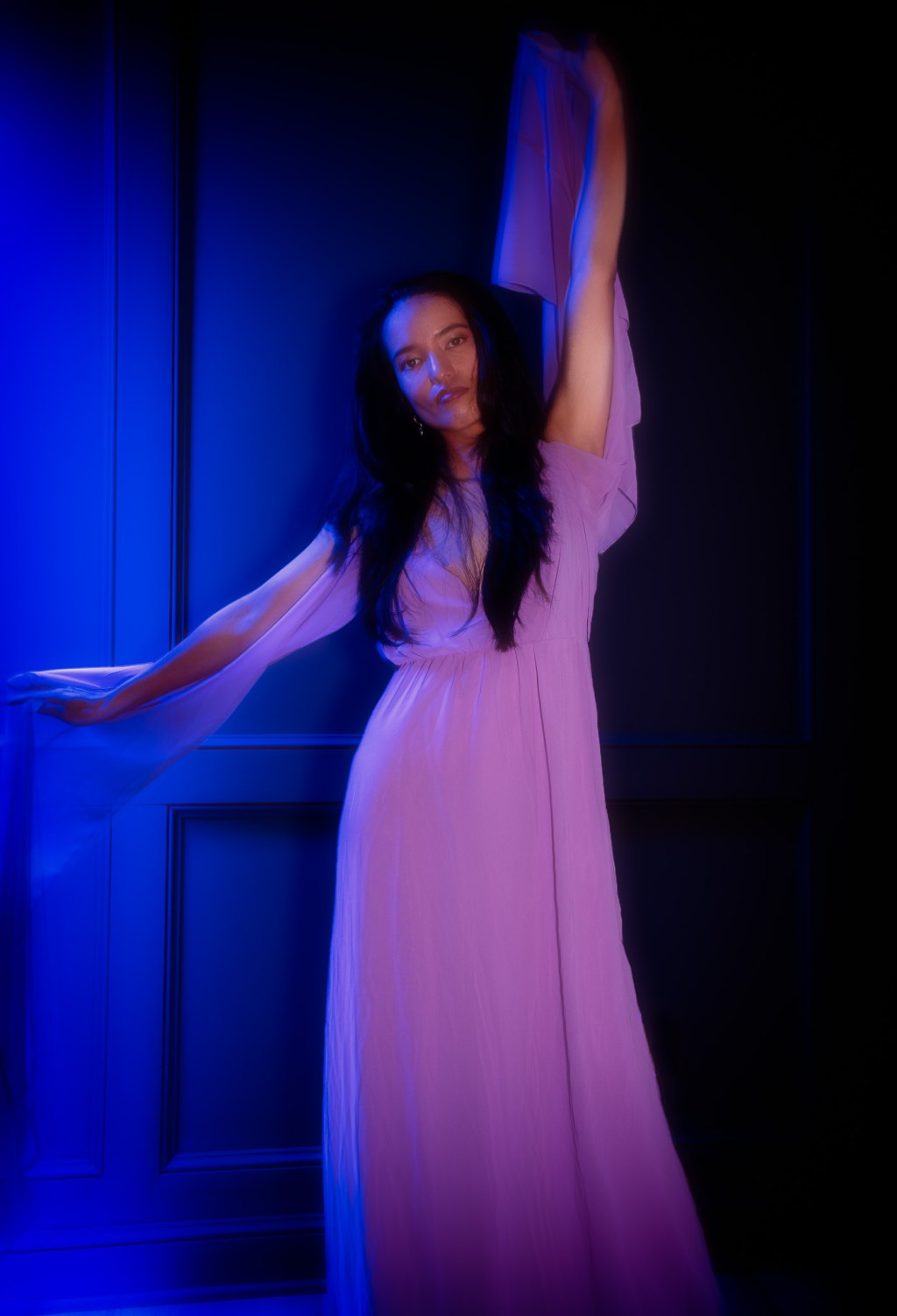
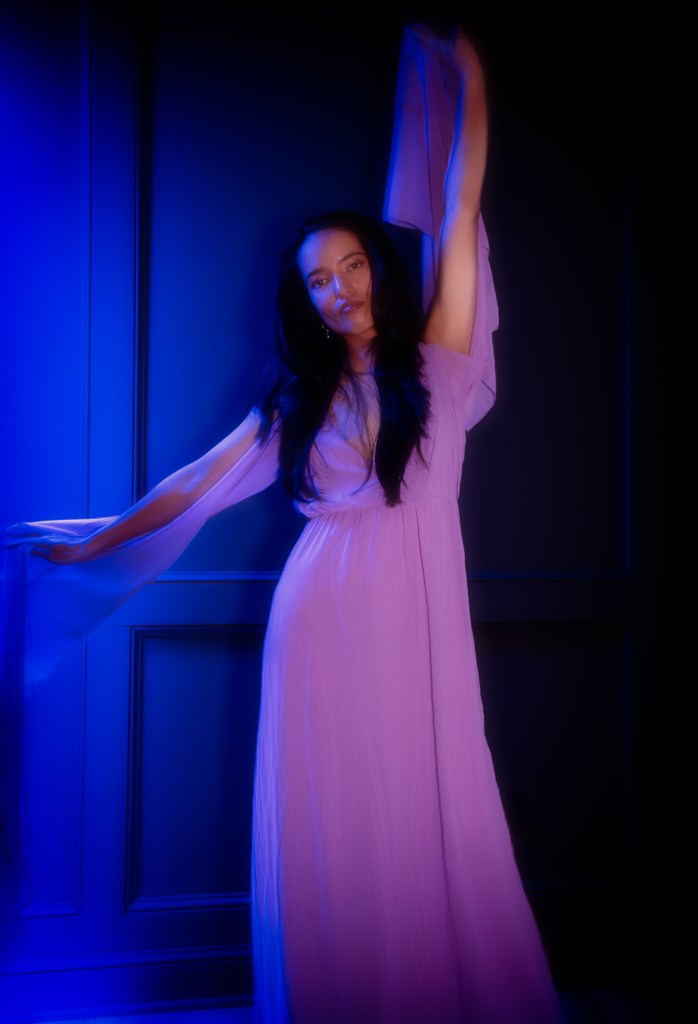
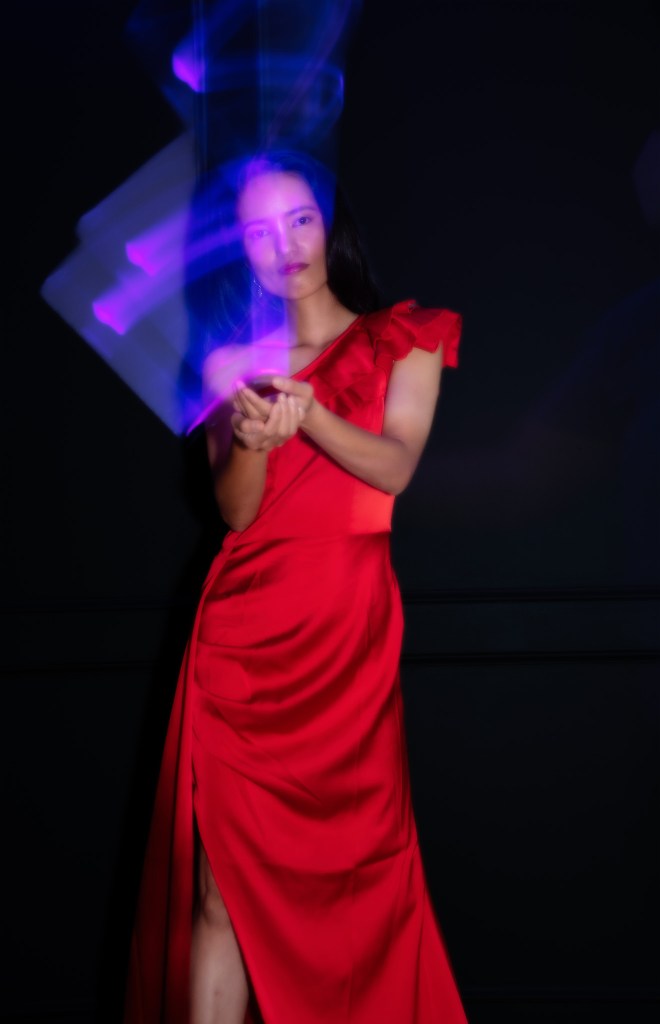
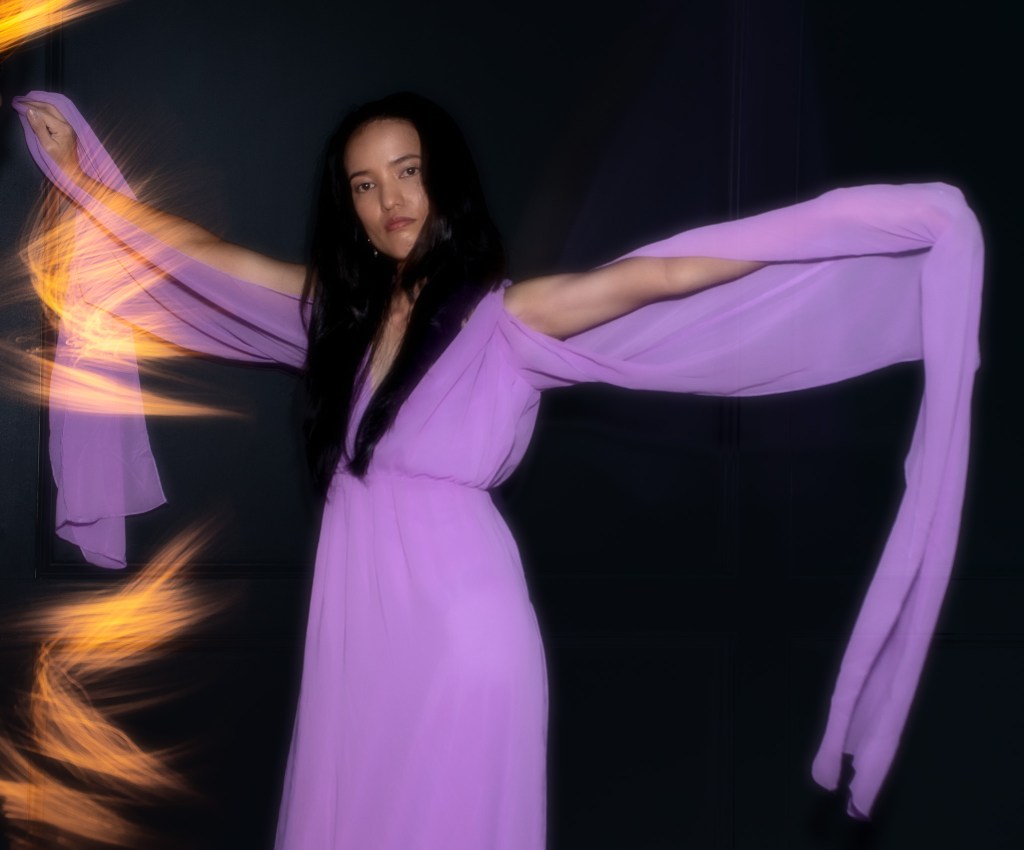
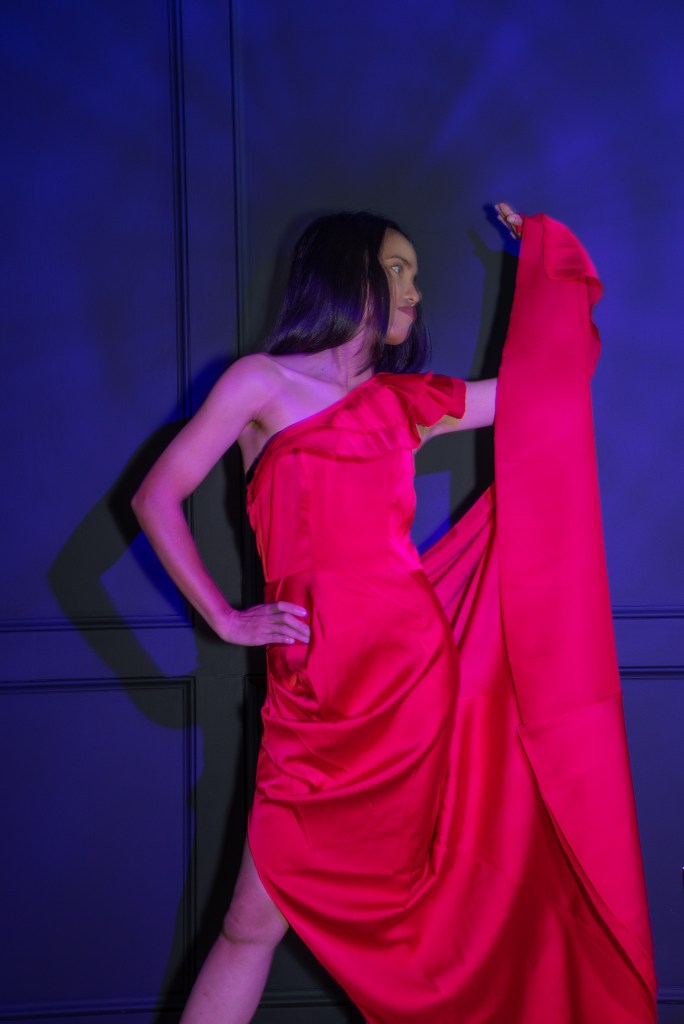
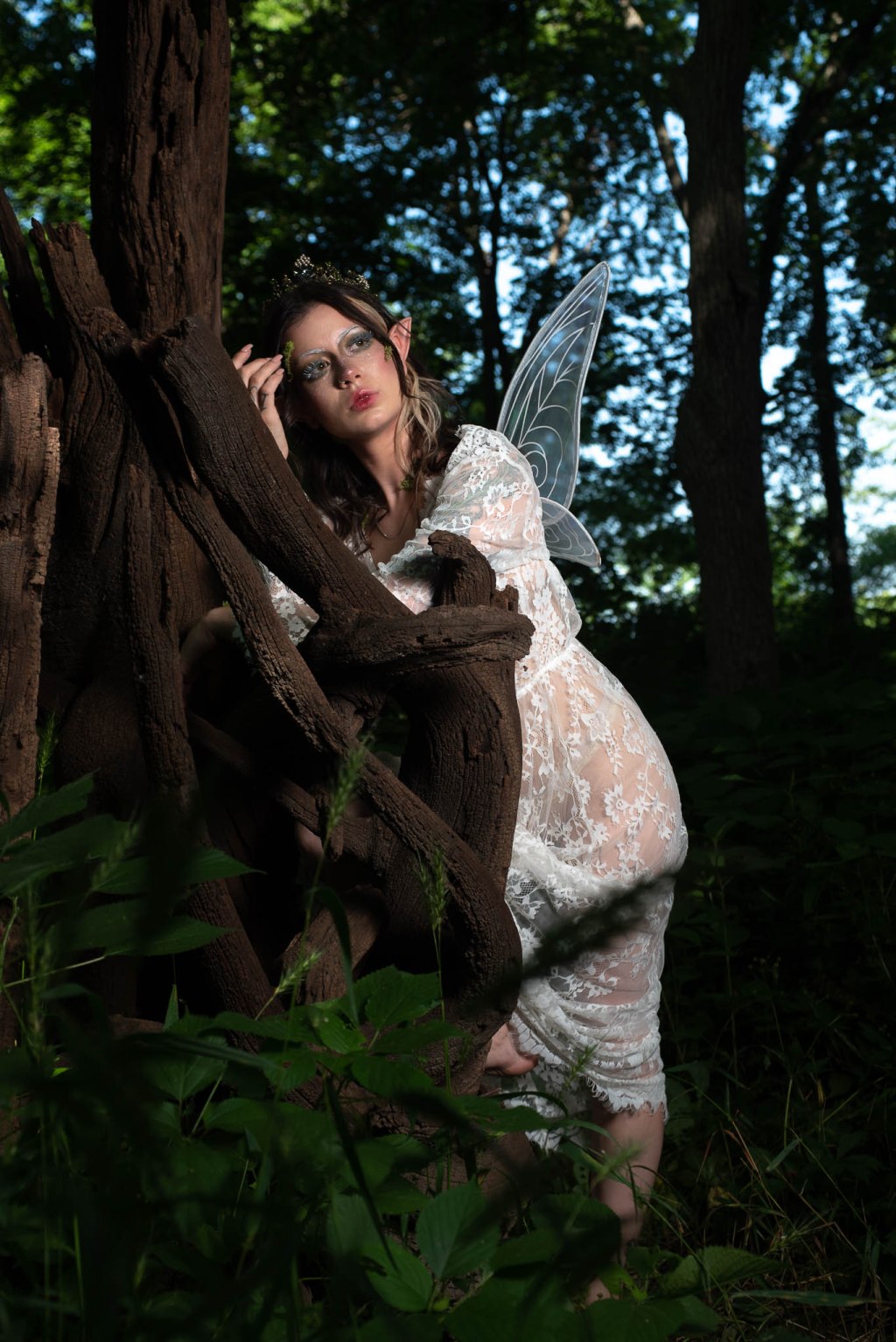
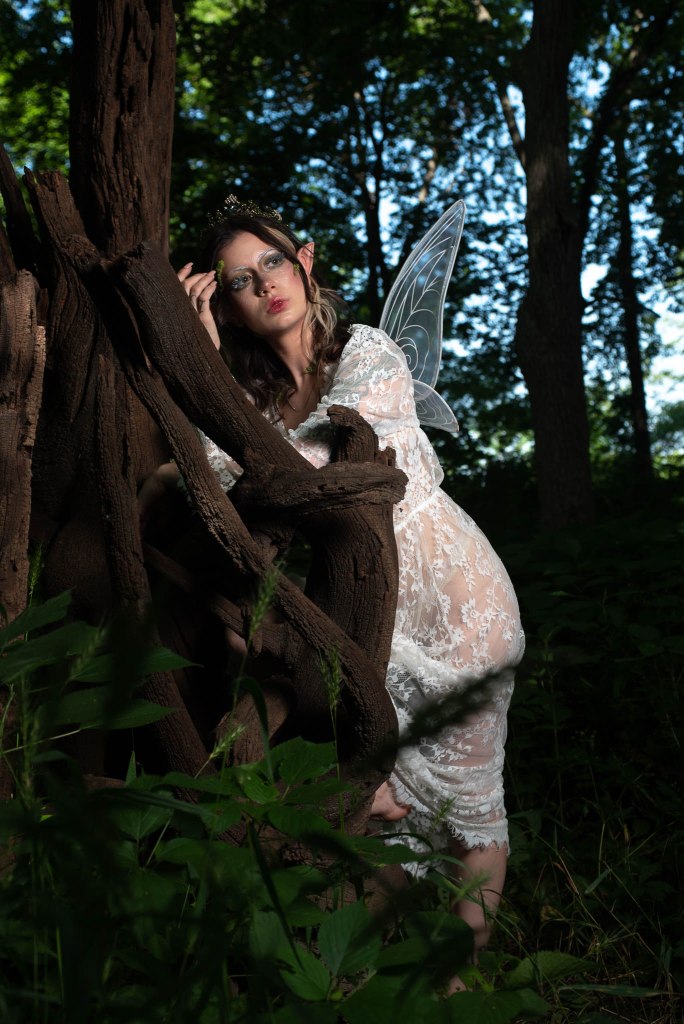
Yesterday, I spent the morning with another photographer working low light portraits and light painting. This was a fairly new concept to me. I have seen photographs where this was done but in all the years I’ve been involved in photography I had not tried this technique.
I bought an LED light wand recently to try these things. Fortunately for me, the other photographer had worked with some of these things before.
I found it to be a very unique experience but one that typically requires some assistance.
The exposures were all 2 to 5 seconds with a rear curtain flash at the end which was set to manual and powered down. We were generally at 1/16th power on a speed light. While I’m not 100% satisfied with some of the results I did gain some experience about how to proceed in the future.
As I have written before, push your boundaries, and learn new techniques and creative ideas.
It is very difficult today to find areas of the world untouched by mankind. So many places we go are cluttered with buildings, roads, power lines, and other manmade structures. When I travel through rural areas I often envision them in times before mankind “settled” the land. I envision a time when people and animals roamed free, untethered by civilization.
Fortunately, for me, I can do a bit of Photoshop “magic” and remove signs of civilization.
What is your personal best? Is it a single image? Is it a series of images? Can it be your personal best of a session or outing? Do you even have a personal best?
I see book titles, TED talks, motivational articles, and quotes nearly every day talking about creating your personal best. Each of these talks about what to do to achieve your personal best. It is actions, it is words, it is a mindset, it is all sorts of these things. But, what does it all mean to you and me?
My personal best is relative, it changes from day to day. It may change from moment to moment. If you are like me, I live in a fluid ever-changing world. There are things I can control and there are things beyond my control. What I always have control over is how I react to each. The same goes for my photography. When I am out taking photographs whether they are in a studio or on location there are things I can control and things I cannot control. Let me take today’s weather as an example. Yesterday there was a chance for rain in the early morning hours. I am awakened at 5ish AM to the sound of thunder. Now there is a significant chance of rain nearly all day long. I can not control the weather, but I can still do my photography, rain or shine and it may alter my best. I may not be able to achieve the photographs I had planned but I can modify the plan and still work to achieve the best results I can.
Realizing your personal best may not be the absolute best. How many times have we seen others suggest that we move further from or closer to our subject even though they were not there at the time? It may not have been possible, but did you achieve your personal best given the circumstances as they presented themselves? Maybe. Only you can answer that question.
My take on achieving my personal best is an internal decision for me. I strive to put all my knowledge, skill, training, and effort into achieving my best but after I’ve completed the tasks at hand I review and ask myself is this your best? Rarely do I answer no because while it may not be the best I’ve ever done it may be the best I could achieve given the circumstances. If it wasn’t I have also achieved the knowledge that I can do better. I’ve learned what I need to improve upon and the next time I’m faced with those conditions I know what I need to do to achieve my best this time.
Open your mind that your best is always for the moment. The next time your best may be more or it may be less. Strive each day to do the best you can at that moment while remembering we live in an ever-changing world where we cannot control everything but merely adapt to the moment.
We see this type of headline often. Things like 10 simple steps to great financial freedom, or 5 easy ways to improve, or the greatest myths about ____________. Often the headline makes us curious about what fascinating information and insight the authors have to bestow upon us. Some will even go so far as to say, these are “proven” methods but when we get to read them we rarely see the proof. Well, I thought I would do something similar except I am not going to prove it.
We rarely question a painting or drawing as being exactly what a scene looked like. We understand it is an artist’s rendition of something or someone. With photography, we often demand that the scene be an exact recording of a scene or person. I won’t even say expect, we often DEMAND IT! Especially photographers. Why is that? Is it that other photographers are familiar with taking photographs? If we weren’t there at the time do we really know what the scene looked like?
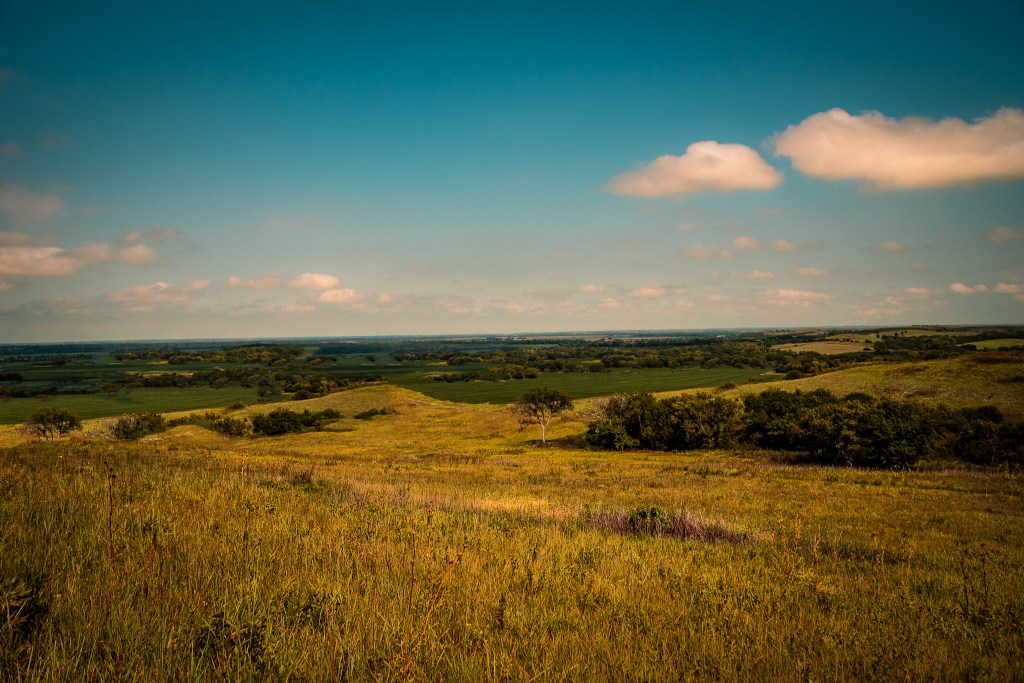
If I were to give you the details of the exposure of the featured photograph, 1/500th of a second at f/5.6 using a 24-70mm f/2.8 lens at 48mm with the ISO of 100 using a Nikon D750 could you really make an exact replica of my image? Maybe but most like not. Not unless you were at this location on September 3, 2021, at 2:48 PM. It may be close but it won’t be the same. The light is different.
There is often so much emphasis put on the technical data of a photograph we forget the greatest influence on the look of a photograph is light and the skill of the photographer. The biggest myth of photography is that knowing the settings of the camera when a photograph was taken will give you enough information to recreate the shot. You may get closer if I included the lumens.
Stop worrying about the camera settings someone else used. Do you really want to recreate the work of someone else or do you want to create your own work? You might even get something better than what you’re attempting.
I get some of my best creative thinking done in the morning. I get up at 4 AM almost every day. Today, I was up at 3:30 AM. On days when I sleep late, 5:30 AM. I’m a morning person. For years I had to be at work by 5:30 AM. About 4 years ago, I started a job where I have to be at work at 6:30 AM so I have become very much a morning person.
I find that getting up early my mind is clear. I’m not thinking about all the events of the past day. I’m not tired from everything that I have done throughout the day. Plus, it is quiet. Few people are awake moving about that early in the morning.
My morning routine is to start coffee and then take a shower. By the time I’m done with the shower coffee is ready. I’ll pour some coffee and sit down at my desk. By this time, ideas start to hit. I usually peruse social media and my favorite photography sites. Then I begin to fine-tune my ideas. They may not be ready for “prime-time” but I’ll add them to my notebook.
I also write this blog in the mornings. I’ve tried to write it later in the day but I’m usually mentally spent by then and it just doesn’t get done.
We all talk about “finding time” to do the things we want or need to do. For me, it is the early morning. This time may change as I move forward in life but for now, early morning works. My mind is clear in the mornings, and the “chalk” board of my thoughts is blank.
Find your creative time and let me know what works for you. I’m curious to hear when you have your creative time of day.
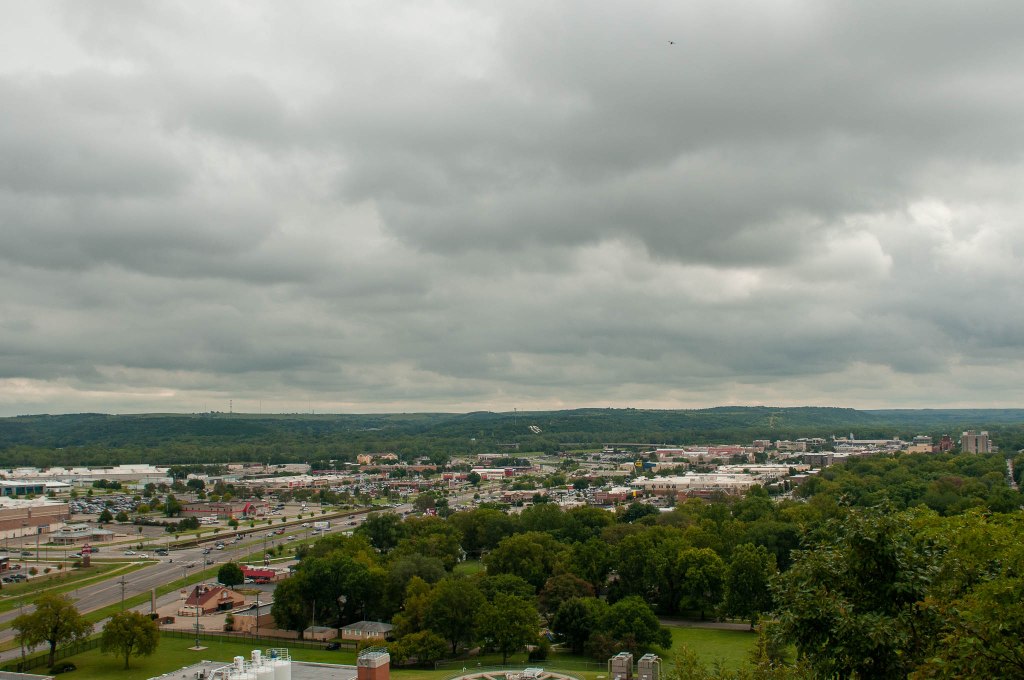
I absolutely love dramatic clouds in the sky when I’m doing landscape photography. So much more dramatic. And, with a bit of development in the digital darkroom, we can really accentuate the dramatic sky.
The original look
The scene above is actually much closer to what the scene really looked like when I took the photograph. To me, it’s somewhat mundane, a little drama but not nearly what I envisioned.
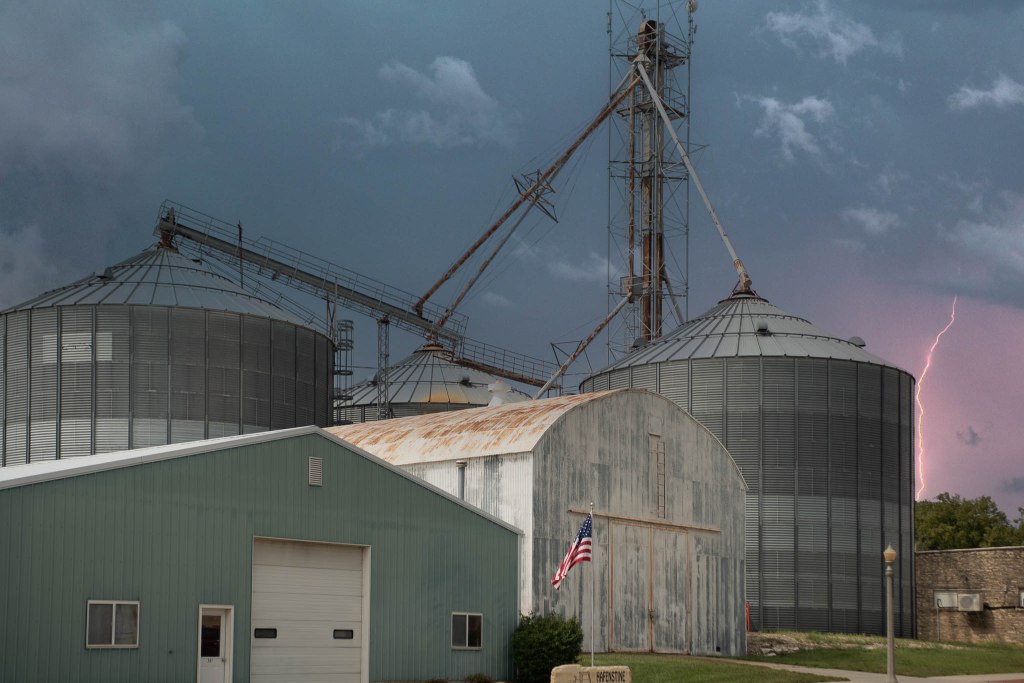
If you have followed me for a bit you know that I have absolutely no problem changing reality.
The photograph above I may have had to wait years to get, if not decades. Yes, I could probably get a thunderstorm over the grain elevator. This has much more drama than the original
In the fairly near future, I will have more time to spend getting the photographs I envision however, may still not be enough to really get what I’m looking for. I don’t try to say my photographs are documentaries when I have developed them in my digital darkroom but I do want to give them the look of reality.
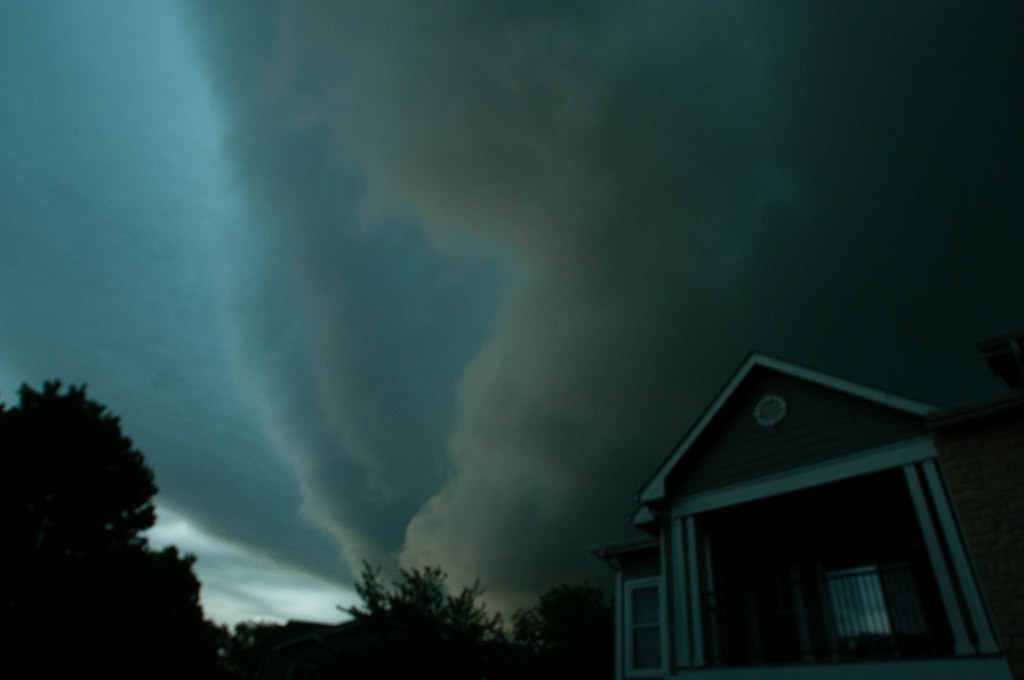
There are also times when nature provides almost exactly what I’m looking for.
For me, it is more about drama.
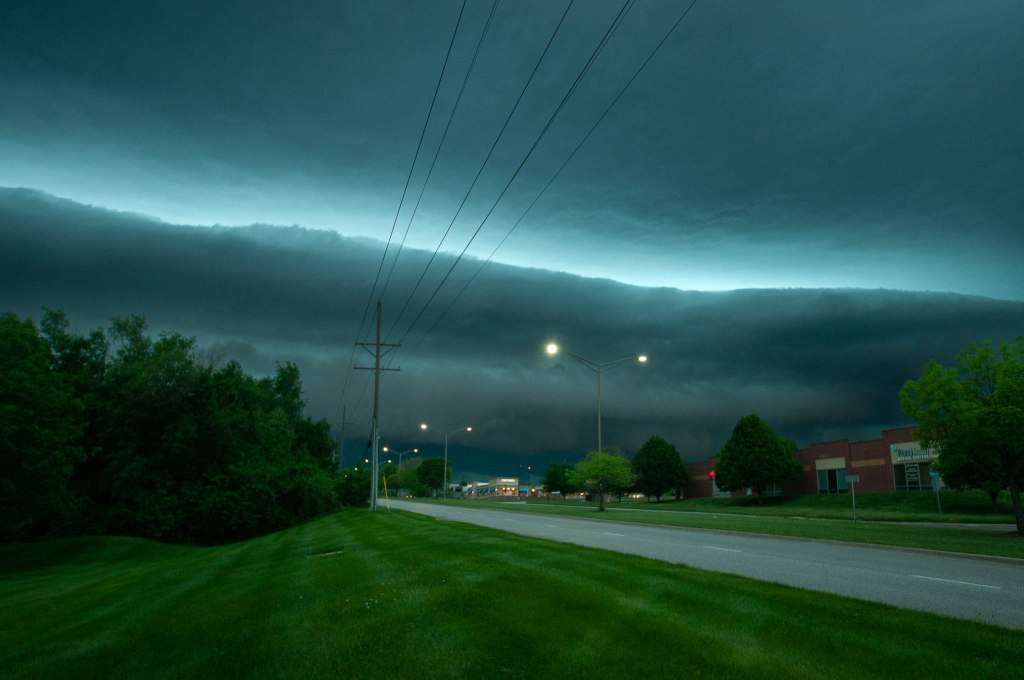
It doesn’t always have to be a storm either.
I just don’t like the plain blue sky unless it fit my vision.
Have a vision of what you want to convey in your landscape photography. Don’t let yourself be limited by what nature provided at the time. Push the boundaries, gather assets that can be used later to create your vision.
Being creative can be exhausting. Unlike a light switch, you can’t turn it on or off, it just happens. Many times creative ideas come in waves, one right after another. Other times, it is like a proverbial desert, a wasteland. It is just for those occasions that I began writing my ideas down. I keep an electronic notebook that I can access on my smartphone, my iPad, or my computer since I always have, at least, one of them with me. I also keep a list of projects that I want to work on in the same electronic notebook. I just use a different tab for projects.
This practice works well for me and I was able to share some of those concepts in talking to another creative last night when we were talking about future projects. The one thing I do need to get a bit better at though is to write them down when I think of them. On too many occasions I get an idea and may not write it down until sometime later. It’s like trying to remember the details of a dream the next morning. You get the basic concept of the dream but you may have forgotten some of the more complex things.
Here is the exhausting part. I have so many ideas, concepts, and projects in mind and on my list that the challenge is getting them completed. As time goes by I end up getting involved in another project or concept. Whew! I run out of time and steam. This doesn’t even count my so-called 9-5 gig. I’m not complaining. I truly enjoy the creative challenge. In fact, I enjoy the creative challenge so much that I took on another project which is writing this blog daily at 4 AM.
Join me in the creative mindset, and start your own form of the creative log book. As you work on completing the concepts or creating the content don’t forget to catalog the resulting works of art.
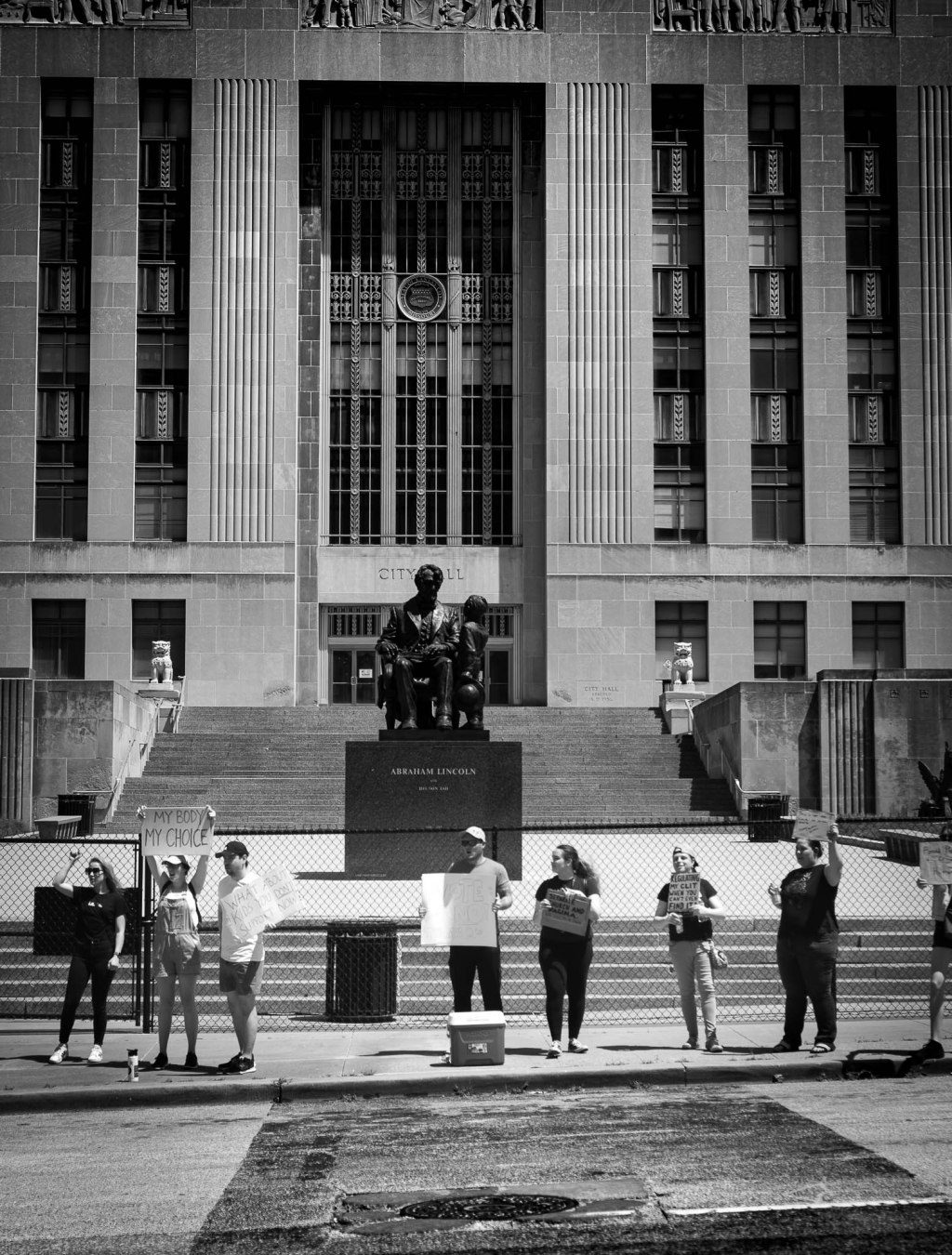
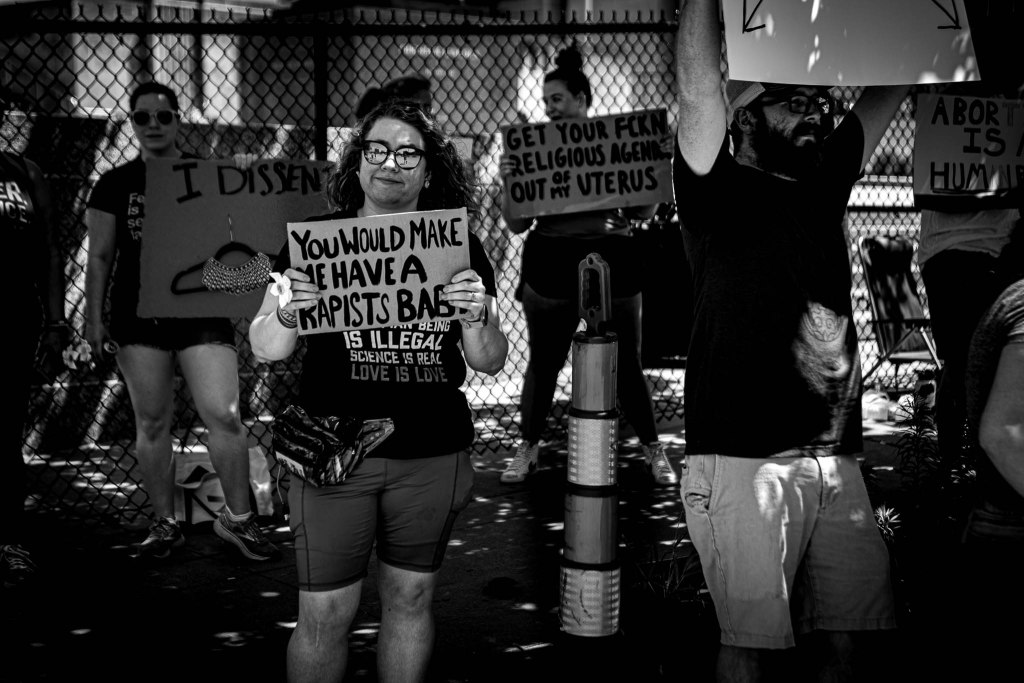
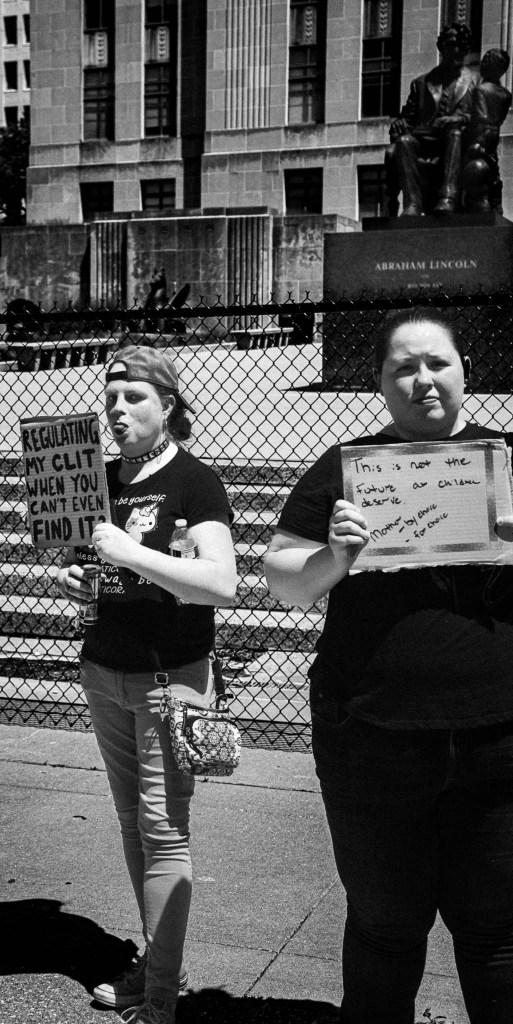
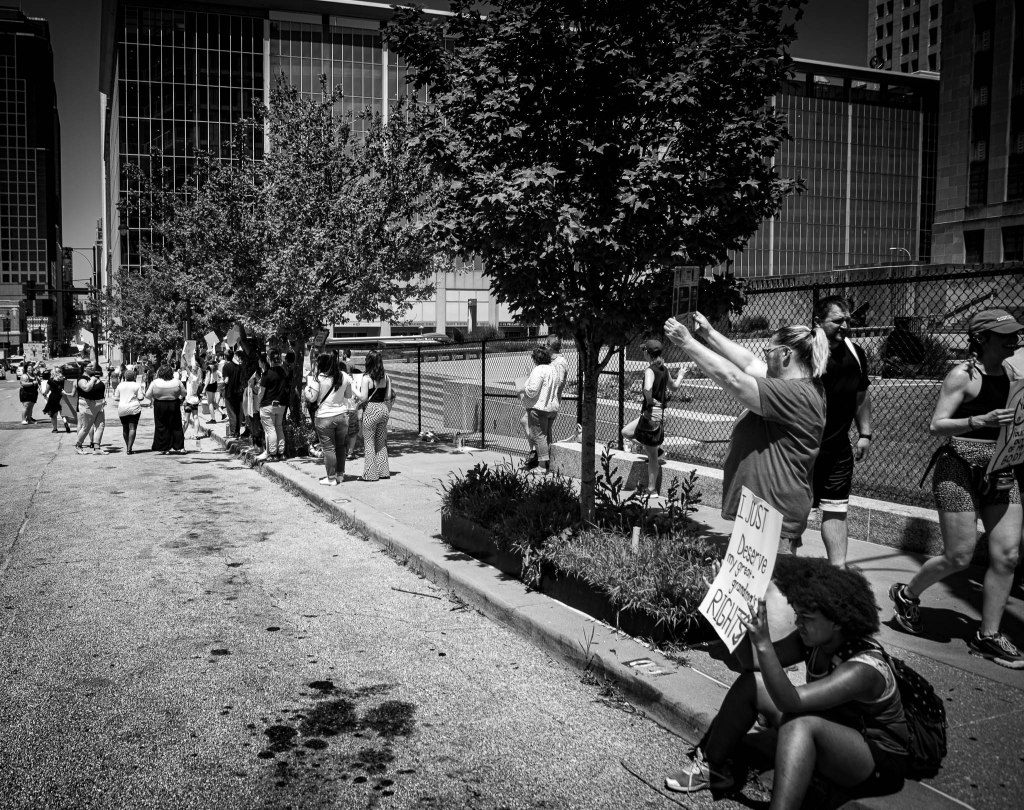
Whew! What a week and weekend. Many things are going on, some fantastic other things are frightening. I met new people, worked hard, played hard, and attended a personally moving rally.
I didn’t get much done in the way of taking photographs this past week but I did get much to reflect upon. I feel like now I am again at a crossroads of photographic motivation and inspiration, to rethink what projects to begin or to complete. Then there are things like bios and artists’ statements to consider or do you just do and create.
For me, it is a good thing to periodically reflect on both my past work as well as where I want to be in the future. Not necessarily to overthink or to overly plan but to set a general course, a destination, and follow the path or paths that lead to that destination.
One thing that I believe will lead me to better photography is to become passionate about things, places, or societal events and issues. This is where we learn to convey messages with our art. We bring all we have learned and experienced through the art we create.
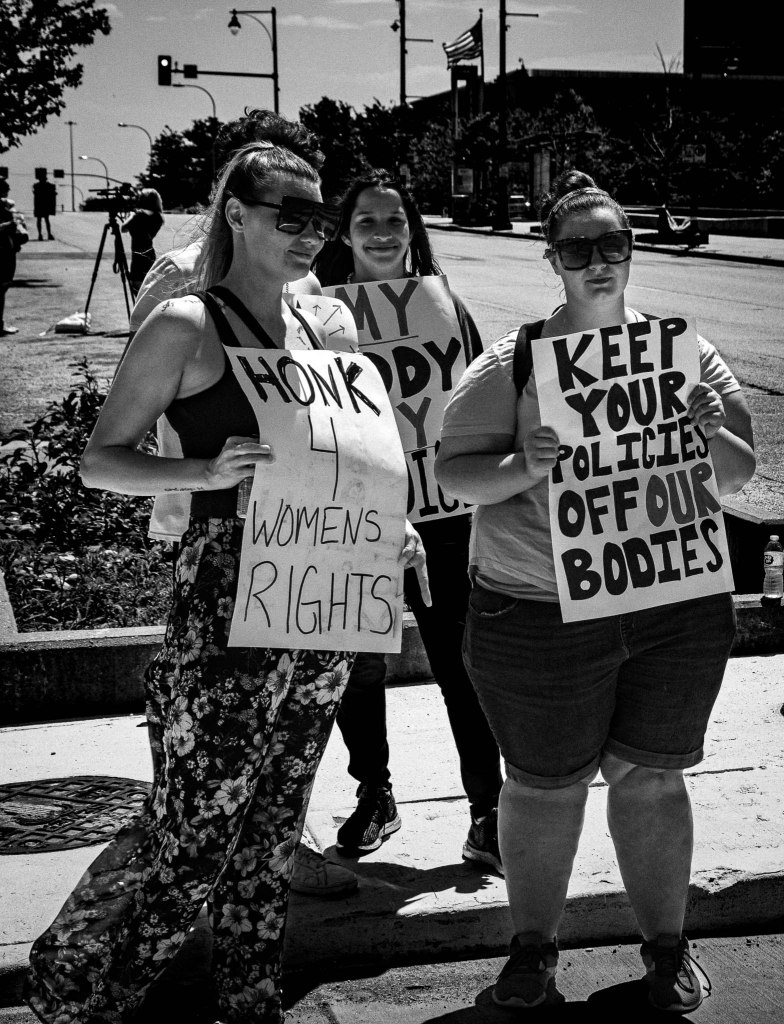
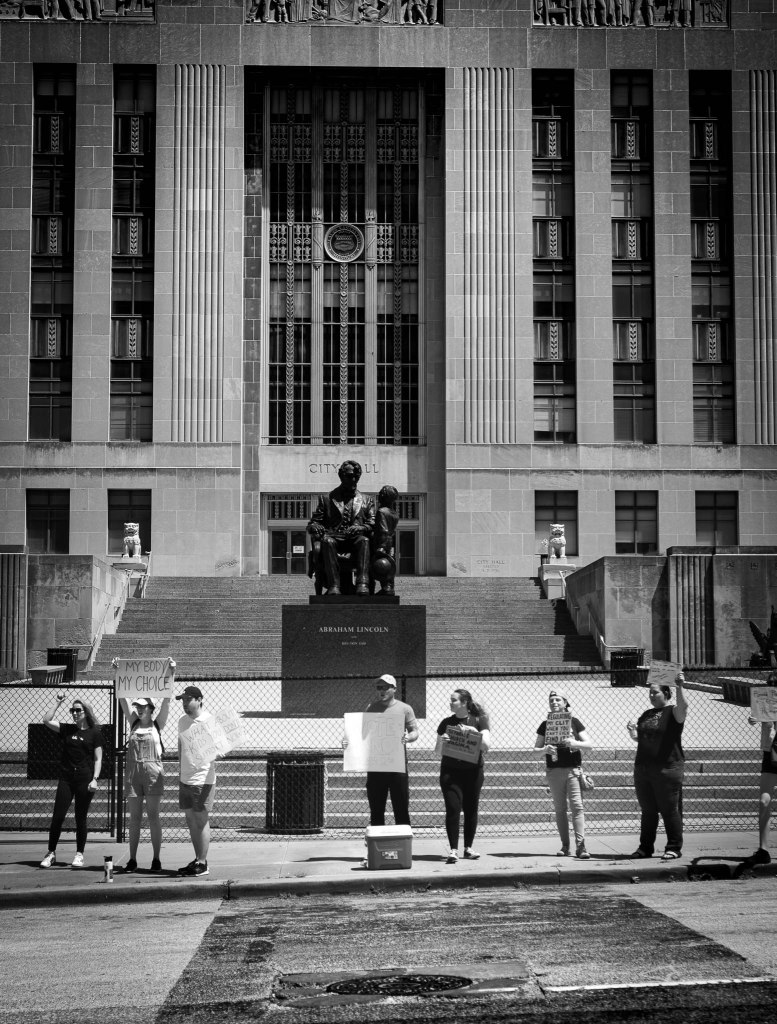
Something I have read on many occasions discusses putting so-called “hidden messages” in photographs. One article, in particular, talked about “a fine art photograph begins with a message, an idea.” This morning, I worked to specifically include a message in some photographs I took yesterday at a protest.
Each of these images was very intentionally composed and developed to give emphasis on the message. I will let these images speak for me as they express my emotions about many of the issues that are arising today in my country.
Merriam-Webster defined photography as the art or process of producing images. Ah ha, the art or process! Surely there is more to photography than merely pushing a button. Is merely pushing a button a process or one step in a process? The process is finding something to photograph, composing the photograph by choosing what to include in the frame, ensuring that the object(s) are in focus (or artistically out of focus), setting the exposure, then pushing the button. What about the modern cameras that set the focus and exposure for us? Doesn’t that make it finding something, composing, and then pushing the button? Again, technically yes, but I believe there is more to it. I believe the process and the art are truly one. I believe it is the art of the process, not the art or process.
I believe it is the art of the process, not the art or process.
Clay
Study and learn
To truly become something intentionally, such as a photographer, one must study and learn. I don’t mean you have to attend a school or formal classes. To truly achieve your goal to become a photographer you need to study photographs and the process of making a photograph otherwise I believe you’re just a person with a camera taking snapshots. I define a snapshot as a casual photograph without any particular thought other than “saw object, took picture of same.” There is nothing wrong with snapshots, we all take them, but I don’t believe it is truly a photograph that is made with intent and purpose.
To study photographs is to look at them with depth and purpose. Critically look at the content. Look at the light. Look at the focus or lack of focus. Observe the placement of the elements contained within the frame of the image.
To learn about photography is learn how to control you equipment. Learning to adjust the exposure levels, learning where to focus, learning what to not only include in the photograph but what to exclude.
To truly achieve your goal to become a photographer you need to study photographs and the process of making a photograph
Clay
Becoming a photographer
One day, I shall become a photographer, but today I am still a student learning to become a photographer. For me, this is a lifelong journey dedicated to becoming a photographer. There are days when I begin to think I have become a photographer and then I suddenly realize I still have much more to learn. Much more skills I need to hone. Becoming a photographer is more than just buying a camera and starting to take pictures. Becoming a photographer is a way of thinking, seeing, and feeling about the things before us. Becoming a photographer is about being able to capture the true spirit of those things and being able to relate that to those who view our images.
Join me on the journey and path to become a photographer.

 Photographer Clay