Tag: learn

  • Does your fear of failure limit you?

    Does your fear of failure limit you?

    Does your fear of failure limit you in your creation of art? When I say failure it includes your work not being accepted or liked by others. We all have an inheirent desire to be liked and as artists we want our work to be liked and accepted, when our work isn’t liked we often can’t help feeling like we failed. But have we really failed?

    Let’s look at this a different way. What do Vincent Van Gogh, Johannes Vermeer, Oscar Wilde, and Franz Kafka all have in common? They didn’t become known for their work until after their deaths. Now, I’m not saying that you have to die to become recognized but if you don’t take chances and express yourself as you may like to try you’ll never know if people will like or accept your work. Get creative, put together what your mind envisions. Expand your horizons and don’t fear failure or let it hold you back on your creative mindset. With few exceptions, your work doesn’t have to represent reality. It doesn’t have to be like everyone else’s work. Go for it.
  • Are we stuck in the past in photography?

    Are we stuck in the past in photography?

    Are we stuck in the past in photography? Not just you, but we collectively as photographers. We have lots and lots of advances the technology and features of cameras, lenses, lighting, software, and all our other accessories such as lightning triggers, GPS tagging, Wifi capatiblies. But, our photographs look just like they did before. Are we really using the new improved technology?

    We have the capability to shoot photographs in extremely low light and high ISO ratings but I see so many photographs shot in low light with long exposures and lower ISO’s to “reduce” noise. Yes, 102,400 ISO can be a bit noisy but think about this for a moment. Remember the grain shoot of films like the Konica Centuria 1600 or Fuji 1600 film? Loads of grain. I know I know. I’ve heard it all before but, but the grain of film has a different look than digital noise. My opinion, so what!

    Here is another thing a few years ago there were a variety of styles of photography that were big. HDR, Orton, soft focus, double exposures, selective color, etc. Now, we have shallow depth of field. I love sites like 500px where you can find a lot of very good photography but a quick look of “popular photographs” the styles are all very similar. We may see the occasional black and white but the basic styles are all the same across all the genres.

    I’m starting to think maybe I just start to stand out and dare to be different. I may not appeal to everyone, I may not become famous or popular but I can be unique and different.

  • My greatest photographic challenge

    My greatest photographic challenge

    My greatest photographic challenge is to create something meaningful. When I first transitioned to digital photography I could snap off hundreds of photographs, most of which were pure garbage. A lot of that was a learning experience. What works, what doesn’t work. Nowadays, I can take a camera out, walk about and not take a single, or very few photographs. Once I get back and take a look at them on the computer screen I’m thoroughly unimpressed. Of course, I am probably my own worst critic. For example, after uploading the feature image above I noticed some stray strings ( or as a friend would say, ropes and one was a repelling rope). I admit it, I’m often a pixel peeper. There, I said it. Hi, my name is Clay and I’m a pixel peeper.

    Why is this my greatest challenge? I figure if my photograph doesn’t create something meaningful to me it is not likely to be meaningful to others. The whole purpose of creating photographs and photographic art is to share them with the world. While I don’t ever expect to be regarded as a household name in photography I don’t want to be a Vivian Maier either. I also understand that my photographs may not be everyone’s “cup of tea”.

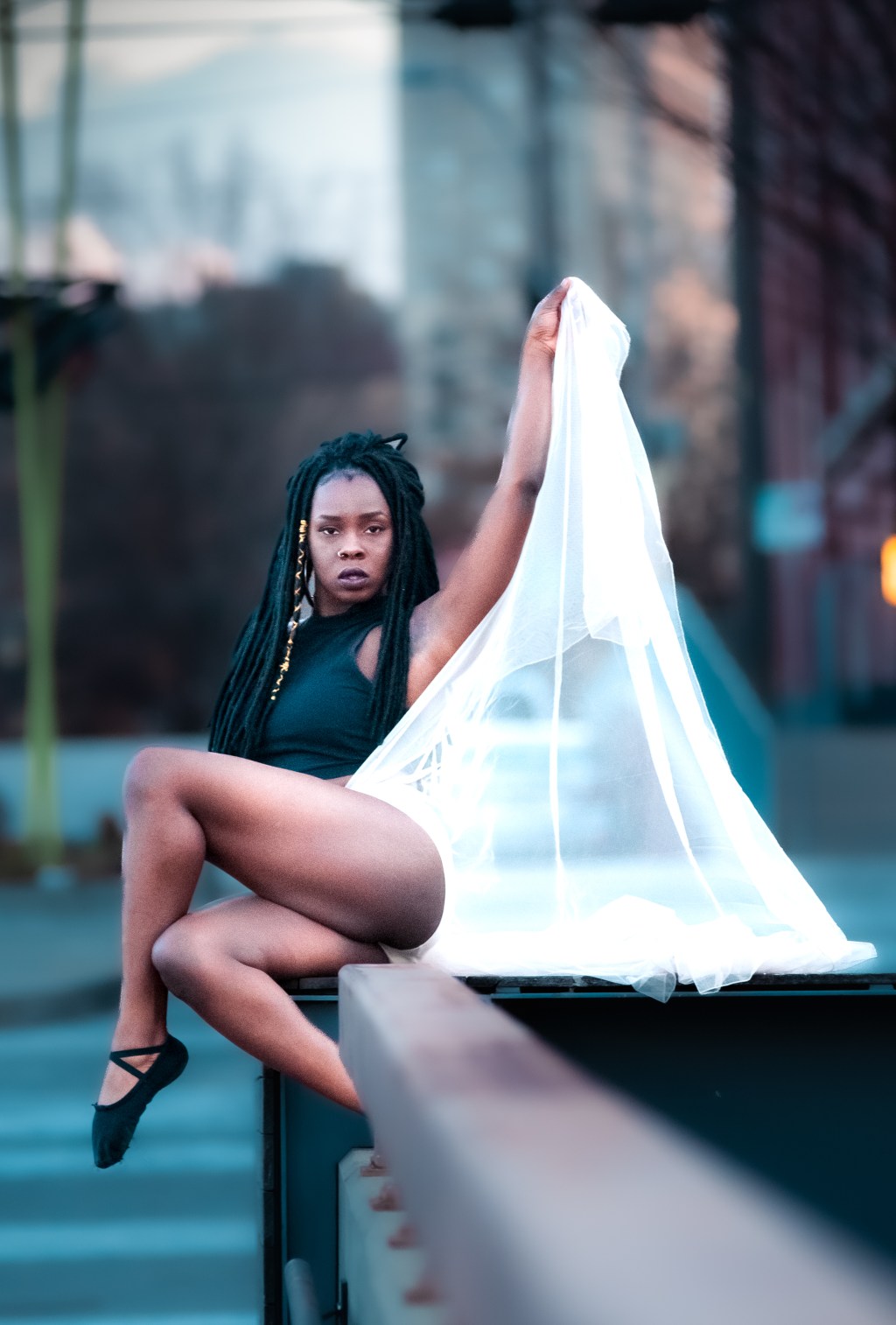
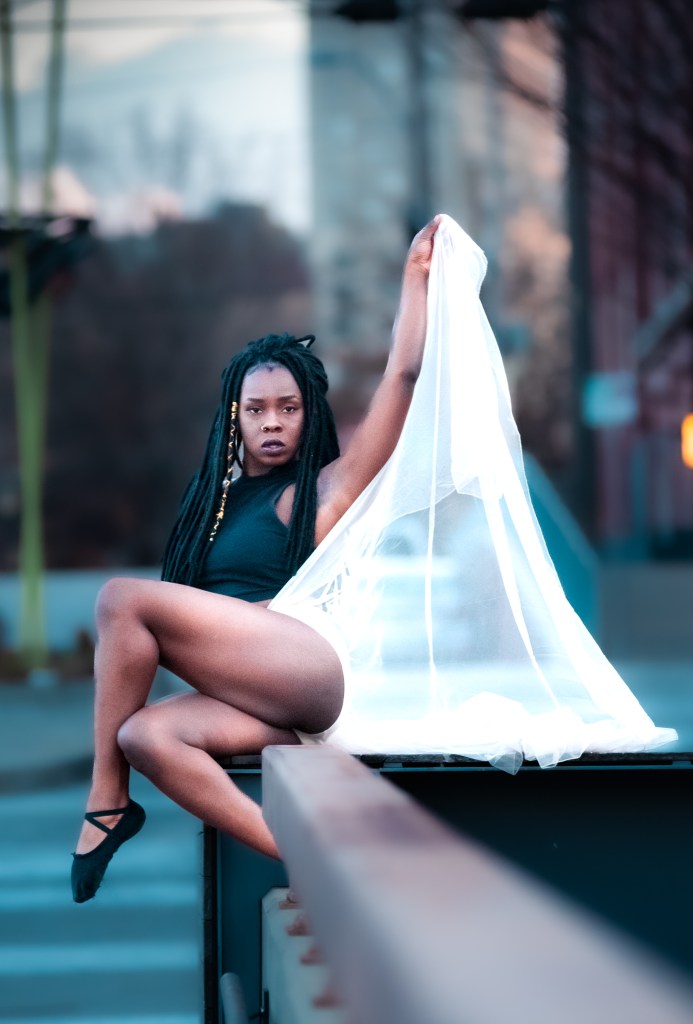
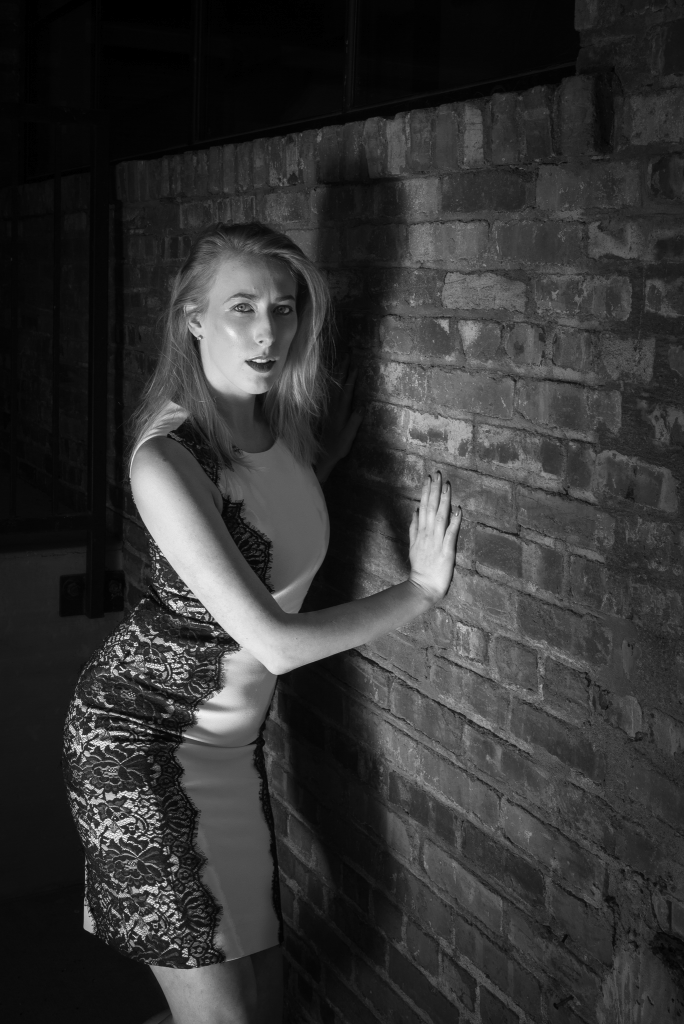
    When I did the photographic session where the featured photo was taken my intent was to photograph the dancer in locations where you typically wouldn’t think to find her. After this session, I photographed a model in an elegant evening gown in various locations such as an alleyway and fire escapes. To me, it was meaningful. The sessions were meant to get me and the viewers to look for the extraordinary in ordinary or unusual locations. This is what we want to do, at least in my mind. We photograph the ordinary and make it meaningful.

  • Film versus digital

    Film versus digital

    Digital photography has been available to the consumer market for over 30 years, however, I still see the debate of film photography versus digital photography. I listened to a podcast just yesterday and the podcaster talked about digital as if it isn’t really photography. I really don’t get it. Why, after 30 plus years are still having this discussion? Does it really matter that much? To me, I don’t care. Shoot the medium you like but don’t try to make your choice better than that of others. Is it that these photographers feel so threatened by newer technology? Is it that they don’t believe that those who shoot digital have “paid their dues”? I do miss some things about film photography, but there are a lot of things I don’t miss.

    I’m all for keeping the old film techniques and processes alive. I enjoy seeing photographs using methods from long ago. I applaud those that can still do photographs using those methods but I also like seeing photographs made with digital cameras and edited using computer software. To me, the medium used doesn’t matter as long as the resulting image captures my attention. In fact, I love the older technology so much that I collect a number of old cameras. The oldest one I have currently is a No. 3 folding Hawkeye which is about 115 years old, but I prefer to shoot digital.

    Let the debate die and enjoy photography for photography’s sake. Let’s create art and use whatever medium we want to use without making one better than the other.

  • The two greatest photographic advances.

    The two greatest photographic advances.

    The two greatest advances in photography since its discovery are Kodak Brownie and digital photography. Why these two?

    The Kodak Brownie

    The Kodak Brownie was introduced by Eastman Kodak company in 1900. The camera sold for $1 in 1900, While $1 was still expensive (the average salary in 1900 was just over $8 per week) it brought the ability of photography to the masses. The Kodak Brownie allowed the common people a chance to photograph their families, events, and the world around them. 150,000 Kodak Brownie cameras were shipped the first year. The Kodak Brownie existed in various models from 1900 through 1986 with millions of units sold.

    Digital Photography

    Digital photography is my next choice for the greatest advancement in photography. Digital photography had early beginnings starting in 1957. The CCD image sensor was invented in 1969. The first self-contained digital camera was invented in 1975. These were typically not available to consumers. The first digital camera available to the consumer appeared in 1990. What makes the invention of digital photography so great is that it led us to where we are today with digital cameras built into our cellphones and modern digital cameras. The invention of digital photographic technology is as big an advancement as the original Brownie cameras. Just think about it, there are over 1.8 billion (1,800,000,000) photographs uploaded to the internet every day! That is just uploaded! We are the most photographed era ever.

    Why is this important

    These two advances are truly important to us as modern photographic artists for a number of reasons. The single most important reason, to me, is that they brought photography to the common people. Many of us may not have been able to create the art and images we do today had these advances not happened. Photography is available to most of us in our pocket. We can instantly create. Let’s create something beautiful today.

  • Winter and snow

    A few years ago I would have loved to be out taking photographs in this weather. It isn’t super cold few people are out, it is quiet with the freshly falling snow, and the landscape is transformed into a winter wonderland. I’m just not feeling it today. I have a bit of a cold, I’m so over winter weather but I’m enjoying my free day off from my day job.

    Sometimes, to get back in the saddle, you have to just get outside and take a few photographs. Today was that day for me despite the cold snowy day. I knew I had to get it going, I’ve been writing about starting anew and being re-born into my photography yet I hadn’t moved a camera in a couple of weeks.

    Today no more, I’m doing it. Let’s get this thing going. I thought to myself, how can I inspire others if I keep procrastinating? And I realized I can’t so it’s time to get going. Even if it’s a quick photograph out my back door. If you’re like me, struggling to get going I want to encourage you to do what I have just done. Get out there and take some photographs. After all, isn’t that why we became photographers. You don’t have to create the next best image ever just create something.

  • The lost art of prints

    The lost art of prints

    It seems that for many people photographs never get printed but rather they depend on electronic devices to keep their photographs. This may not apply to many of us who do fine art style photography. I have many prints of photographs I’ve taken hanging as wall art. I also have prints of grandchildren and family members. It seems that the most common way people display their photographs today is via their smartphones.

    A case in point, several years ago when I was still working on setting up a photography business I was approached by a potential client who wanted a price on photographing her wedding. She stated she didn’t want any prints only digital files. I turned down the job for two reasons, I believe a life event is too important for just a digital file and she was searching for prices I would not work for.

    I have tens of thousands of photographs, the vast majority will never become a print, but I also have photographs I print and do change out my wall art with photographs, along with updated photographs of my family.

    If you haven’t printed any of your photographs, consider doing so.

  • Black and White photography for a reason

    Black and White photography for a reason

    The first color photograph was developed in 1861 but color photographs didn’t become the dominant form of photography until the 1970s. So most of us took black and white photographs because that was all we had available. Back in the days of my darkroom, I didn’t develop my own color photographs as it was much more involved and required equipment and chemicals specifically for developing color film. Times and temperatures needed to be much more tightly controlled. Fast forward to today. Color photography is the dominant style, but I do still like a nicely done black and white photograph.

    I see photographs far too often talk about converting an image to black and white because they had to use high ISO settings, or just because they want to be “creative”, but they merely throw on a preset or some filter and think voila! To me, it takes more than that. Colors are converted to tones of grey. For me, I don’t convert to a black and white just because or as a way to “fix” an image with lots of noise due to high ISOs. Doing so, to me, makes it like a black and white image is something less than its color counterpart. There is a reason why masters did so much dodging and burning on their black and white photographs. It’s about tonal range and contrast.

    I feel like the color gets in the way of the story in some photographs which leads me to do a black and white version. Think about it next time you want to do a black and white photograph. Learn to do more than just slapping a filter or preset on an image. Do the black and white conversion the justice you do your color images. Convert the image with a purpose.

  • Could you choose your all-time best photo

    Could you choose your all-time best photo

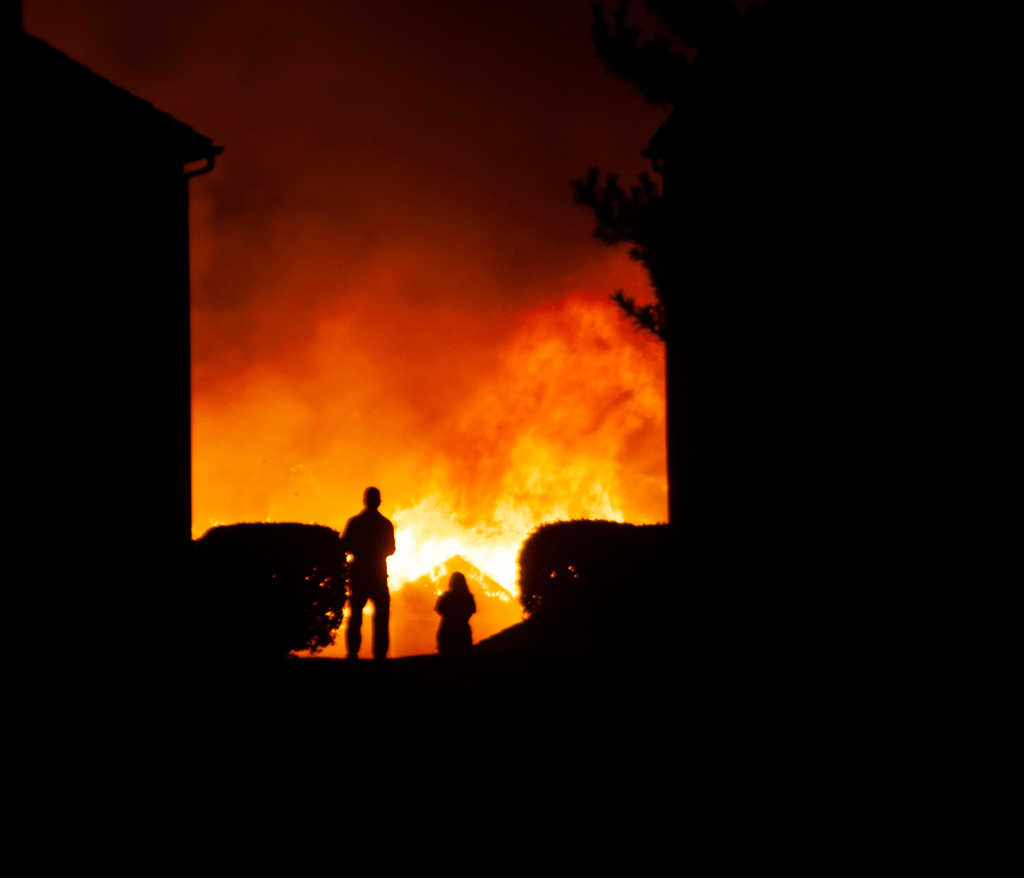
    Could you choose your all-time best photograph? I find it difficult to choose one of my all-time best photographs. My choice changes each time I look through my catalog of photographs. Today, I chose the photograph above. It was one I took shortly after I moved to Kansas. I was awakened at about 1:15 AM on September 10, 2014, by the sounds of sirens, lots of sirens. I walked outside and towards the direction of the sirens and saw an apartment building across the street completely engulfed in flames. I quickly grabbed a camera and took the photograph. I don’t know if the two people were residents of the building in flames or just like me a bystander but the emotion of two people who appear as mere silhouettes against a roaring blaze makes this one of my best photographs of all time. It is often easy to choose a photograph of a loved one as a best but is it a best because of our attraction to the person or is it truly your best photograph.

    Think about it, go through your images and see what images you believe are your absolute best.

  • Create art for art’s sake

    Create art for art’s sake

    Create art for art’s sake. This phrase has been around since the 19th century. Art doesn’t have to have a deeper meaning, it doesn’t have to have a motive, it doesn’t have to have a hidden message. Create art for the sake of creating something aesthetic and beautiful. Create art that lets you and your viewers enjoy the art you created. Art doesn’t have to be complex. Life is often far too complex and we are constantly bombarded with messages that attempt to persuade us on what to do or what not to do. Music and poetry have messages they are attempting to convey. With photography, we can just create images and art that is pleasing to view to help us, and maybe others, to just enjoy the moment without having to receive a message.

    Create some art today merely for the sake of creating art.