Tag: learn

  • The Evolution of Vision: From Capturing Moments to Creating Art

    The Evolution of Vision: From Capturing Moments to Creating Art

    The Introduction: A Shift in Perspective

    True artistic evolution rarely hinges on a single, lightning-bolt photograph. For me, the profound shift in perspective came from rooting myself in a community of dedicated creators and finding a guiding voice. That journey began when I connected with my mentor, Blake Rudis of f.64 Elite. Despite having navigated Photoshop for over a decade, his guidance exposed a humbling truth: I had only been scratching the surface of my digital darkroom. Infinite scrolling through bite-sized video tutorials can teach you quick tricks, but it cannot cultivate your voice or give you a true framework for your art. The real paradigm shift—the moment the blinders came off—ignited during the Discovering Your Vision course. It was there that I stopped merely operating software and finally began to see the boundless potential of my own work.

    A camera doesn’t make art; the person holding it does. Today’s post is about a massive paradigm shift in my creative life. I’m pulling back the curtain on how I evolved from being a photographer who captures scenes into an artist who uses a camera to deliberately build and craft my art.

    My journey didn’t start yesterday. It began in 1982 with the mechanical click of a 35mm film camera. I spent years steeped in the slow magic of the darkroom before boldly leaping into the digital frontier in 2005. For over four decades, I have relentlessly pursued technical mastery—internalizing the nuances of shutter speeds, dialing in exact apertures, and studying the rigid rules of composition. But those 40 years of rigorous study weren’t just about learning the mechanics of a machine; they were about building an unshakeable foundation so I could finally set my artistry free.

    The Transition

    Immersed in the Discovering Your Vision coursework and fueled by the insights of my mentor and a close-knit group of fellow artists, I experienced a true paradigm shift. The revelation was striking: the conventional rules I had relied on for decades were simply too vague. They lacked the deliberate, structural intention needed to truly anchor a viewer’s attention. I recognized that to elevate my work into fine art, I had to abandon abstract guidelines. Instead, I needed to become the architect of the image—intentionally directing the viewer’s gaze to the exact moments of light, shadow, and emotion I wanted them to experience.

    The coursework at f.64 Elite ignited a crucial shift in my approach: I stopped chasing quantity and started demanding intentionality. I realized that making impactful art requires stepping out with a deliberate, yet adaptable, plan. It is about so much more than what the lens sees. It is about actively tuning into your own inner landscape—recording your mindset, honoring your emotions, and absorbing the symphony of sounds and smells around you, so you can weave those rich, sensory memories directly into the fabric of your final piece.

    Becoming a Fine-Art Photographic Artist

    I have come to realize that ascending to the level of a fine-art photographic artist requires pouring your very soul and vision into the work. It is no longer about merely “fixing” technical flaws in post-production; it is about translating the raw emotion of a landscape and extending a profound invitation to the viewer. I want them to stand where I stood, to feel the atmosphere, and to experience the awe of that exact moment. The digital file we capture is nothing more than a modern-day negative—a starting point. Transforming that raw data into a finished masterpiece requires a deliberate plan for the emotional journey you want your audience to take. Ultimately, the greatest transformation happens within: it is the empowering, mental shift of shedding the title of “photographer” and bravely stepping into your true identity as an artist.

    The journey ahead and your call to action

    As my artistic voice has matured, I find myself drawn back to projects I began years ago. These past works were never abandoned; they were simply waiting for me to catch up to my own aspirations. Now equipped with the ability to truly tap into my vision—to weave my raw emotions into the frame and connect deeply with the viewer—I can finally transform those early captures into the art I always knew they could be. This newfound clarity is the compass for both my reimagined past and my unwritten future.

    I invite you to walk this path with me. Follow my journey here and on my upcoming podcast, but more importantly, let this be the moment you step into your own potential. Join me, awaken the artist within, unleash your untapped talent, and boldly create the art you have always dreamed of.
  • Beyond the Shutter: The Evolution from Photographer to Photographic Artist

    There is a distinct, quiet threshold we cross in our creative lives. For years, we operate as enthusiastic collectors of moments. We learn the exposure triangle, we obsess over sharpness, and we chase the golden hour with a relentless, almost mechanical precision. We are photographers. We document what is in front of us.

    But then, the paradigm shifts. You stop clicking the shutter merely to record a scene, and you start pressing it to express a feeling. You realize that the camera is no longer a tool for documentation, but an instrument for translation.

    This is the journey of becoming a photographic artist.

    The Foundation: Where Routine Meets Vision

    The transition doesn’t happen by accident, and it rarely happens overnight. It requires creating the space for inspiration to take root. Often, the most profound artistic breakthroughs don’t come from chaotic bursts of inspiration, but from disciplined structure. When we establish dedicated routines, we actually fuel our creativity—removing the daily friction so the mind is entirely free to explore, analyze, and create.

    With that mental space secured, the shift from photographer to artist ultimately comes down to mastering a triad of artistic vision: cultivating the right mindset, deepening our awareness in the field, and honoring the memory of how a scene truly felt.

    Shifting the Mindset: From Looking to Seeing

    As a photographer, the mindset is often technical: How do I expose this correctly? As an artist, the mindset is intentional: What am I trying to say?

    When you stand before a sweeping landscape, the goal is no longer to capture the vista exactly as an optical sensor dictates. You begin to project your own internal landscape onto the physical one. You stop letting the environment dictate the image and start dictating how the environment serves your vision.

    Deepening Awareness: The Power of Contrast and Shadow

    With this new mindset comes a heightened awareness. A photographer looks for perfect, even light. An artist looks for mood, narrative, and tension.

    You begin to realize that what you choose to obscure is just as important as what you choose to illuminate. You might find yourself drawn to high-contrast lighting, intentionally letting details fall away into deep, heavy shadows to evoke mystery or emotional weight. The landscape becomes a canvas of tones and gradients, where the interplay of light and dark tells a story that a flat, “perfectly exposed” image never could.

    Honoring the Memory: The Role of the Image Analyst

    Perhaps the most significant realization on this journey happens long after you’ve left the field.

    For the photographer, post-processing is a task used to “fix” an image. For the artist, the digital darkroom is where the image is truly born. You step into the role of an image analyst, dissecting the raw file not for its factual accuracy, but for its emotional potential.

    The goal is no longer to replicate the scene as it objectively existed, but to honor the memory of how it felt to stand there. Dodging, burning, and sculpting the light become deliberate, painterly strokes. You manipulate the contrast and guide the viewer’s eye, ensuring that the final, fine-art piece resonates with the exact atmosphere you envisioned when you first composed the shot.

    The Journey Continues

    Realizing you are a photographic artist is incredibly liberating, but it is also daunting. It strips away the safety net of technical perfection. An image can no longer be judged simply on whether it is sharp or well-lit; it must be judged on whether it makes the viewer feel.

    It is a lifelong pursuit of aligning what you see with who you are. And once you cross that threshold, you can never look through a viewfinder the same way again.

    What was the specific “turning point” image or experience that first made you realize your own work was shifting from documentation to fine art?

  • From Photographer to Photographic Artist: Learning to See Like an Artist

    From Photographer to Photographic Artist: Learning to See Like an Artist

    There comes a defining moment in the life of many photographers when something quietly changes inside them.

    The excitement of new gear fades.
    The chase for technical perfection begins to feel hollow.
    The endless pursuit of sharper images, better presets, and social media approval no longer satisfies the deeper creative hunger growing beneath the surface.

    The photographer realizes they do not simply want to take better pictures.

    They want to create art.

    This moment is powerful because it marks the beginning of transformation — the transition from someone who records the world to someone who interprets it. It is the beginning of learning to see not merely as a photographer, but as an artist.

    The Difference Between Capturing and Creating

    A camera can record what something looks like.

    An artist reveals what something feels like.

    That distinction changes everything.

    The world is already overflowing with photographs. Every day, billions of images are created. Most are technically acceptable. Many are visually attractive. Yet only a small number truly move us emotionally. Only a few images linger in our minds long after we have seen them.

    Why?

    Great photographic art is not built solely on technical skill. It is built on vision.

    Traditional artists understood this deeply. A painter did not stand before a landscape simply to duplicate reality. They searched for mood, symbolism, emotion, atmosphere, rhythm, and meaning. They shaped light intentionally. They simplified distractions. They guided the eye with purpose. Every brushstroke reflected thought and feeling.

    The photographic artist must learn to approach the world in the same way.

    The question is no longer:

    • “What can I photograph today?”

    The question becomes:

    • “What do I feel here?”
    • “What truth exists beneath the surface?”
    • “How can light and form express emotion?”
    • “What story is this scene whispering?”

    That is where art begins.

    Learning to Truly See

    Most people look at the world literally.

    Artists see emotionally.

    Where others see an empty road, the artist sees solitude.
    Where others see fog, the artist sees mystery.
    Where others see an aging building, the artist sees memory, endurance, and the passage of time.

    The subject itself becomes secondary to the emotional experience it creates.

    This kind of seeing does not happen automatically. It must be cultivated deliberately and patiently. It requires slowing down in a world obsessed with speed. It requires observation instead of reaction. It requires presence.

    The developing photographic artist begins to notice:

    • How soft morning light carries peace
    • How shadows create tension
    • How color influences emotion
    • How negative space can evoke loneliness
    • How gesture and timing reveal humanity

    Eventually, photography stops being about collecting images.

    It becomes about understanding life more deeply.

    Why Traditional Art Matters

    One of the greatest turning points for many photographers comes when they begin studying traditional art.

    Painters, sculptors, and designers spent centuries exploring visual emotion long before cameras existed. They mastered the language of light, composition, balance, color harmony, symbolism, and storytelling.

    The photographic artist who studies:

    • Renaissance masters
    • Impressionist painters
    • Tonalist landscapes
    • Baroque lighting
    • color theory
    • design principles
    • visual psychology

    begins to develop an entirely different relationship with imagery.

    Suddenly, photography becomes more intentional.
    More thoughtful.
    More expressive.

    The artist no longer asks only whether an image is “good.”

    They ask whether it says something meaningful.

    The camera becomes more than a device.

    It becomes a creative instrument.

    Technical Skill Is the Foundation — Not the Destination

    Technical excellence matters. Craft matters. Discipline matters.

    But technical perfection alone rarely creates unforgettable work.

    Some of the most emotionally powerful photographs in history are not perfect. What makes them extraordinary is not flawless execution, but emotional honesty and artistic clarity.

    The photographic artist eventually understands:

    • Sharpness does not equal depth
    • Dramatic editing does not equal meaning
    • Expensive gear does not create vision
    • Trends do not create timelessness

    Real artistry emerges when technique begins serving expression.

    Every artistic decision gains purpose:

    • light
    • perspective
    • timing
    • color
    • contrast
    • motion
    • texture
    • simplicity

    Nothing is random.

    The image becomes intentional from beginning to end.

    The Courage to Develop Your Own Vision

    Perhaps the most difficult part of becoming a photographic artist is learning to trust your own way of seeing.

    The modern world constantly pressures creatives to imitate what is popular. Algorithms reward familiarity. Trends reward repetition. But art has never been born from imitation alone.

    The artists who leave a lasting impact are those willing to see differently.

    That requires courage.

    It requires creating work that reflects your experiences, your emotions, your questions, and your understanding of the world. It means moving beyond copying compositions or chasing validation and instead pursuing authenticity.

    True artistic vision is not manufactured overnight.

    It is discovered slowly through:

    • observation
    • experimentation
    • failure
    • study
    • reflection
    • patience

    Over time, your images begin carrying something unmistakably personal — an emotional fingerprint unique to you.

    That is when photography becomes art.

    Photography as a Way of Living

    At its deepest level, artistic photography is not merely about producing beautiful images.

    It becomes a way of experiencing the world.

    The photographic artist learns to notice beauty that others overlook:

    • quiet light through a window
    • the mood before a storm
    • subtle gestures between strangers
    • silence in empty spaces
    • emotion hidden in ordinary moments

    Life itself becomes richer because the artist has trained themselves to truly observe.

    The camera is no longer simply documenting reality.

    It is participating in a deeper conversation with it.

    The Journey Never Ends

    Becoming a photographic artist is not a title someone earns. It is a lifelong pursuit of seeing more clearly, feeling more deeply, and expressing more honestly.

    There will always be more to learn.
    More to refine.
    More to discover about light, emotion, design, and yourself.

    But that is the beauty of the journey.

    The artistic path keeps photography alive with wonder.

    And one day, almost without realizing it, you will look at your work and recognize something extraordinary:

    You are no longer merely taking photographs.

    You are creating images infused with thought, emotion, atmosphere, and soul.

    You are no longer simply recording the world.

    You are interpreting it as an artist.

  • Beyond the Lens: Making the Leap from Photographer to Photographic Artist

    Beyond the Lens: Making the Leap from Photographer to Photographic Artist

    There is a distinct, almost magical milestone in every photographer’s journey. It happens when the mechanics of the camera—the holy trinity of aperture, shutter speed, and ISO—finally become second nature. You no longer have to think about how to expose an image properly; your hands just know what to do.

    But once you conquer the technical mountain, a new, far more daunting peak reveals itself. You realize that capturing a technically perfect image isn’t the same as creating a meaningful one. This is the chasm between being a photographer and becoming a photographic artist.

    Here is how to stop simply taking pictures and start making art.

    The Trap of Technical Perfection

    We live in a golden age of camera technology. Modern sensors are incredible, autofocus is practically telepathic, and lenses are sharper than ever. It is easier than ever to take a “good” photo. But a sharp, well-exposed photo of a boring subject is still a boring photo.

    Being a photographer means you understand the light and the machine. Being an artist means you understand yourself. An artist doesn’t just document what is in front of the lens; they project what is inside their mind onto the sensor. Technical perfection is a tool, not the final destination.

    From “Taking” to “Making”

    Ansel Adams famously said, “You don’t take a photograph, you make it.” This subtle shift in vocabulary represents a massive shift in mindset.

    • The Photographer arrives at a beautiful landscape, points the camera, and records what is there.

    • The Artist arrives, studies the light, considers the mood they want to convey, decides what to leave out of the frame, and waits for the exact moment the elements align with their internal vision.

    Making a photograph requires intentionality. Before you press the shutter, ask yourself: Why am I taking this? What do I want the viewer to feel? If you don’t have an answer, put the camera down and keep looking.

    Developing Your Visual Voice

    Your visual voice is the thread that ties all your work together. It’s what makes someone look at an uncredited image and say, “I know who shot that.” Finding this voice doesn’t happen overnight, but you can actively cultivate it:

    • Consume art beyond photography: Study paintings, watch classic cinema, read poetry, and listen to music. Notice how other mediums handle composition, pacing, and emotion.

    • Curate ruthlessly: We all take bad photos. The difference is that artists only show their best ones. Curating your work forces you to identify what you actually like about your own photography.

    • Embrace limitations: Shoot with one focal length for a month. Limit yourself to black and white. Constraints breed creativity by forcing you to see the world differently, rather than relying on the crutch of endless options.

    Emotion Over Rules

    The Rule of Thirds, leading lines, and the golden ratio are excellent training wheels. But once you know the rules, you have to know when to break them to serve the narrative.

    Sometimes, a blurry, grainy, awkwardly cropped photo captures the raw, kinetic energy of a moment far better than a pristine, sharply focused one. An artist prioritizes the emotional truth of the image over the rigid rules of composition. If the image makes the viewer feel something, it is successful.

    The Journey Inward

    Ultimately, the transition from photographer to photographic artist isn’t about buying a better camera or mastering a new editing technique in Lightroom. It is a journey inward. It requires vulnerability. It requires you to have a perspective on the world and the courage to share it.

    Your camera is just a box that lets in light. The art doesn’t come from the box; it comes from the person standing behind it. Stop worrying about capturing the world exactly as it is, and start showing us the world exactly as you see it.

  • The Changing Approach to Photographic Excellence

    The Changing Approach to Photographic Excellence

    There was a time when photographic excellence was inseparable from patience.

    For much of the 20th century, masters of the craft built their reputations not only behind the camera but in the darkroom, an environment that demanded discipline, precision, and a willingness to engage deeply with the medium. Each print was not merely produced; it was constructed. Exposure, contrast, dodging, burning, every decision was deliberate. The process itself became an extension of the artist’s vision.

    This approach required more than technical proficiency. It demanded endurance, restraint, and an almost obsessive commitment to refinement. The final image was the culmination of hours, sometimes days, of iterative work. Excellence was not assumed; it was earned through repetition and critical evaluation.

    From Craft to Convenience

    Fast forward to today, and the landscape has shifted dramatically.

    Digital technology has democratized photography in extraordinary ways. Powerful editing tools are widely accessible, workflows are streamlined, and the barriers to entry are lower than ever. These are, by most measures, positive developments. More people can create, experiment, and share their work with a global audience.

    However, alongside these advancements, a noticeable shift in mindset has emerged.

    Many contemporary photographers now prioritize efficiency over depth. Editing is often approached as a quick step rather than a critical phase of artistic development. One-click presets, automated enhancements, and AI-assisted tools have become standard practice. While these tools are undeniably useful, they can also foster a reliance on convenience at the expense of intentionality.

    The result is a growing tension between speed and craft.

    The Illusion of Effortless Excellence

    There’s a subtle but important misconception at play: the idea that high-level results should come quickly.

    When photographers limit their editing time to just a few minutes or rely entirely on automated solutions, they may achieve technically acceptable images. But fine-art photography has never been about “acceptable.” It’s about nuance, interpretation, and emotional resonance.

    The darkroom era made one thing clear: excellence is rarely efficient.

    Today’s tools can accelerate workflows, but they cannot replace the need for critical thinking. They cannot substitute for the iterative process of refining an image until it aligns with the artist’s intent. When that process is skipped or minimized, the final work often lacks depth, not because of a lack of talent, but because of a lack of engagement. Let me say that again for the people in the back: When that process is skipped or minimized, the final work often lacks depth, not because of a lack of talent, but because of a lack of engagement.

    Reclaiming the Process

    This isn’t an argument against modern technology. In fact, digital tools offer unprecedented control and creative flexibility. The issue is not the tools themselves, but how they are used.

    Photographers seeking to elevate their work might consider revisiting some of the principles that defined earlier generations:

    • Intentional editing: Approach post-processing as a creative act, not a checkbox.
    • Time investment: Allow images to evolve through multiple passes rather than settling for quick results.
    • Critical evaluation: Develop the habit of analyzing what works—and what doesn’t—at a granular level.
    • Restraint: Avoid over-reliance on presets; instead, build adjustments from the ground up when possible.

    These practices don’t require abandoning efficiency. They require rebalancing priorities.

    Excellence Still Demands Commitment

    The tools have changed. The pace has changed. But the underlying principle remains constant:

    Photographic excellence is the product of deliberate effort.

    The darkroom may no longer be a physical space for most photographers, but its philosophy still holds relevance. The willingness to slow down, to engage deeply with an image, and to refine it beyond the obvious, that is where meaningful work emerges.

    In a culture that increasingly values speed, choosing to invest time and care into your process becomes a differentiator. It signals not just technical ability, but artistic intent.

    And ultimately, that’s what separates a photograph from a finished piece of art.

  • The Quiet Friction: Why Innovators in Photographic Art and Education Often Walk Alone

    Innovation in photographic art rarely looks dramatic from the outside. There’s no lab explosion, no sudden invention moment. Instead, it’s slow, internal, and often invisible — a shift in how a photograph communicates rather than how it’s made. And for those pushing this evolution, especially photographic artists and educators, the struggle is less about cameras or technique and more about resistance — cultural, institutional, and psychological.

    The Problem With Innovation in Photography

    Photography is uniquely resistant to innovation because it sits between documentation and expression. When photographers innovate, they often challenge assumptions people didn’t realize they were making:

    • That sharpness equals quality
    • That subject equals meaning
    • That rules equal composition
    • That realism equals truth

    Innovators disrupt these beliefs. They may soften focus intentionally, obscure the subject, flatten depth, or remove traditional compositional anchors. The result is often misunderstood — not because it lacks intention, but because it requires viewers to participate differently.

    Innovation in photography asks the audience to feel before they identify. That is uncomfortable for many viewers trained to decode rather than experience.

    The Innovator’s Isolation

    Photographic innovators frequently face a paradox: the more original their work becomes, the less immediately understood it is. This creates a quiet isolation.

    They may hear:

    • “What am I supposed to be looking at?”
    • “It’s technically good, but what’s the subject?”
    • “Why is it out of focus?”
    • “This feels unfinished.”
    • “This is AI.”
    • “This is overprocessed and not realistic.”

    These reactions reveal an expectation that photography should behave predictably. Innovation breaks predictability. And when predictability disappears, viewers often assume something is wrong instead of something is new.

    This friction is emotional, not just professional. Innovators begin to question themselves:

    • Am I overthinking?
    • Am I losing clarity?
    • Am I making mistakes?
    • Is this actually meaningful?

    The hardest part is that innovation often looks like failure during its early stages.

    The Double Burden of Photographic Art Educators

    Photographic art educators who are innovators carry an additional weight. They are not only developing new visual language — they are trying to teach it.

    This is significantly harder than teaching fundamentals.

    Teaching exposure, focus, and rule-of-thirds is straightforward. Teaching emotional structure, visual tension, ambiguity, and narrative suggestion is abstract. Students often want formulas, but innovation resists formulas.

    Educators face pushback like:

    • “Just tell me where to put the subject.”
    • “What settings should I use?”
    • “What’s the correct composition?”
    • “How do I make it look professional?”
    • “Can’t you just make a preset?”

    Innovative educators must instead say:

    • There isn’t one subject.
    • The tension is the point.
    • The frame creates the meaning.
    • The photograph is a question, not an answer.
    • Guide your viewer into the image.
    • Think like an artist.

    This can frustrate students who are still building confidence. The educator becomes misunderstood — seen as vague, philosophical, or even impractical — when in reality they are teaching at a deeper structural level.

    The Lag Between Innovation and Acceptance

    History shows that photographic innovation is rarely embraced immediately. New visual languages need time to develop shared understanding. What initially looks strange becomes influential later.

    But innovators live in the gap — the period before acceptance.

    During this time:

    • Their work may not sell
    • Their teaching may confuse
    • Their peers may not relate
    • Their audience may shrink

    This is the cost of originality.

    Why Innovation Still Matters

    Despite the struggle, innovation in photographic art is essential. Without it, photography becomes repetitive — technically refined but emotionally stagnant. Innovation expands what photographs can do:

    • Move beyond description into suggestion
    • Replace clarity with atmosphere
    • Turn subjects into symbols
    • Use space as narrative
    • Use tone as emotion

    Innovators remind us that photography isn’t just about what we see — it’s about how we experience seeing.

    The Quiet Courage of Innovators

    Perhaps the defining trait of photographic innovators and educators is not creativity, but endurance. They continue refining ideas that aren’t widely validated. They teach concepts that don’t have simple answers. They produce work that asks viewers to slow down in a fast-scrolling world.

    They work in ambiguity.

    And while recognition may come later — or not at all — innovation reshapes the language of photography in subtle ways. Students absorb it. Viewers adapt to it. Other artists build on it.

    Eventually, what once felt confusing becomes normal.

    And a new innovator begins pushing the boundaries again.

    That is the cycle.

    And it has always depended on those willing to create before they are understood.

  • Editing as Interpretation: Translating Vision into Art

    Editing as Interpretation: Translating Vision into Art

    Embracing Editing as a Bold and Essential Creative Act

    In the world of photography, editing is often misunderstood and underestimated. Some might suggest that transforming images in post-production is taking the easy way out, but this couldn’t be further from the truth. Editing is not about covering up mistakes; it’s about courageously interpreting your vision. Much like a translator breathing new life into a story, editing empowers you to turn a simple capture into a piece of art that truly represents your creative spirit.

    Think of RAW files as the digital equivalent of film negatives: full of hidden potential, quietly awaiting your imagination and skill. Shooting in RAW gives you a canvas brimming with possibility, not just data. Each adjustment you make, whether refining color, balancing light, or perfecting detail, is a confident step toward realizing your unique point of view. The final image is a triumph of artistic intent over technical limitation, a testament to your voice as a creator.

    Every choice in the editing process, every tweak and transformation, serves to translate what you saw, felt, and envisioned into something powerful that others can experience. Editing isn’t about hiding behind software; it’s about bravely sharing your perspective, making each photograph honest, expressive, and unmistakably yours. It’s the difference between a forgotten draft and a masterpiece that inspires.

    So, whenever you sit down to edit your photos, remember: you are not cheating. You are seizing the opportunity to interpret, to translate the untold story within your RAW files into a visual language that belongs to you alone. Instead of just recording what was in front of the lens, you are creating something that reflects your artistry, your passion, and your vision. Editing is your superpower, wield it boldly, and let your art inspire the world!

  • Archives as Time Capsules

    Archives as Time Capsules

    Old photographic files are emotional archaeology. They remind me how I once saw the world, and how my seeing has changed.

    I open these folders the way one brushes dust from a buried wall—slowly, half-expecting something to collapse, half-hoping it won’t. Each image is a shard. Each filename a coordinate. Together they form a landscape I once walked through without knowing I was leaving tracks.

    Digital photographs pretend to be light, but they are heavy with looking. The moment they open, time bends inward. A window reappears. A street exhales. Someone I knew stands exactly where they once stood, suspended in the careless confidence of being unremembered. These images do not move, yet they advance toward me.

    In the earliest files, everything is crowded. The frame tries to hold too much sky, too many faces, too much proof. I wanted the world intact, uncut, unwilling to let anything fall outside the edges. I photographed as if loss were immediate, as if memory were already failing. The camera was my insurance policy against disappearance.

    What I see now is hunger. Not for beauty, but for certainty. I didn’t yet trust experience to stay with me unless I pinned it down with pixels. I needed evidence that I had been there, that the moment had weight, that it could be returned to later and still answer my name.

    As the years scroll forward, the images breathe. Space appears. Silence. The subject drifts to the margins. A shadow on a wall begins to matter more than the wall itself. I stop trying to gather the world and start listening to it. The photographs no longer ask to be believed; they ask to be felt.

    This is where the archaeology turns inward. The record is no longer of places, but of attention. What I framed tells me what I was ready to notice. What I left out tells me what I could not yet see. Certain colors repeat like a private language. Certain distances hold, again and again, as if I were measuring how close I dared to be.

    There are years filled with people, and years emptied of them. Years that lean toward motion, and others that kneel before stillness. At the time, none of this felt intentional. Now it reads like weather—patterns moving through me, shaping what the lens could hold.

    Some photographs remember more than I do. Others remember things I was sure were essential, but now barely recognize. The archive is honest in a way memory is not. It does not flatter. It does not edit for narrative. It simply keeps what I gave it.

    And yet, I feel tenderness toward every flawed frame. The awkward compositions. The overexposed skies. The moments that try too hard. They are sincere attempts to understand. You can’t fake attention, even when you don’t yet know what you’re paying it for.

    These files are not proof of improvement. They are proof of continuity. Each image is a layer, not a correction. Each way of seeing made the next one possible. Nothing here is wasted.

    Someday, the photographs I take now will become artifacts too. I will open them and wonder what I was reaching for, what I feared might vanish, what I thought mattered most. That is the quiet promise hidden in every image—not that it will preserve the past, but that it will teach the future how to look back gently.

  • The Beauty of Ordinary Things

    The Beauty of Ordinary Things

    Rediscovering the Ordinary: How Photography Turns the Mundane into Art

    Introduction

    Art has always been about seeing the world differently. While many rush past the everyday, artists pause, observe, and rediscover objects that most overlook: a bowl of fruit on a countertop, a forgotten keychain, a cracked tile in the kitchen, or a worn-out doorway. These seemingly trivial items become the raw material for creative expression, especially in photography, where the lens transforms the ordinary into something extraordinary.

    The Artist’s Eye: Noticing What Others Miss

    Artists possess a unique ability to notice the unnoticed. Where others see clutter or routine, artists see potential. A piece of fruit, for example, isn’t just a snack—it’s a study in color, texture, and light. A keychain isn’t merely a tool for organization; it’s a symbol of journeys, memories, and identity. Even a cracked tile, often dismissed as a flaw, can become a metaphor for imperfection and resilience.

    This heightened awareness is not accidental. It’s cultivated through curiosity, patience, and a willingness to look beyond surface appearances. Artists train themselves to ask: What stories hide in plain sight? What beauty lies in the overlooked?

    Photography: Elevating the Mundane

    Photography is uniquely suited to this rediscovery. The camera’s frame isolates objects from their context, inviting viewers to see them anew. Through careful composition, lighting, and focus, photographers elevate the mundane—fruit, keychains, tiles—into subjects worthy of contemplation.

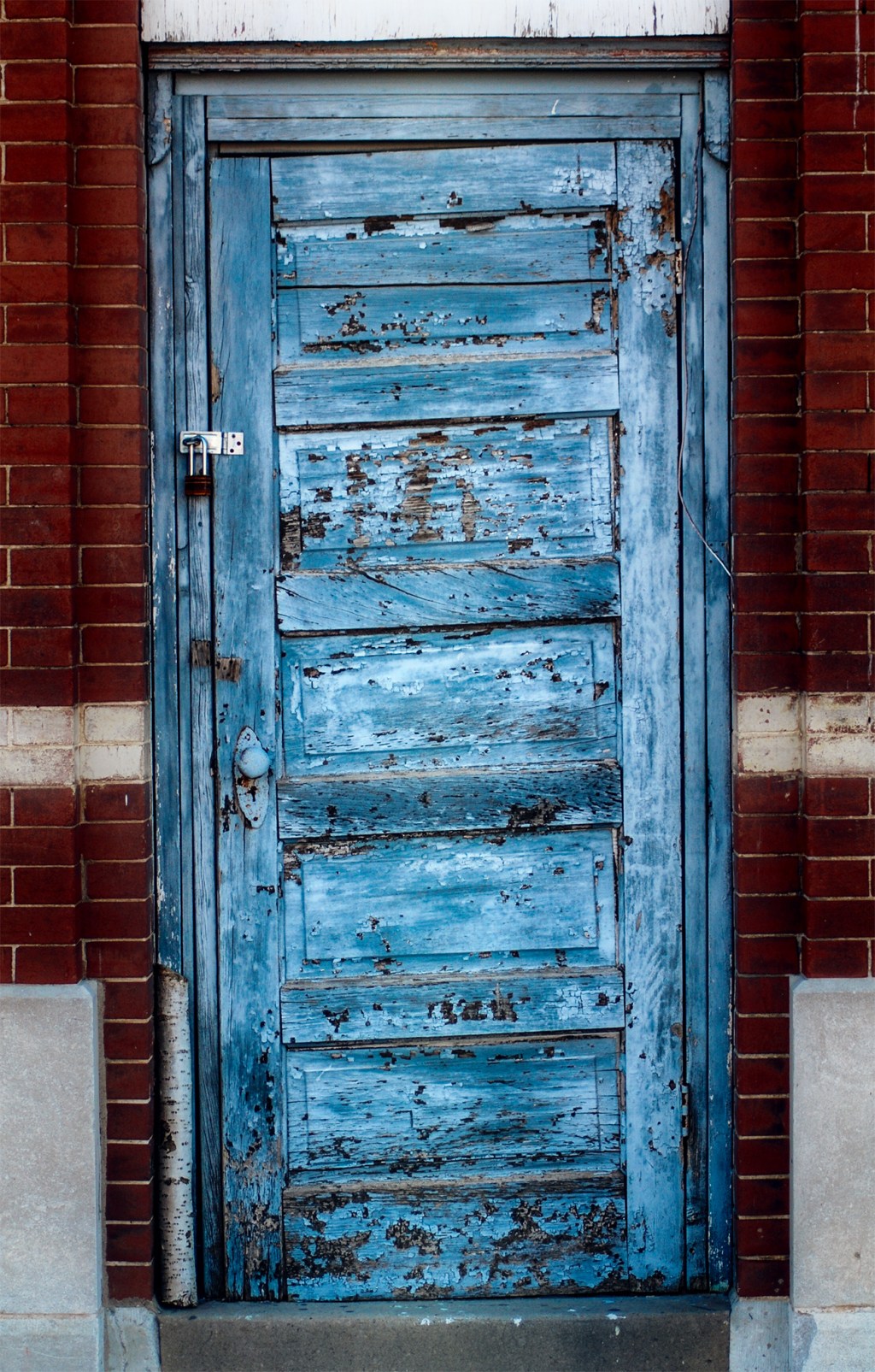
    Consider the work of still life photographers. Their images of fruit on a countertop are not just records of groceries; they are meditations on abundance, decay, and the passage of time. A close-up of a keychain can evoke nostalgia, hinting at the places it’s been and the hands that have held it. The cracked tile, captured in detail, becomes a testament to the history of a home, the passage of feet, and the inevitability of change. A worn-out doorway causes one to wonder about the things or people who have passed through on their journeys.

    Why the Mundane Matters

    By focusing on the ordinary, artists and photographers remind us that beauty is everywhere. The mundane is not boring—it’s the foundation of daily life, rich with meaning and possibility. When we learn to see as artists do, we discover that every object, no matter how humble, has a story to tell.

    This approach also democratizes art. You don’t need exotic locations or expensive materials to create something meaningful. Inspiration is as close as your kitchen counter or your pocket. The challenge—and the joy—is to notice, appreciate, and elevate what’s already around you.

  • The Influence of Other Art Forms

    Cinema taught framing. Poetry taught brevity. Painting taught color. Music taught rhythm. Photography borrows from everything.

    Many photographers yearn for photography to be celebrated as a true art form; however, I would venture to guess that most do not immerse themselves in the vast worlds of art, cinema, poetry, or music. Instead, many, if not the majority, prefer to simply aim their cameras at a subject and press the shutter button. To truly create art, every element of the process must be infused with intention and thoughtfulness. The ultimate goal should be to captivate and engage the viewer, drawing them into the vision and emotion behind the lens.

    Achieving success demands unwavering dedication. There are no shortcuts, no quick fixes, and certainly no ready-made solutions that can pave the way for you. It’s all about putting in the effort and commitment to make it happen!