Tag: learn

  • The double edge sword

    The double edge sword

    Social media is the double-edged sword of our times. We love it and hate it, we embrace it and we avoid it. Social media is a source of information and misinformation. It exposes us to a wide audience, the good, the bad, and the ugly. We can use it to express our opinions, thoughts, and comments. It is a source to find anything and everything to be offended by. So why do we bother?

    Back in the “olden times” before social media and the internet I had few places to showcase my photography. I had prints and slides but few outside of my immediate circle of friends and family ever saw any of my work. Today, I have a multitude of places to show my work, my ideas, and my concepts. I have this blog site to express my thoughts. Sure it comes with a risk of haters and trolls (nice word for assholes).

    In recent days, I have seen a multitude of people become offended by virtually anything. I have seen people say things to others they would never, or a least rarely, say in a face-to-face conversation.
    While it would appear that the internet is a horrible place and social media is a big contributor to hatred and drama it is also a place for expanding our world, our ideas, our creativity, and inspiration. It may be nearly impossible to avoid the drama and hate on social media but I, for one, am not ready to give it up. I work to stay out of the drama and look for positive interactions with the world.
  • Photographer versus Artist

    Photographer versus Artist

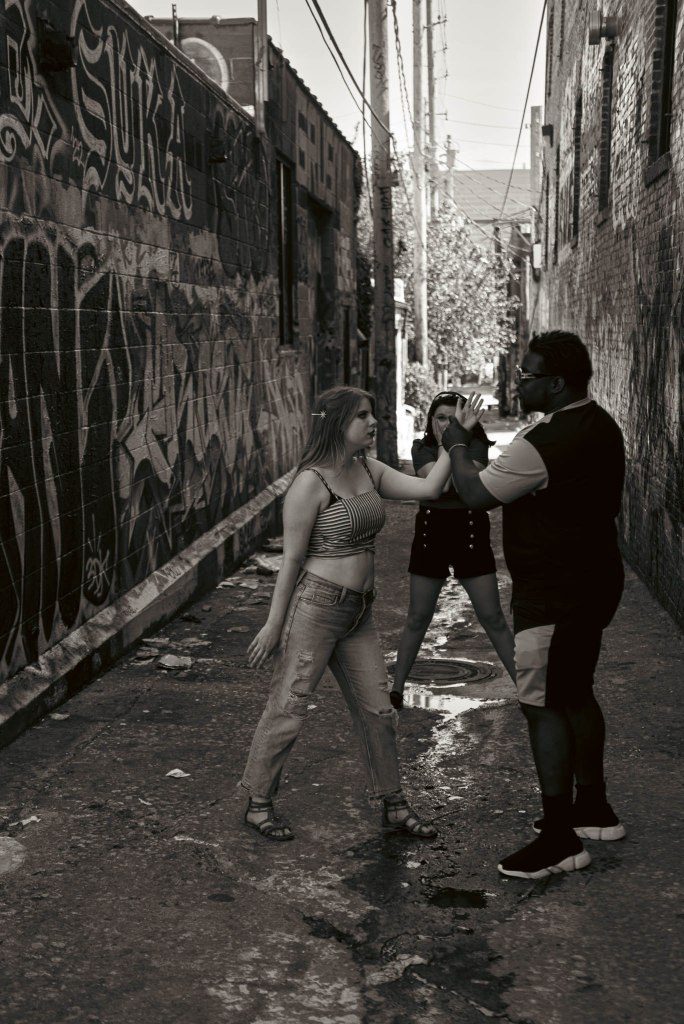
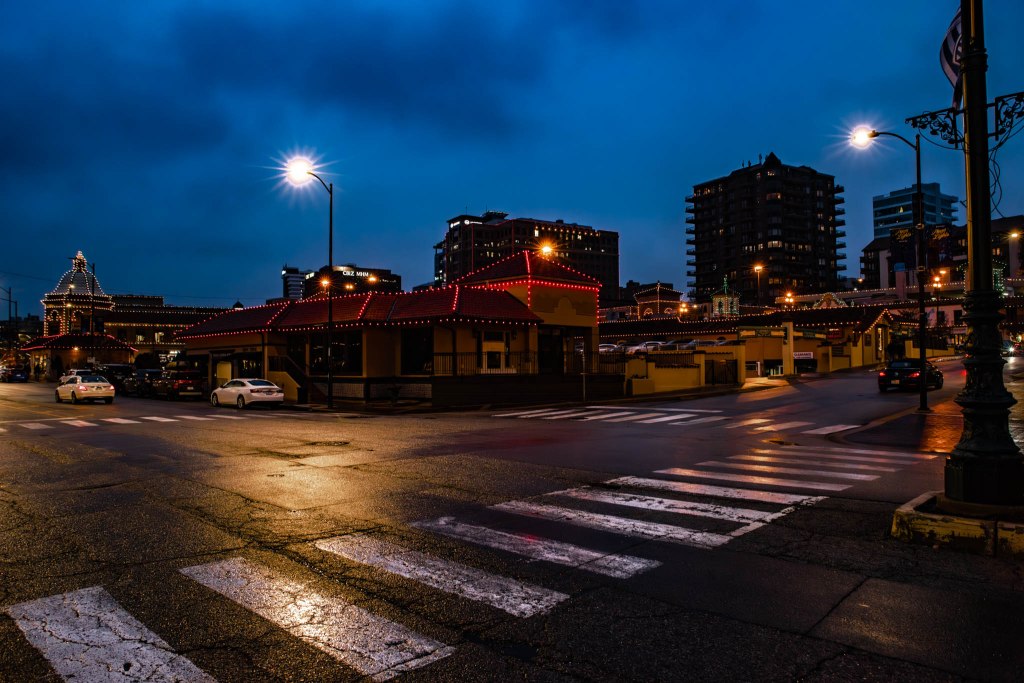
    It has become more apparent to me that I am not a photographer, but rather an artist who uses a camera. The difference is that I work to create a photograph more than just take a photograph. While I strive to get the best result at the time I take the initial photograph it is not complete until I work it. For me, it is important to recognize that camera is ruthless. It sees and records everything. In many instances we can include or exclude elements we want but then there are times we have little to no control what may be in a scene. Let’s take the image above as an example. 

    I won’t say the image was “heavily” manipulated but it was manipulated more than just basic edits such as saturation, and sharpening. There were reflections caused by lights and the wet pavement I found distracting. There were also some street signs, and other distractions that I could not have otherwise eliminated at the time I took the photograph. For me, it is about creating a piece rather than just recording it. 

  • The value of post-processing

    The value of post-processing

    It appears to me that the discussion of post-processing images is never-ending. It also appears to me that those who are against the use of tools such as Photoshop/Lightroom, or similar programs, are because of their lack of skills and ability. Post-processing isn’t always about “fixing” a photograph. It isn’t about a photographer not planning or utilizing the camera and equipment properly. The camera, cannot see as I see. 

    Post-production has existed as long, or nearly as long, as photography itself. In the past, we selected films based on how we wanted to render color, contrast, and tones. If we were good we also learned how to further enhance those qualities in our chemical darkroom using dodging and burning, unsharp masks, development times and chemicals, the selection of papers, and more development. Today’s tools take us even further without exposure to chemicals and smells. As nostalgic as those things may be. 

    To become a good or great photographer it is necessary, in my mind, to understand and utilize ALL THE TOOLS which include how to post-process the images. 

  • Changes leads to progress

    Changes leads to progress

    My last post on the blog was several weeks ago. This wasn’t intentional but I was in the midst of some changes. I moved to a new place and was in the middle of getting everything moved, set up, arranged, and organized. This was one of the changes that was planned months ago when we (my wife and I) started a new journey. The journey included moving out of our former home, putting much of our belongings into storage, and traveling for several months. The plan included returning for the holidays but what we found was we love to travel but we also missed having a home base where we could return from our travels and have our own stuff. 

    During our stay with family during the holidays we began shopping for a new place to live permanently.  During the first part of December, we found a place, however, it was not going to be ready until January 5, 2024. On the 14th of January, 2024 we got all our belongings moved into the new house which is in an area more urban than we have ever lived. Now I have a room dedicated as a home office and photography room. 

    Changes, such as those I have just described above are very stressful and exciting at the same time. At the same time, change leads to progress. While it may not appear like it at times to progress change needs to happen. We are witnessing changes in the creative world as well with the advancement of artificial intelligence and creating or developing art using artificial intelligence and computers. 

    Many, unfortunately, see it as the death of human creativity. I see it as just another advancement. As we grow as an artist it makes sense, to me, that we allow artificial intelligence to do mundane time-intensive tasks while maintaining creative control over the artificial intelligence. Failing to do so will, eventually, cause us to lag behind others and lose our edge.