Tag: learn

  • Do you really want to improve your photograph?

    Do you really want to improve your photograph?

    Do you really want to improve your photography? If not do you think your photography is the best it can be? If you do what have you done recently to improve? These may seem like simple questions but I believe if we really dig and ponder they aren’t necessarily simple. For instance, if I say yes, I really want to improve my photography but I haven’t done anything to improve then maybe I don’t really want to get better. If I say no, I don’t want to improve my photography because it is the best it can be then am I saying it is the best, or am I not capable of improving?

    Maybe it’s just me but I always want to improve. While I may not have shared many new images doesn’t mean that I’m not shooting photographs. A good number of things I photograph are never intended to be anything more than experimenting or testing. I read loads of articles and listen to photography podcasts. I study photographs of others. I don’t want to copy another photographer’s style but may use bits and pieces of many styles to build my own.

    There are many great photographers nowadays. We have loads of resources available at the tips of our fingers. We have access to vast amounts of knowledge and experience in photography and we have technology built into our modern cameras that the masters of the past could only dream about.

    I hope everyone really wants to improve their photography and if you haven’t already actively done something to improve your photography, start today. Let’s grow and improve together!

    .
  • How to rise above the crowd

    How to rise above the crowd

    Photo by Snapwire on Pexels.com

    Just think about the sheer number of photographers there are today compared to 50 years ago. And the number of good to great photographers has also increased dramatically in 50 years. Can we rise above the crowd? If so, how can we rise above? To rise above the crowd we have to photograph things in a way few photographic artists photograph them. Take a look at the multitude of photographs out there. The greatest number all look similar to one another. We don’t even have to invent new techniques. We can blaze a new trail or we can go back and study what was done before and find the style that preceded that is used little. A perfect example is clothing styles. An older style is revitalized with a slightly new twist.

    Much of our problem today is there are many more copycats than trailblazers. I’ve got my gear ready to blaze a new trail through the jungle of photography. This is a time to let our vision run wild and look for new ways to do what may have been done before. We have the tools, we have the knowledge, we have the passion.

  • What’s the best?

    What is the best [ insert name of a piece of gear ] for [ insert photographic activity ]? I see these questions asked every single day. Do you know what I rarely see? I rarely see the question asked what is the best way for me to learn. When you do see that question asked the vast majority of answers are based on watching YouTube videos. I have nothing against YouTube or video learning. There are some great videos on photographic subjects but is it the best way to learn? I don’t think so and I’ll explain why.

    Watching a video to teach photography my lighting conditions may be entirely different than those of the video. To me, it is like knowing the shutter speed, aperture, ISO, focal length used to take a photo. It only tells part of the equation. Knowing these things doesn’t tell me anything about lighting conditions. If it was cloudy, how cloudy, if it were sunny how sunny.

    Another issue is there is no interaction between the student and the instructor. What if I have a question? I could leave a comment, or send an email but will it be seen and replied to? If it is seen and replied to when, how long? Then what if I have a follow-up question?

    In my way of thinking, the why is just as important as the how. I’ve watched hundreds, if not thousands, of videos on photography and photography techniques and I rarely see the instructor talk about the why. The videos are primarily focused on the how.

    We all learn differently, but human interaction is a very important part of learning. The interaction of the teacher and student or mentor and mentee. I finished my photography classes years ago and was fortunate to have a very helpful instructor. I have also been fortunate to be surrounded by photography friends that are very good. The knowledge of good photography is more important than the gear. The best knowledge comes from a variety of sources which includes working side by side with a good or even better a great photographer.

  • The creativity challenge

    The creativity challenge

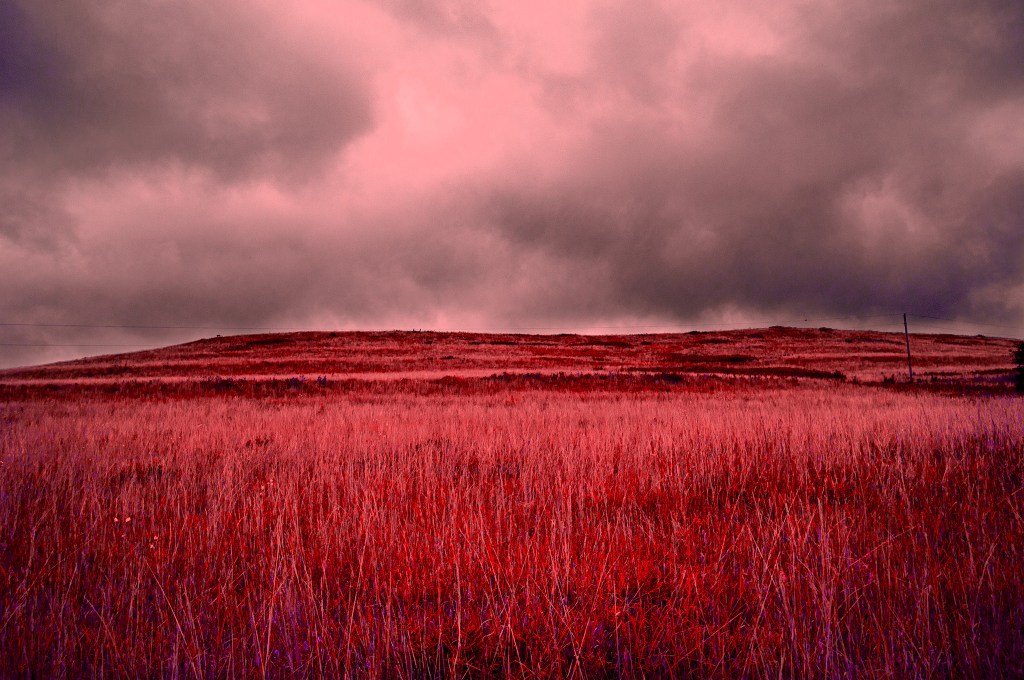
    The creativity challenge for my had become a struggle for me. I felt like I wasn’t able to come up with creative ideas. I started writing a blog several months ago with my daily thoughts. The blog entries as typically short and to the point. Since I have started on this site, this is my 89th post. Some days were difficult in getting something written but as time went along it became easier to get started. As you may tell from the image above, I am starting to do just as I have written about. I”m trying out some bizarre and different techniques. I also noticed last night as I was sitting watching a movie with my grandsons I came up with a photographic project to work on. I feel like I’m getting back in the creative groove. My inner muse is starting to awaken after a long rest.

    Awaken your inner muse. It may take some time and some effort but it can pay off. I’m no longer afraid of blazing a trail on the wild side of my photographic art.

  • Is photography really a metaphor

    Is photography really a metaphor

    A podcaster I listen to on a regular basis talked about a book by Minor White, Mirrors, Messages, Manifestations. His discussion led into photography may be a metaphor. Since listening to that podcast yesterdy, I have thought about this a bit. Merriam-Webster defines a metaphor as;  an object, activity, or idea that is used as a symbol of something else. To me, that is essentially what photograph is, a symbol of something else. It isn’t the object represented. If that is the case then in most photography, realism doesn’t matter. The photograph is merely a symbol. Reality, or as close to it as we can get is only critical in documentary photography. Everything else becomes open to artistic creativity.

    Having now come to this realization I finally have my arguement for creative expression of nearly all the photographs I will take. My work is a metaphor for this object represented in the image. I feel like I have been set free. Think about it. I believe it is hard to argue against photography as being a metaphor for the people, scenes, and objects we photograph.

  • Never work for free

    Never work for free

    Never work for free. Never work for cheap. Yes, I’ve done both and I’ve had some good and some bad experiences but I can tell you the negative experience has far outweighed the good. Here is an example of what I mean

    There’s a lady who’s been wanting me to do a FREE newborn shoot (I’m new at it) for her daughter but my kids have been terribly sick and we’ve had to reschedule a few times and now my son got into a massive accident and she sent this really mean message tonight and I sent her a picture of the car just stating that you know I’ve been having a tough time and she’s being really rough on me about it and rescheduling on her a few times.. Just not sure what to do.. I told her I’d do it Wednesday but I’m in no condition to do it.. I know my work won’t be good and I’m just depressed and don’t know what to say to her.

    From a recent Facebook post I read

    I see these posts or their sister posts about doing a cheap photography session virtually every day and they are all very similar.

    I know there are concepts of “trade for” where the photographer and the “client” work together with neither charging because they are exchanging services. I don’t consider that work for free. I also understand that some would consider the example above could be a trade for because the photographer may be able to use this as practice blah, blah, blah. But, you get into the problem of cheap customers will always be cheap customers, free customers will always be free customers. I tried the business of photography once in a half-assed way, but I wasn’t ready to be in business. I was horrible at collecting the money even though I always requested half upfront I rarely collected it and then had the experience of slow payers. The customers never got the product until the bill was paid but most of those I allowed to not pay upfront went months without an order of the finished product or payment.

    The other concept I hear about where you work for free is to provide photography for a charity. Here is what I have learned about that. Charities, even those that are 501C3 charities have budgets to pay for some services such as printing, mailing, telephones, electricity, etc. I’ve researched some of the biggest name charities and all the big names pay huge sums of money to public relations and advertising agencies. To me, if I want to support a charity with photography I will donate money to the charity and request that to be used to pay a photographer.

    I realize this post may irritate a few, it may even make some angry with me but think about the potential problems you can get before you work for free. For me, I’m not doing it anymore and I warn others to not work for free or for cheap.

  • Five simple tips to great photography

    Five simple tips to great photography

    Five simple tips to take great photographs. I see these types of headlines, or something very similar to the every single day. Then you get into the article and they say the same things every other article says about photography. Learn exposure, get closer, blah, blah blah. Simple right? Well maybe but maybe not. I’ve taught people just beginning photography. When I teach a beginner, I go out with them to help guide them. What sounds simple isn’t always so simple. I read a lot of these articles, or watch online videos that are similar, just to see if they have some “magic” technique. I haven’t found one yet. To me, this is becoming the problem I see with photography. This has become the way to learn photography and what we’re getting is everyone is taking the same photographs. They all look like everyone else’s photographs.

    When I have taught beginner photography the first thing I mention is that I don’t want to make them a copy of me. I want them to find their own style(s). I’ll teach the concepts and let them explore. Online instruction is fine in some cases, but to depend upon a video to teach as the only source often leads to confusion and failure. What if you have a question? You don’t have an instructor, if you send an email or post a comment you may, eventually, get an answer.

    If you really want to get better at photography find a real class or mentor that you can have real interactions with and help guide you personally. I feel like today we are losing personal interactions in hopes of fast and easy. Fast and easy is rarely good and far more often not even close the great.