
Tag: Photoshop

  • The wonder of new tools in Photography

    The wonder of new tools in Photography

    Yesterday, I discussed photographers’ grievances regarding the shift to subscription-based software, particularly Adobe products like Photoshop and Lightroom, which are part of my regular toolkit. Contrary to some opinions, there have been significant improvements in both existing tools and the addition of new ones, many powered by artificial intelligence.

    I understand that not everyone engages in the extensive processing that I apply to my photographs, and therefore, might not need the robust capabilities of programs like Photoshop or Lightroom. My aim is not merely to document but to craft art, with photography serving as my canvas.

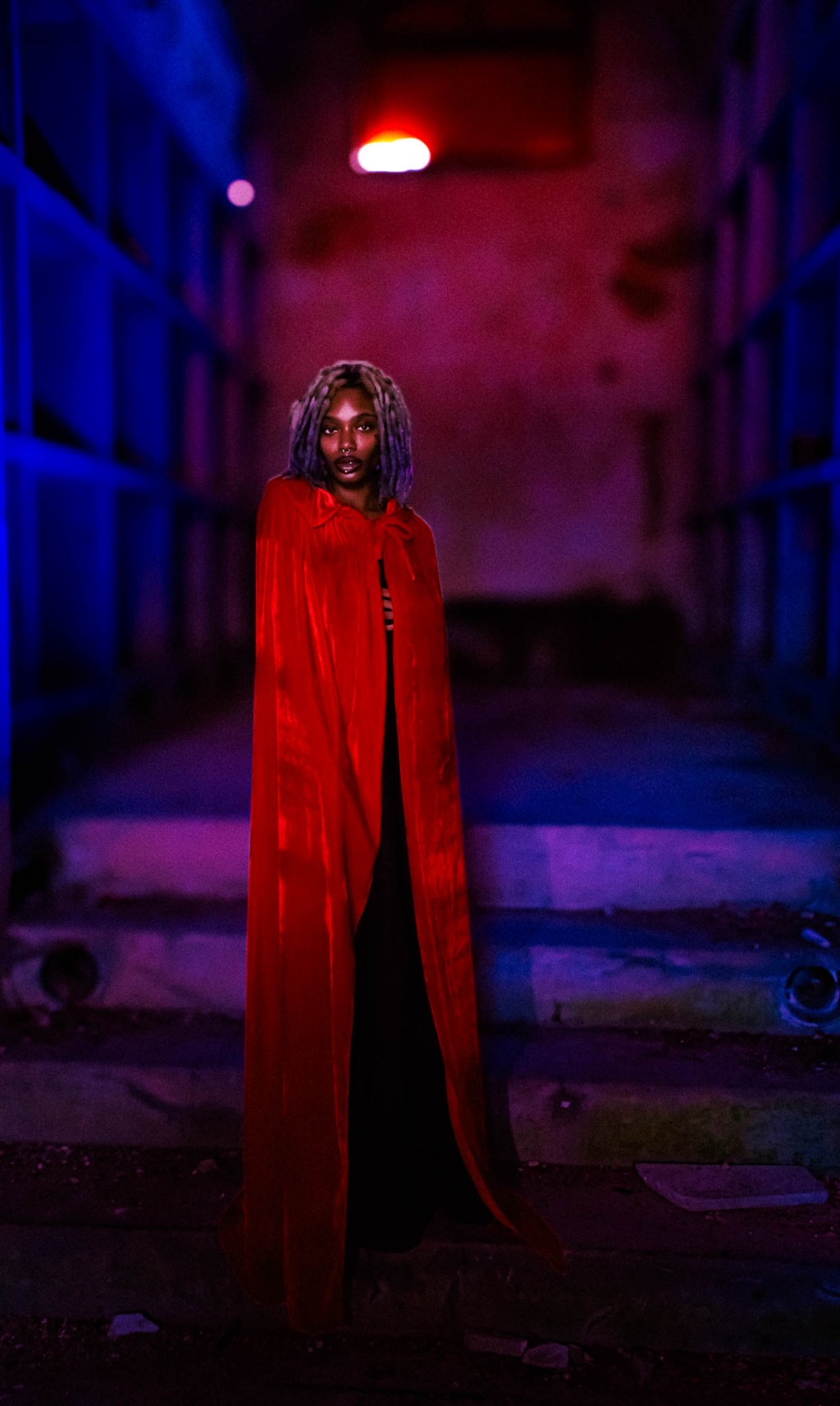
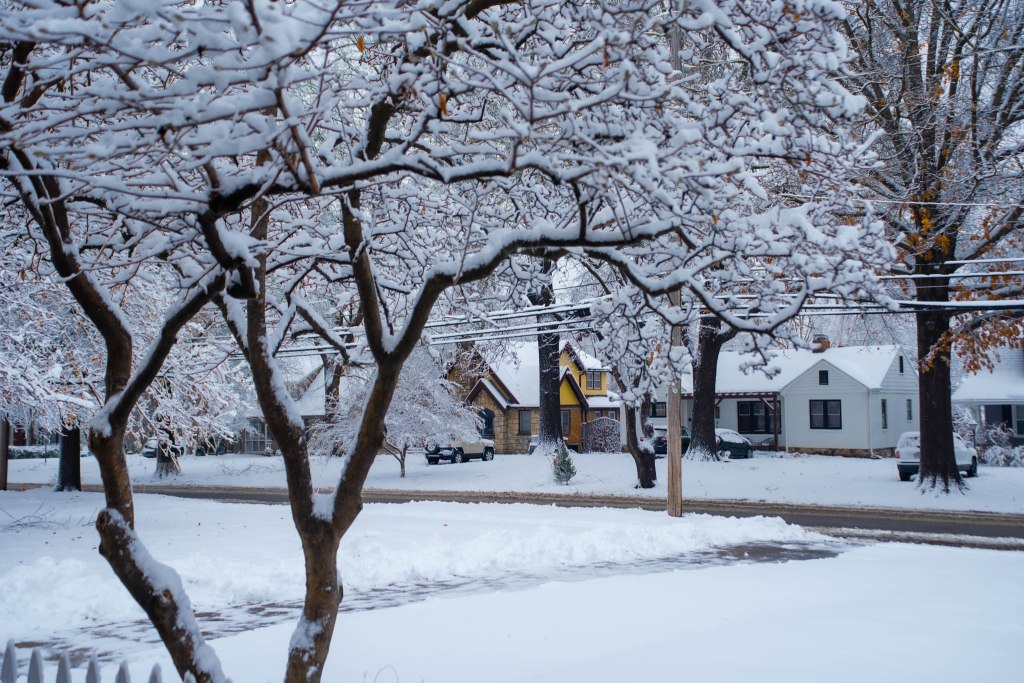
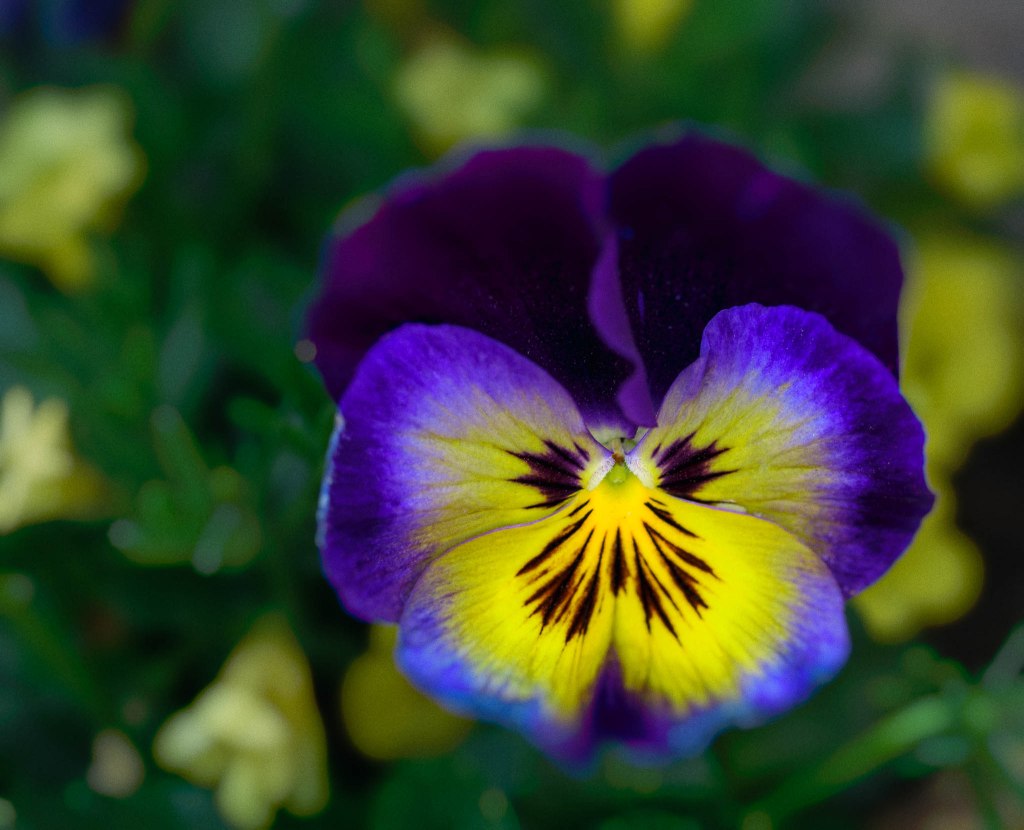
    The featured photograph of the day was captured in 2006 with my initial digital SLR camera, the Nikon D50. At the time of taking the photo, my knowledge of post-processing digital images was rudimentary yet adventurous. Moreover, I was utilizing some quite basic software and did not transition to Photoshop until 2010. A key factor in my switch to Photoshop was its advanced features like layers and masking, which were considered powerful at the time and not widely available in other programs. This justified the steep initial cost of $800, equivalent to just over $1,100 in 2024 when adjusted for inflation. At the time, I enjoyed today’s featured photograph, but it just never really felt like it justified my memory of the scene as I perceived it.

    With the modern tools available in the latest versions of Photoshop and Lightroom, I can make adjustments more effectively and quickly than ever before. Tasks that would have taken hours using software from 2006 can now be accomplished in minutes. While change may not always be welcome, it is inevitable, occurring with or without our consent. Personally, I choose to embrace and adapt to change. The advancements in computers, software, and camera equipment grant me greater freedom as a photographic artist.

  • Stop complaining about the Creative Cloud!

    Stop complaining about the Creative Cloud!

    I’m exhausted from seeing constant complaints about Adobe’s subscription model, and I realize this is a hornet’s nest of a topic. It has been 12 years since the subscription service came out. In those 12 years, I have spent $1,438 with my previous purchases of Photoshop CS4, CS5, and CS6, pulse Lightroom 3, 4, and 5 I spent over $1,550. After 12 years, I am still 11 months ahead of what I spent about 4 years of before the monthly plan. It has also been 12 years! If you don’t like it move on.

    Additionally, I recently viewed a video detailing the differences between Photoshop CS4 and the current version of Lightroom. Unfortunately, I didn’t save the link, which has made it challenging to locate the video again. The photographer in the video processed an image in Photoshop CS4 years ago and sold a number of prints. The original edit in Photoshop CS4 took him 10 hours to complete. Nearly the same look took him 10 minutes in the current release of Lightroom. Ten minutes!

    Many individuals continue to express concerns, discussing how the “subscription model” would negatively impact Adobe. Yet the numbers talk differently, “but within a year of the launch, customers had grown 244%[1], resulting in 50% growth in revenue“.

    I realize I sound like a “fan-boy” and maybe I am, but I am just tired of seeing the endless whining and complaining about something that is old history. Move on if you don’t like it. For me, I am staying with Photoshop and Lightroom. The advances far outweigh the $9.99 monthly fee.

  • Another thing that is “ruining” photography

    Another thing that is “ruining” photography

    Photography is an art form that is constantly evolving, and with that comes new technology and techniques. Yet, no matter how much progress is made, there will always be those who claim that something is “ruining” photography. But isn’t it important to embrace change and innovation? After all, it is through these advancements that we can create new and exciting works of art. Let’s celebrate the evolution of photography, instead of resisting it.

    In the mid-1980s, I developed a keen interest in photography, even before the advent of Photoshop in 1990. At that time, Photoshop was only available on Macintosh computers, and it wasn’t until 1994 that it became available on Windows. Despite its release, few hobbyists I knew used Photoshop. Instead, we relied on a variety of creative filters. In 2005, I ventured into the realm of digital photography and began processing my images using computer programs. Although some of my early edited photographs were terrible by my current standards, it was a valuable learning experience.

    In 2010, I made the bold decision to switch to Photoshop, despite its hefty price tag of over $800. It was during this time that I became increasingly aware of the baseless complaints against digital photography, with some claiming it was “ruining” real photography. Fourteen years on, the integration of artificial intelligence is significantly altering the landscape of photography leading us to yet another problem that is ruining photography. Many have said it is robbing photography of its soul.

    That statement is simply not true. The integration of Photoshop and artificial intelligence is an invaluable asset to my artistic process, greatly improving efficiency and output quality. The integration of artificial intelligence into programs like Photoshop has undoubtedly sparked a renewed interest in film. However, it’s important to note that some photographers believe that this technology allows their photography to be closer to reality – and that’s simply not true. Reality in photography, just like in painting and drawing, is an illusion. It’s crucial to understand that, regardless of the format you choose, reality will always be skewed based on various factors, such as how the image is being recorded and what camera settings are being used.e is being recorded and what camera settings are being used.

    Photographers, instead of wasting your time complaining about what’s ruining photography, why not focus on what you can control? Pour your energy into creating art and captivating photos that inspire and move people. Don’t let external factors hinder your creativity. Embrace the challenge and use it as a catalyst to push yourself to new heights. Remember, the best way to combat negativity is with positivity. So, let your passion and talent shine through your work, and let that be your legacy.

  • Words I loath in photography

    Words I loath in photography

    The specific words for me are – “pics,” “bokeh,” “tog,” and the phrase “fix in [insert name of program]” – hold different meanings and connotations for different individuals. Understandably, certain terms within the photography community can evoke strong feelings or interpretations. For instance, “bokeh” refers to the aesthetic quality of the blur produced in the out-of-focus parts of an image. While it’s a technical term, it’s also become somewhat of a buzzword in photography discussions.

    Similarly, the abbreviation “tog” for a photographer and the casual term “pics” might come across as overly informal to some. In contrast, others may see them as part of the ever-evolving language of the digital age. Additionally, the phrase “fix in [insert name of program]” could be a shorthand way of referring to the post-processing stage of photography, where editing software is used to refine and enhance images.

    It’s intriguing how language and terminology can shape our perceptions, and it’s not uncommon for certain words or expressions to carry various associations for different people. It’s clear that, for me, these particular words may either appear as a lack of understanding or as diminishing the skill and artistry of photographers. My perspective, hopefully, sheds light on the complexities of language and how it intersects with my passions and interests.

  • Reclaiming motivation

    Reclaiming motivation

    The road to reclaiming your motivation to create can be long and arduous. In September of 2023, we moved from where we had lived for 7 years. Our previous home, with its familiar surroundings and comfortable spaces, held countless memories and moments of inspiration. The decision to move was not easy and adjusting to a new environment proved challenging. As the days passed, the longing for the familiar creativity-inducing atmosphere grew stronger, but the unfamiliarity seemed to stifle the creative flow. However, amidst the struggles, small sparks of motivation began to appear. Exploring the new neighborhood, discovering local art, and meeting creative individuals slowly reignited the passion for creating. It was a gradual process, but with patience and perseverance, the joy and inspiration for creating was rediscovered. The journey was indeed long and challenging, but it ultimately led to a newfound appreciation for the creative process and the resilience to overcome obstacles.

    The return of spring and the upcoming summer season infuse me with renewed inspiration. The warmer weather and longer days are awakening my creative spirit, beckoning me to venture outdoors and reconnect with the world around me. As the world outside bursts into vibrant color and life, I feel drawn to capture these moments and translate them into creative expressions. This transition into a new season ignites a sense of rejuvenation within me, allowing my creativity to flourish once more.

  • Photographer versus Artist

    Photographer versus Artist

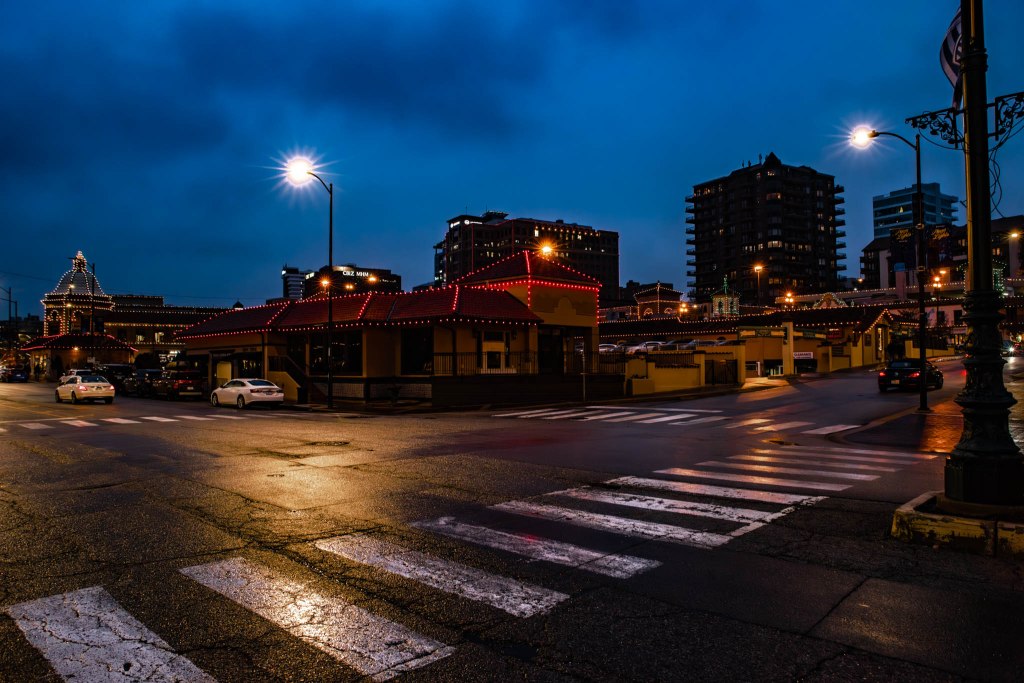
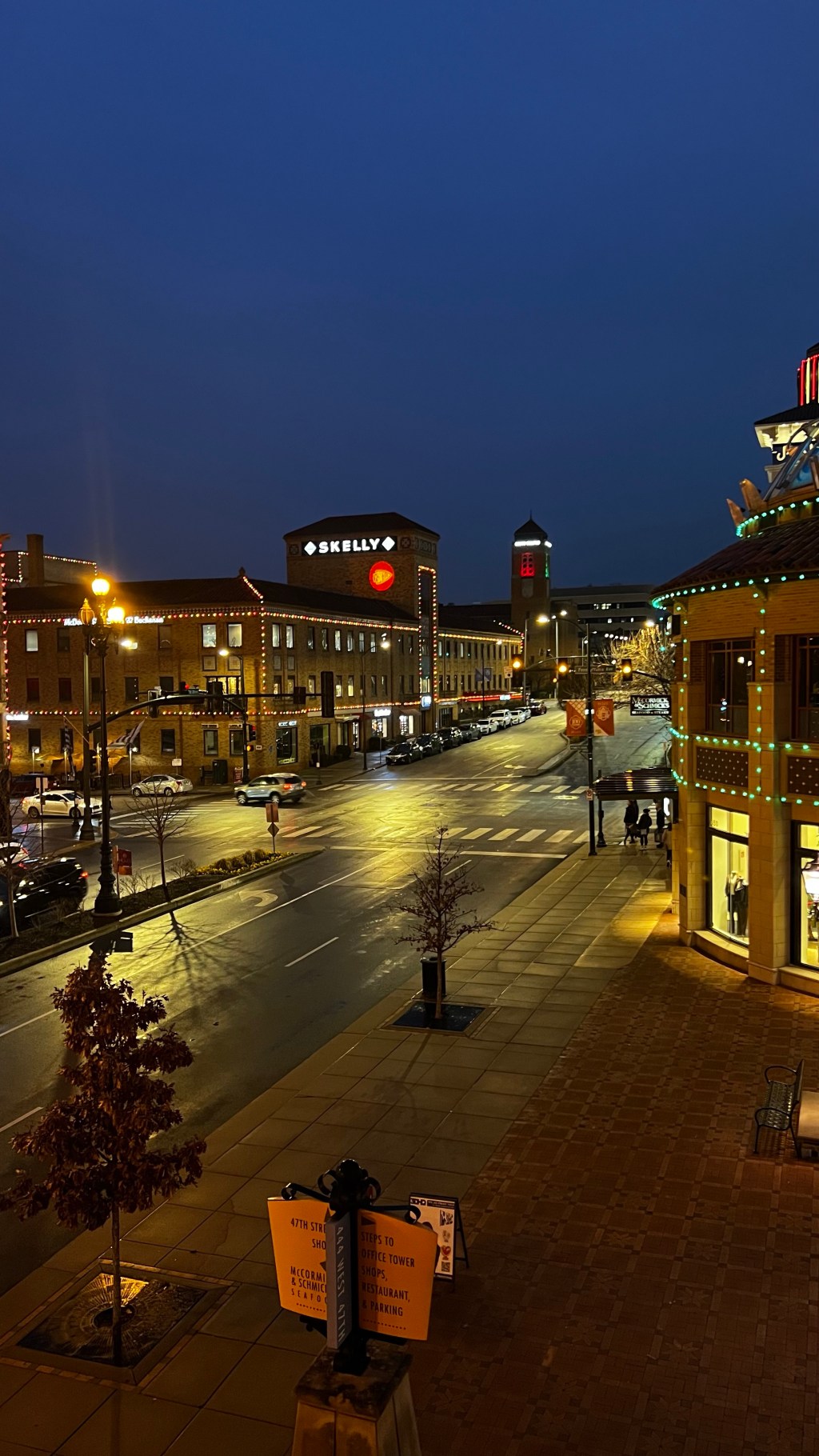
    It has become more apparent to me that I am not a photographer, but rather an artist who uses a camera. The difference is that I work to create a photograph more than just take a photograph. While I strive to get the best result at the time I take the initial photograph it is not complete until I work it. For me, it is important to recognize that camera is ruthless. It sees and records everything. In many instances we can include or exclude elements we want but then there are times we have little to no control what may be in a scene. Let’s take the image above as an example. 

    I won’t say the image was “heavily” manipulated but it was manipulated more than just basic edits such as saturation, and sharpening. There were reflections caused by lights and the wet pavement I found distracting. There were also some street signs, and other distractions that I could not have otherwise eliminated at the time I took the photograph. For me, it is about creating a piece rather than just recording it. 

  • The value of post-processing

    The value of post-processing

    It appears to me that the discussion of post-processing images is never-ending. It also appears to me that those who are against the use of tools such as Photoshop/Lightroom, or similar programs, are because of their lack of skills and ability. Post-processing isn’t always about “fixing” a photograph. It isn’t about a photographer not planning or utilizing the camera and equipment properly. The camera, cannot see as I see. 

    Post-production has existed as long, or nearly as long, as photography itself. In the past, we selected films based on how we wanted to render color, contrast, and tones. If we were good we also learned how to further enhance those qualities in our chemical darkroom using dodging and burning, unsharp masks, development times and chemicals, the selection of papers, and more development. Today’s tools take us even further without exposure to chemicals and smells. As nostalgic as those things may be. 

    To become a good or great photographer it is necessary, in my mind, to understand and utilize ALL THE TOOLS which include how to post-process the images. 

  • AI and photography aren’t a bad thing.

    AI and photography aren’t a bad thing.

    Artificial intelligence (AI) has greatly influenced the field of photography, bringing about significant advancements and transforming the way we capture and enhance photos. Here are some ways in which AI has revolutionized photography:

    1. Image Recognition: Thanks to AI algorithms, images can now be analyzed to identify objects, scenes, and even emotions. This allows for automatic tagging, categorization, and quick searching through photo libraries.
    2. Automatic Settings: AI-powered cameras can intelligently adjust settings like exposure, focus, and white balance based on the analysis of the scene. This means that photographers can capture great photos without having to manually make those adjustments.
    3. Image Enhancement: AI algorithms excel at enhancing photos by reducing noise, improving sharpness, and adjusting colors. Through deep learning, these algorithms continuously improve by learning from vast amounts of data, resulting in visually impressive enhancements.
    4. Face Detection and Recognition: With AI, accurate face detection and recognition is now possible in photos. This enables features like autofocus on faces, automatic tagging of individuals, and smart organization based on people present in the photos.
    5. Style Transfer: AI algorithms can apply various artistic styles to photos, giving them the appearance of paintings or imitating the styles of renowned photographers. This opens up new avenues for creative expression and experimentation.
    6. Photo Restoration: Using AI algorithms, old and damaged photos can be restored and repaired with ease. Scratches, stains, and noise can be removed, and missing parts can be intelligently recreated by leveraging deep learning and extensive training data.
    7. Automatic Photo Organization: AI-powered photo management software can cleverly organize photos based on factors such as location, date, and content. This simplifies searching, browsing, and reliving cherished memories.
    8. Intelligent Photo Editing: AI-driven editing tools offer advanced functionalities like object removal, automated retouching, and even generating realistic backgrounds. These tools streamline the editing process and save time for photographers.

    With ongoing advancements, AI technology continues to evolve and integrate further with photography, enhancing the way we capture, edit, and appreciate visual moments.

  • Combining A.I. and photography

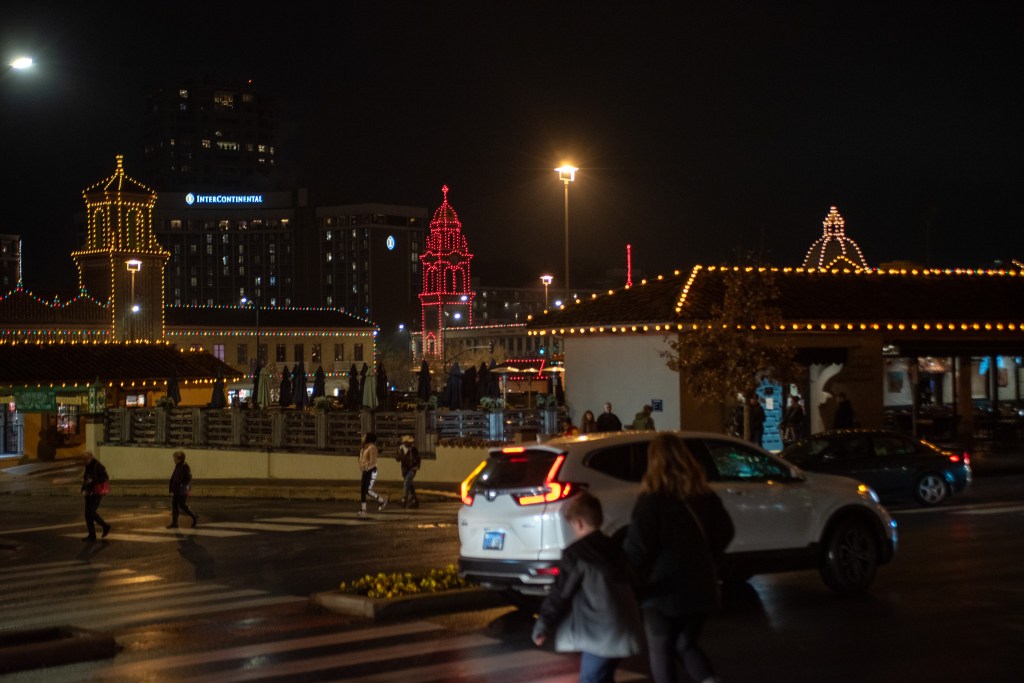
    Much has been written lately about artificial intelligence, specifically generative fill in Photoshop, and creating photographic art. Some in support of artificial intelligence and generative fill and others against. My thoughts are I am in support of artificial intelligence and photography. I work to create the images I want when I want. Let’s talk about the “featured image” (above). I took the image at roughly 6:30 PM on a Saturday night. The street was busy with cars and the sidewalk was packed with people, as see below.

    This is reality, but for me there are many distractions. Sure, I could have waited until much later or got up very early and had a better chance to get the shot with no cars or people, but I could also have used generative fill and artificial intelligence to remove those distractions to create the shot I wanted. Additionally, had I waited the wet pavement may have dried and not allow the reflections I wanted. The generative fill and artificial intelligence will, most likely, continue to improve making its use better but for now I believe it is quite usable.

  • Creativity is dead only if we choose it to be dead.

    Creativity is dead only if we choose it to be dead.

    Creativity is not dead despite what others may think. Yes, there is a low bar set for entry into photography but the bar was lowered 123 years ago and the so-called masters didn’t let that hold them back. How do I get the bar was lowered 123 years ago? That was when Kodak released the Brownie camera. The camera meant for everyone. Since then photography has experienced a number of advances making taking photographs easier and faster.

    Just because it is easy and fast and nearly everyone owns a high quality camera doesn’t mean that creativity in photography is dead. The only thing stopping you from creating art. Just because it is so easy to share photography with the world and others just scroll past doesn’t stop you. Share. Inundate the world with your work and raise the bar for you.