I’m going to mention Ansel Adams again. Ansel Adams wrote a book series, “The Camera”, “The Negative”, and “The Print”. These books discuss Ansel’s process of making photographs. These are about film photography since they were first published in 1978. Something I want you to notice, two of the three books are about the process of making photographs after the click of the shutter. In other words, 2/3rds of Ansel Adams’s process was post-processing. Two-Thirds!
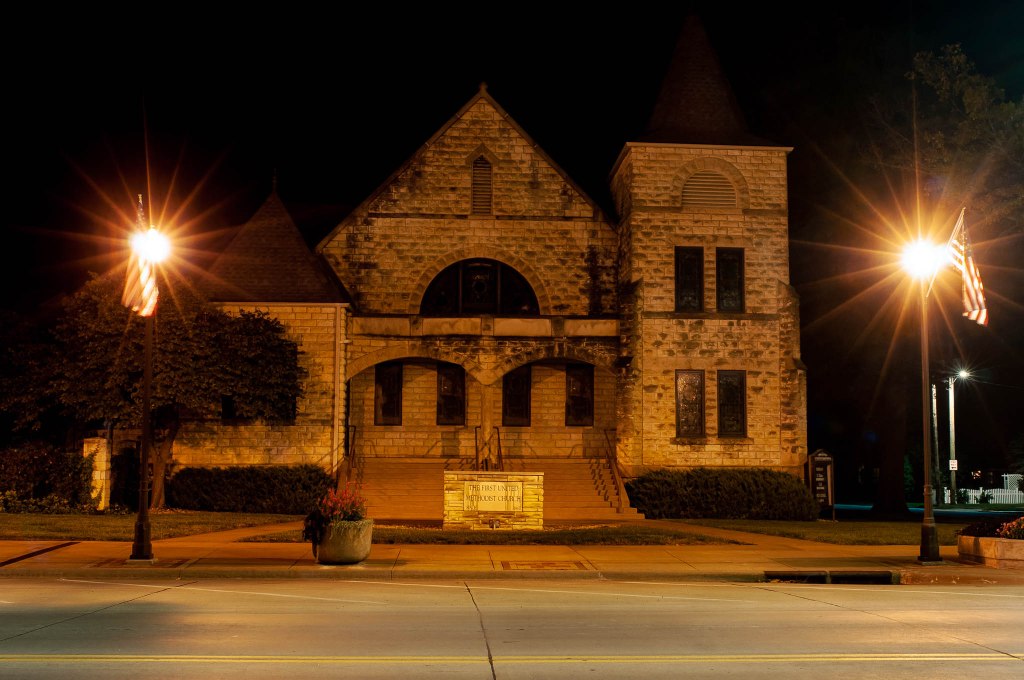
Last fall, A friend and I were on a photography weekend in the plains of Kansas. Coming back from doing some Milky Way photographs we stopped to photograph some night shots of the small town where we were staying. I thought a church was an excellent subject. I got my camera and tripod set up and took a couple of photographs, but a problem hindered showing the subject as I envisioned.
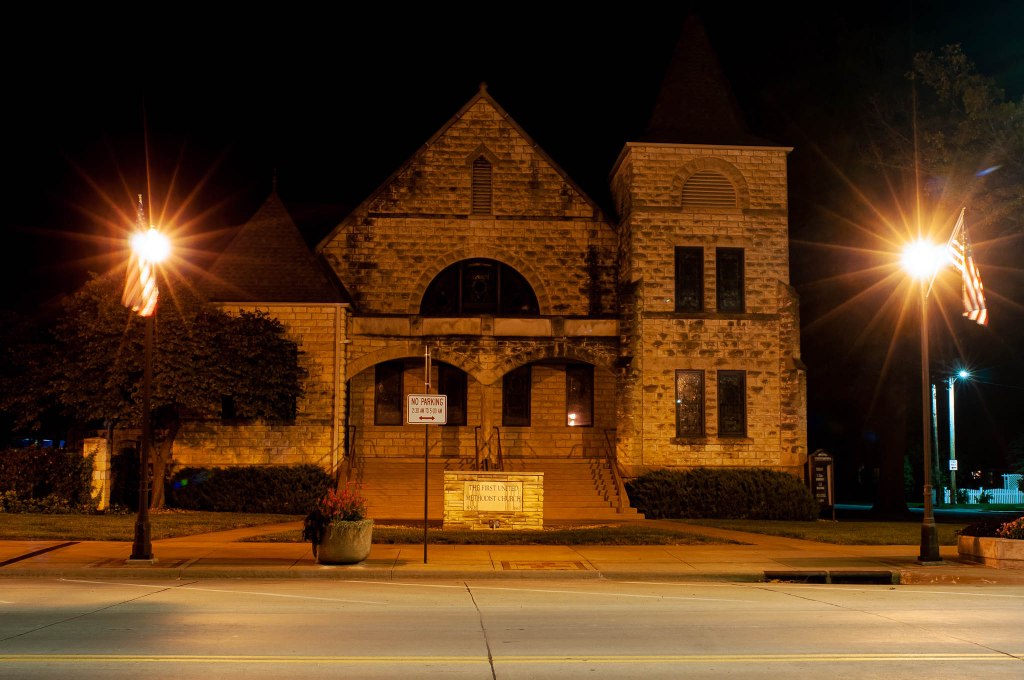
There was an ugly, no parking street sign, there were some weird reflections in the windows, and the street light towards the back of the church was a very different color temperature. Plus the top of the building was in the shadows due to the ambient lighting.
While it was possible back in the late 1970s to remove objects from prints I find it much easier to do today with Photoshop. I could also adjust the color temperature of the light, remove some of the weird reflections, and adjust the shadows and highlights (dodge and burn if you will).
The sign is gone, the weird reflections are gone, the color temperature of the light in the background is better, the shadows and highlights are adjusted, and a bit of street sweeping to clean up some debris in the street. This is how I envisioned representing this church.
Short of vandalizing the sign, I would not have been able to get this photograph without the power of post-processing and the use of Photoshop. I would not have been able to adjust the shadows and highlights or probably the color temperature of the light in the background.
Did I alter reality? I don’t think so because here is the funny thing. When I looked at this building and this scene with my eyes, I could easily look past those issues. My brain processed the scene as I wanted to envision it.
As you proceed on your photographic journey, remember the Ansel Adams books, “The Camera, The Negative, and The Print.” Much work is done through post-processing, not because you made a mistake but because of the limitations of our mechanical equipment to capture what our eyes and brain envision.
 Photographer Clay
Leave a comment