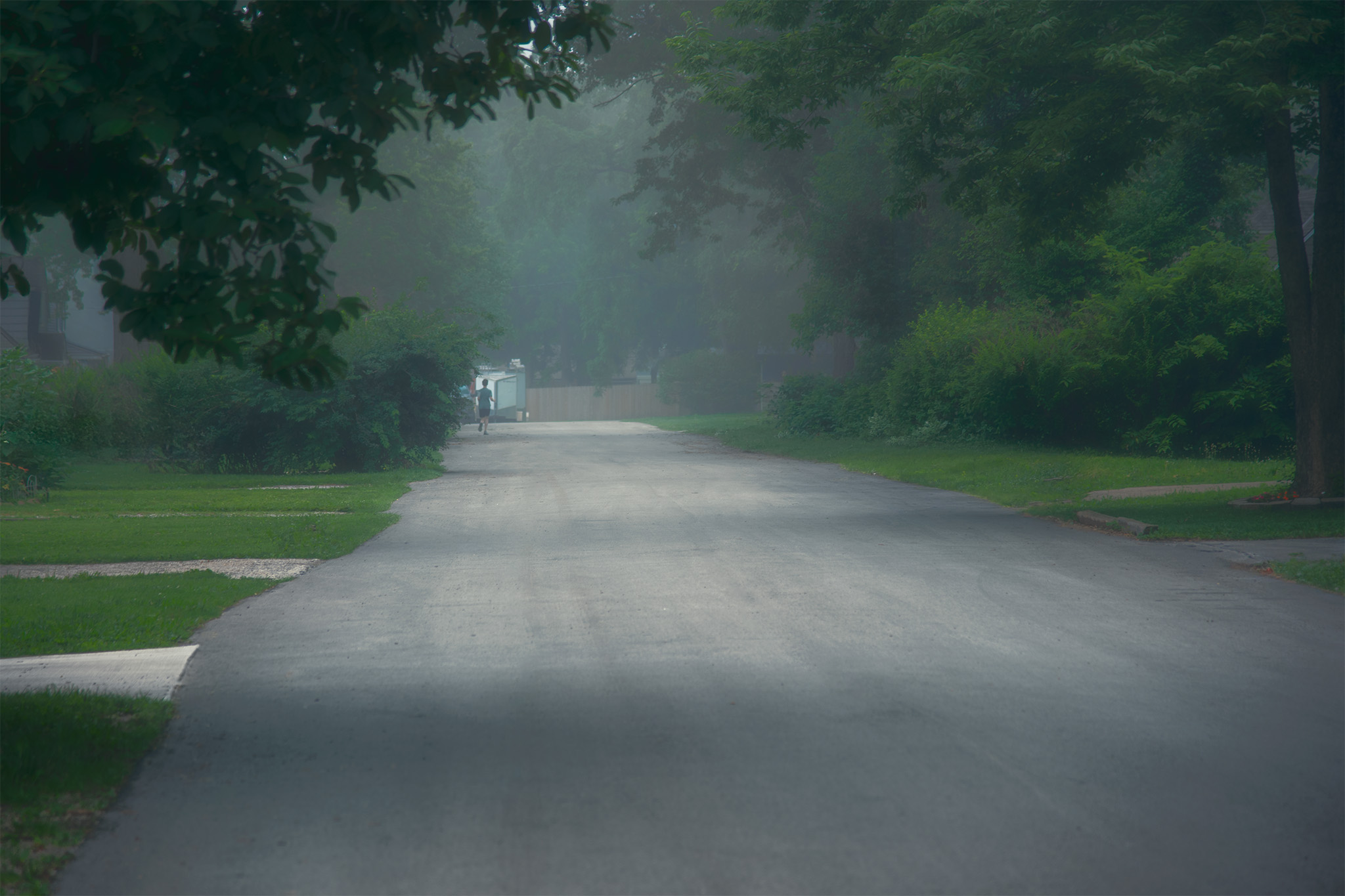
“The landscape has been speaking long before we arrive. Photography begins the moment we learn to listen.”

When I first became interested in photography, I believed every photograph began with the camera. The process seemed straightforward enough. Find an interesting subject, decide where to stand, arrange the composition, choose the right exposure, and press the shutter. If the photograph succeeded, I assumed it was because I had made good decisions. If it failed, I looked for technical mistakes or promised myself I would return when the light was better.
There is truth in that way of thinking. Photography certainly requires decisions, and every decision influences the final image. Yet over the years I began to notice something that didn’t fit my understanding of the process. Occasionally I would arrive at a place with every intention of making a photograph, only to discover that nothing spoke to me. Other times I would stop beside an ordinary country road, intending only to stretch my legs, and within a few moments I would find myself completely absorbed by a scene I never expected to photograph.
The difference wasn’t the camera.
It wasn’t even the landscape.
The difference was whether I had noticed what was already there.
In the previous essay, I suggested that meaningful photographs are less about subjects than about relationships. That realization answered one question, but it immediately raised another. If everything within a landscape is already connected, what exactly am I doing when I compose a photograph? Am I creating something that did not exist before, or am I discovering something that has been unfolding long before I arrived?
The longer I practice photography, the more I believe it is the latter.
When I stand before a landscape, I am stepping into a conversation already in progress. The wind has been moving through the grasses for hours. Clouds have crossed the sky without any awareness that I would eventually stand beneath them. Light has slowly transformed the colors of the prairie from the cool blues of dawn to the warm tones of morning. Birds have found shelter, insects have gone about their work, and shadows have quietly shifted across the hillsides. None of these things waits for the photographer.
The landscape is complete without me.
That realization has become strangely liberating. I no longer feel responsible for creating beauty every time I unfold my tripod. Instead, I have become responsible for recognizing it. My role is no longer to organize the landscape into something meaningful. My role is to understand the meaning that already exists and decide how best to reveal it.
That may sound like a subtle distinction, but it has changed almost everything about the way I work.
There was a time when I walked quickly through a scene searching for the strongest subject. Today I walk more slowly. I stop more often. Sometimes I spend ten or fifteen minutes simply watching before I even think about removing the camera from my shoulder. I have learned that the first thing I notice is rarely the most interesting thing about a place. It usually takes time for the quieter relationships to reveal themselves.
Perhaps that is because our minds are naturally drawn toward objects. We notice the tree before we notice the wind moving through its branches. We notice the mountain before we notice the changing light that gives it form. We notice the old barn before we notice the silence surrounding it. Photography often begins with those obvious subjects, but meaningful photographs rarely end there.
The longer I remain in one place, the more the landscape begins to reorganize itself in my mind. What first appeared to be separate elements gradually become part of a single experience. The movement of the grasses echoes the movement of the clouds. The curve of a distant ridge is repeated in the shape of a weathered fence line. A patch of sunlight becomes significant not because it is bright, but because it briefly connects the foreground to the horizon.
I haven’t created those relationships.
I have simply become aware of them.
That awareness has also changed the way I think about composition. I no longer see composition as the act of arranging objects inside a rectangle. Composition has become the process of deciding which relationships deserve to be included and which are distractions from the larger conversation. Every step forward strengthens one relationship while weakening another. Every change in camera height alters the dialogue between foreground and distance. Even deciding when to press the shutter becomes less about timing an event and more about recognizing the moment when those relationships feel complete.
For many years I admired Ansel Adams’ idea of pre-visualization. The discipline of seeing the finished print before pressing the shutter remains one of photography’s great achievements. Yet I have come to believe that pre-visualization begins with something even more fundamental. Before we can imagine the finished photograph, we must first recognize the relationships that make the photograph worth imagining.
Perhaps that is why two photographers can stand only a few feet apart and return home with entirely different images. They are not simply choosing different compositions. They are responding to different conversations. One is captivated by the way light traces the edge of a distant hillside. Another notices how approaching weather changes the emotional character of the prairie. A third is drawn to the quiet rhythm created by grasses bending beneath an unseen wind. The landscape offers each of these possibilities freely. The photographer chooses which one to reveal.
That thought reminds me of something I wrote in my artist statement. My work is an inquiry into the profound truth of Mitakuye Oyasin—the understanding that we are all related. It is an attempt to reveal the invisible threads connecting humanity, nature, and the larger world around us. I realize now that those invisible threads are not only the subject of my photographs. They are also the process by which the photographs are made. Every meaningful image begins with recognizing that nothing exists in isolation.
These days, when I arrive somewhere with my camera, I ask myself a different question than I once did. I no longer begin by asking, What should I photograph? Instead, I ask, What has this landscape been saying all along that I have only now become quiet enough to hear?
Sometimes the answer becomes a photograph.
Sometimes it becomes nothing more than a moment of gratitude.
I have learned to value both.
If Mitakuye Oyasin teaches us that everything is connected, then perhaps photography is not the act of creating beauty, but the practice of recognizing it. The landscape has already composed itself through light, weather, time, and the countless relationships that exist within it. My responsibility is simply to notice those relationships and make them visible to someone else.
The photograph, in a very real sense, was already there.
I simply had to learn how to see it.
Leave a Reply