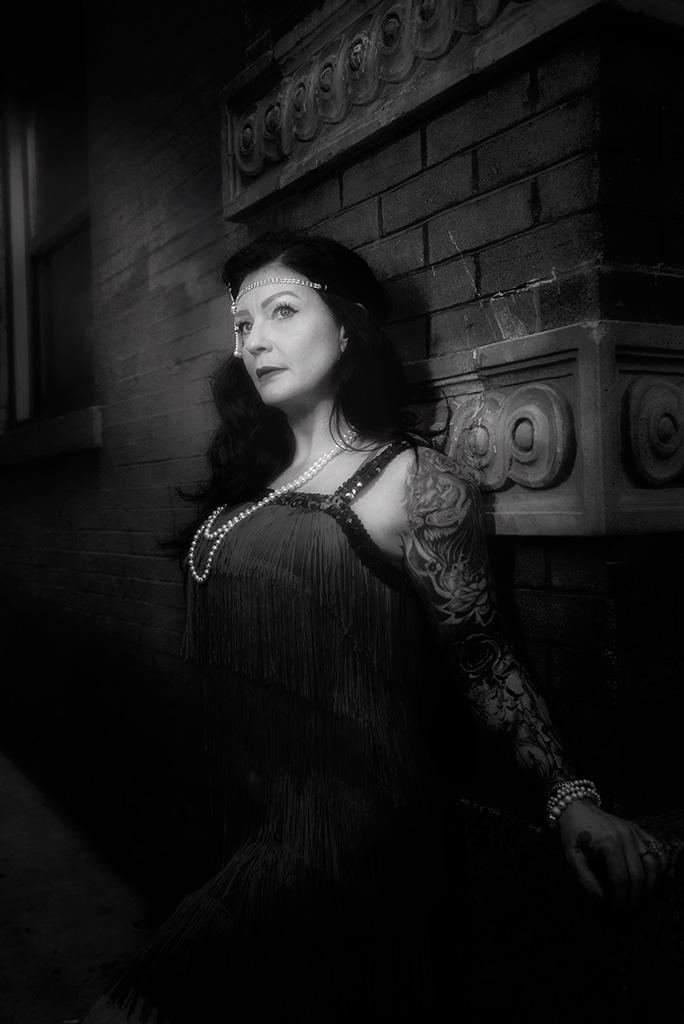
Let’s talk about the exact moment you realize you’ve been doing something for four decades, only to discover you are basically a newborn baby holding a very expensive piece of glass.
Since the 35mm film days of the early ’80s, I thought I was the undisputed master of my domain. You point, you focus, you panic about the exposure, and you click.
I treated the “Rule of Thirds” like it was a federal law. If a horizon line accidentally crept into the dead center of my frame, I fully expected the Photography Police to kick down my door and confiscate my lenses.
But then came my creative crisis. I didn’t want to just be a photographer anymore. I wanted to be an Artist.
I thought this just meant I needed to start wearing a black turtleneck, sighing heavily, and drinking artisanal espresso.
I was wrong. It meant rewiring a brain that had spent 40 years worshipping technical perfection.
Suddenly, I had to understand deep, mystical concepts like “tones” and “color separation.”
Color separation? For forty years, I thought that was just how you kept your white socks from turning pink in the washing machine.
Now, instead of simply taking a nice, sharp picture of a rusty old truck, I’m standing in a ditch for an hour, squinting at the shadows, trying to feel their “emotional weight” and “tonal harmony.” My neighbors definitely think I’ve lost my mind.
And don’t even get me started on composing a shot without the “rules.”
Ignoring those comfortable grids and mathematical leading lines felt like trying to ride a unicycle blindfolded. My inner perfectionist was constantly screaming, “Put the subject on the intersecting grid line, you absolute madman!”
There were scraped knees, bruised egos, and a lot of photos that looked less like high art and more like accidental pocket dials.
But you know what? Surviving that awkward, messy transition has been the most liberating experience of my life.
When you stop obsessing over the mathematical perfection of a snapshot, you start actually seeing the world. You see how light, texture, and beautiful chaos all dance together.
Sure, rewiring a 40-year-old habit is a comical struggle. I still occasionally catch myself sweating over a perfectly straight horizon line and a textbook histogram.
But the reward on the other side of that struggle is pure magic.
If you are out there feeling stuck behind your lens, give yourself permission to be a bumbling beginner again. Break those technical rules you’ve been clutching like a safety blanket.
Embrace the beautiful, confusing mess of it all. You might just finally meet the artist who has been hiding behind your camera this whole time.
 Photographer Clay
Leave a comment